Your solar system is underperforming, and you are staring at a repair quote that makes you wonder whether you should simply replace the whole thing. This is one of the most common situations homeowners face after the initial glow of going solar wears off. The wrong decision costs real money, whether you spend on a repair that only delays an inevitable replacement, or you replace components that had years of useful life left. Solar system repair is often the right call, but not always. This guide gives you a clear framework for making the decision, grounded in what licensed solar contractors actually see in the field.
Table of Contents
- Quick Takeaways
- How Solar Systems Fail and Why It Matters
- When Solar System Repair Is the Right Call
- When Solar Panel Replacement Makes More Sense
- Solar Repair Cost vs. Replacement Cost: What to Expect
- Repair vs. Replacement: Side-by-Side Comparison
- What a Proper Diagnostic Looks Like
- Battery Storage and EV Chargers: How They Change the Equation
- Frequently Asked Questions
- References
Quick Takeaways
Key Insight | Explanation |
|---|---|
Age of the system is the first filter | Systems under 10 years old with a single point of failure are almost always better candidates for repair than full replacement. |
Inverter failures dominate repair calls | The inverter is the most commonly replaced component. Replacing it alone is far cheaper than a full system swap. |
Solar repair costs range widely | According to Angi, solar panel repair costs range from roughly $100 to $4,700 depending on complexity, component, and roof access. |
Microcracks and delamination need a professional call | Minor panel damage may be repairable; widespread cell-level damage across multiple panels usually is not. |
Warranty status changes everything | If a component is still under manufacturer warranty, repair or replacement costs may be covered. Always check before authorizing paid work. |
Performance loss is not always a panel problem | Shading, wiring faults, dirty panels, or a failing optimizer can mimic panel degradation. A proper diagnostic rules these out first. |
Replacement opens the door to upgrades | If your system is 15 or more years old, full replacement often lets you add battery storage and a higher-efficiency layout at the same time. |
How Solar Systems Fail and Why It Matters
Solar panels do not simply stop working one day. They degrade gradually, and components fail at different rates. Understanding which part of your system is causing the problem determines whether repair or replacement is the smarter path.
The major failure categories most licensed solar contractors deal with are inverter and optimizer failures, wiring and junction box faults, panel-level damage (hot spots, microcracks, delamination), mounting and sealing issues, and battery storage degradation in newer systems. Each has a very different cost profile and very different repair-vs-replace logic.
Inverter Failures
String inverters typically carry a 10-to-12-year warranty, while microinverters often carry 25-year warranties. When a string inverter fails, you lose output from your entire array, not just one panel. Replacing a string inverter is almost always cheaper than replacing the array, but it is also a natural decision point: if the panels are aging and the inverter is dead, you may want to evaluate both together.
Wiring and Junction Box Faults
Rodent damage, UV degradation of conduit, and corroded connectors are extremely common in systems that are 7 to 15 years old. These are repair-first situations. The components are inexpensive, the labor is bounded, and fixing them restores full performance immediately. A common mistake is to assume a wiring fault means the panels are failing. It usually does not.
Panel-Level Damage
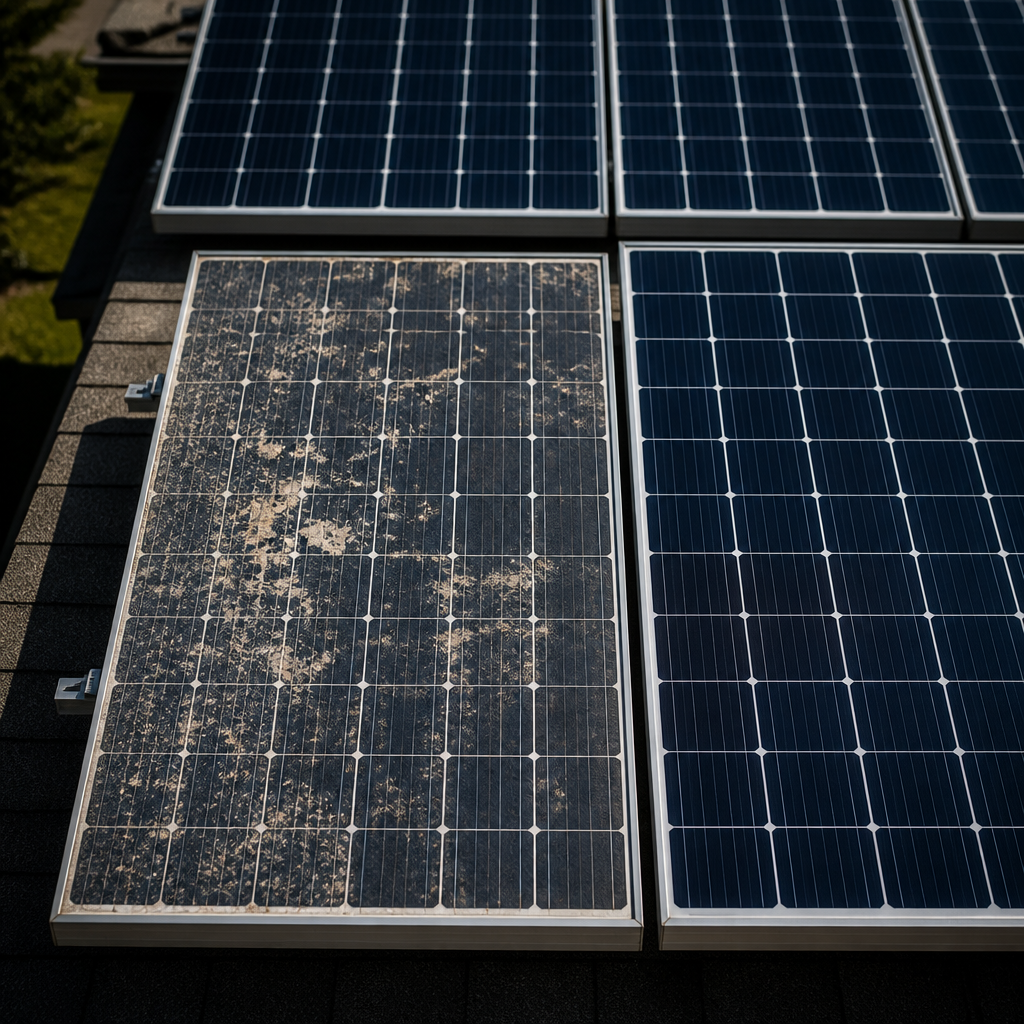
Hail, storm debris, and thermal stress can crack cells or cause delamination. A single cracked panel can often be replaced individually without touching the rest of the array. Widespread hot spot damage across many panels, however, is a sign that the array has reached the end of its serviceable life.
When Solar System Repair Is the Right Call
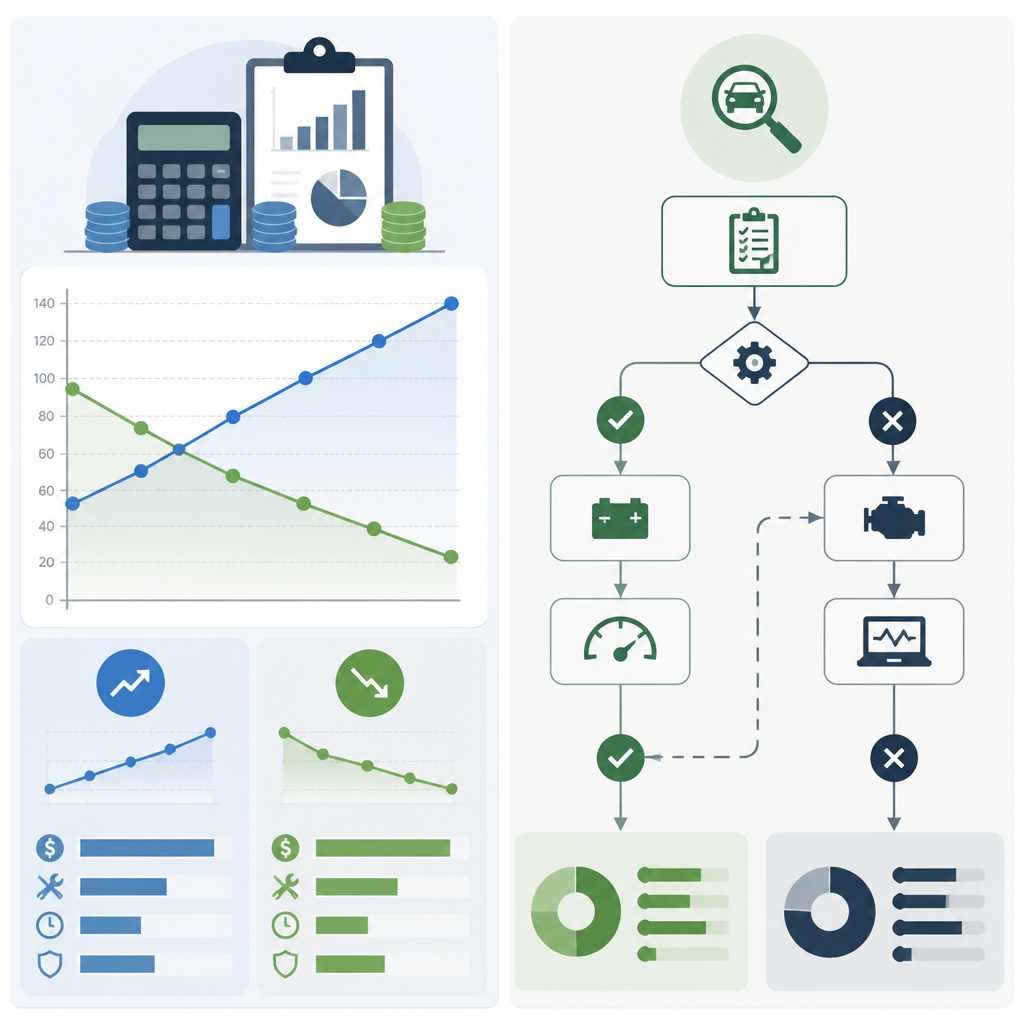
Repair wins in most situations involving a system under 15 years old with isolated component failures. The economics are straightforward: if the repair cost is less than 30 to 40 percent of what full replacement would cost, and the remaining components have meaningful life left, repair almost always pencils out.
Repair is typically the right answer when:
One or two panels are physically damaged but the rest of the array is producing normally.
The inverter or a power optimizer has failed but the panels are performing well.
A wiring fault, blown fuse, or failed DC disconnect is causing the output drop.
The system is still under manufacturer or installer warranty, which may cover parts and labor.
Monitoring data shows the issue is localized, not system-wide.
One thing that separates a quality solar repair contractor from a large national installer is honesty about when repair is sufficient. Companies like Sunrun or Vivint Solar, which are primarily sales-driven organizations, have an incentive to push replacement. A licensed local contractor whose business model is built on service, like Triple R Energy across Delaware, Maryland, New Jersey, Pennsylvania, Virginia, and Washington, D.C., has an incentive to give you the correct answer, because your repeat business and referrals depend on it.
Pro tip: Before authorizing any work, ask the contractor to pull monitoring data for the last 90 days. Production graphs reveal whether the problem is new and acute (repair candidate) or a slow multi-year decline across the whole array (replacement candidate).
When Solar Panel Replacement Makes More Sense
Replacement is not a failure. For systems 15 to 20 years old, it is often the financially correct choice, especially when you factor in the efficiency gains from modern panels and the ability to integrate battery storage.
Solar panels have improved substantially in efficiency and cost since the early 2010s. Replacing an aging, lower-efficiency array with a modern high-efficiency system can meaningfully increase your annual production from the same roof footprint. If your household energy use has also grown, due to an EV, a home addition, or new HVAC, replacement gives you the chance to right-size the system.
Signs That Point Toward Replacement
The clearest signals that replacement is the right move are: the system is producing significantly less than its rated output even after repairs, multiple panels show hot spot damage or delamination, the inverter has already been replaced once, your utility has changed its net metering structure and your current system no longer optimizes for it, or the original installation used outdated racking that is now causing roof penetration leaks.
When Replacement Doubles as an Upgrade
If you are already replacing a significant portion of the system, it is worth evaluating battery storage at the same time. Adding a battery like the LG RESU or the Enphase IQ Battery to a repaired aging system is often difficult because older inverters are not compatible with modern storage. A full replacement removes that integration problem entirely. Similarly, if your electrical panel is undersized, a replacement project is the right moment to combine the solar upgrade with a panel upgrade, rather than doing two separate projects with two separate permitting processes.
A repair that keeps a 20-year-old system limping along for another two years often costs more over that window than a replacement that produces well for another 25. The math only works in favor of repair when the system has meaningful productive life remaining.
Solar Repair Cost vs. Replacement Cost: What to Expect
Cost is the most immediate concern for most homeowners, and rightfully so. Here is what the numbers actually look like in practice, based on publicly available cost data and real project experience.
According to Angi, solar panel repair costs range from roughly $100 to $4,700, with the specific repair type driving the final number. Minor wiring repairs and fuse replacements sit at the low end. Inverter replacement and structural racking repairs push toward the higher end. Roof repairs that need to happen alongside solar work, such as resealing penetrations, add another $360 to $1,550 in typical cases.
Inverter Replacement Costs
Inverter replacement is the most common and often most expensive single repair. String inverter replacement for a typical residential system can run from roughly $1,000 to $3,000 installed. Microinverter replacement for one or two units is much cheaper per unit but can add up if multiple units are failing simultaneously across an aging array.
Panel Replacement Costs
Replacing individual panels involves both the panel cost and the labor of safely removing, rerouting, and reinstalling. A single panel swap is usually less expensive than a full replacement project, but if you need to replace four or more panels on a typical residential array, you are getting close to the territory where a full replacement quote is worth requesting for comparison.
Full System Replacement
Full replacement cost varies significantly based on system size, roof complexity, and whether battery storage is added. The important point is that full replacement may qualify for the federal Investment Tax Credit (ITC) on new equipment, which can offset a meaningful portion of the cost. Your solar repair contractor should confirm what is and is not eligible before you make the decision.
Repair vs. Replacement: Side-by-Side Comparison
The table below compares the three most common decision scenarios homeowners in the Mid-Atlantic region face, from a pure repair to a targeted component swap to a full system replacement.
Scenario | Typical Cost Range | Best For |
|---|---|---|
Targeted solar system repair (wiring, optimizer, single panel) | $100 to $1,500 | Systems under 15 years old with a single isolated failure and strong monitoring data |
Major component replacement (inverter, multiple panels) | $1,000 to $4,700 | Mid-age systems (10 to 18 years) where panels are healthy but key components have failed |
Full solar panel replacement and system redesign | Varies significantly by system size; ITC may apply | Systems 15 or more years old, widespread panel degradation, or homeowners adding battery storage or EV charging |
What a Proper Diagnostic Looks Like
The single biggest mistake homeowners make is authorizing repair or replacement work before a proper diagnostic has been completed. A good solar system diagnostic is not a technician glancing at the roof and quoting a new inverter. It is a structured process.
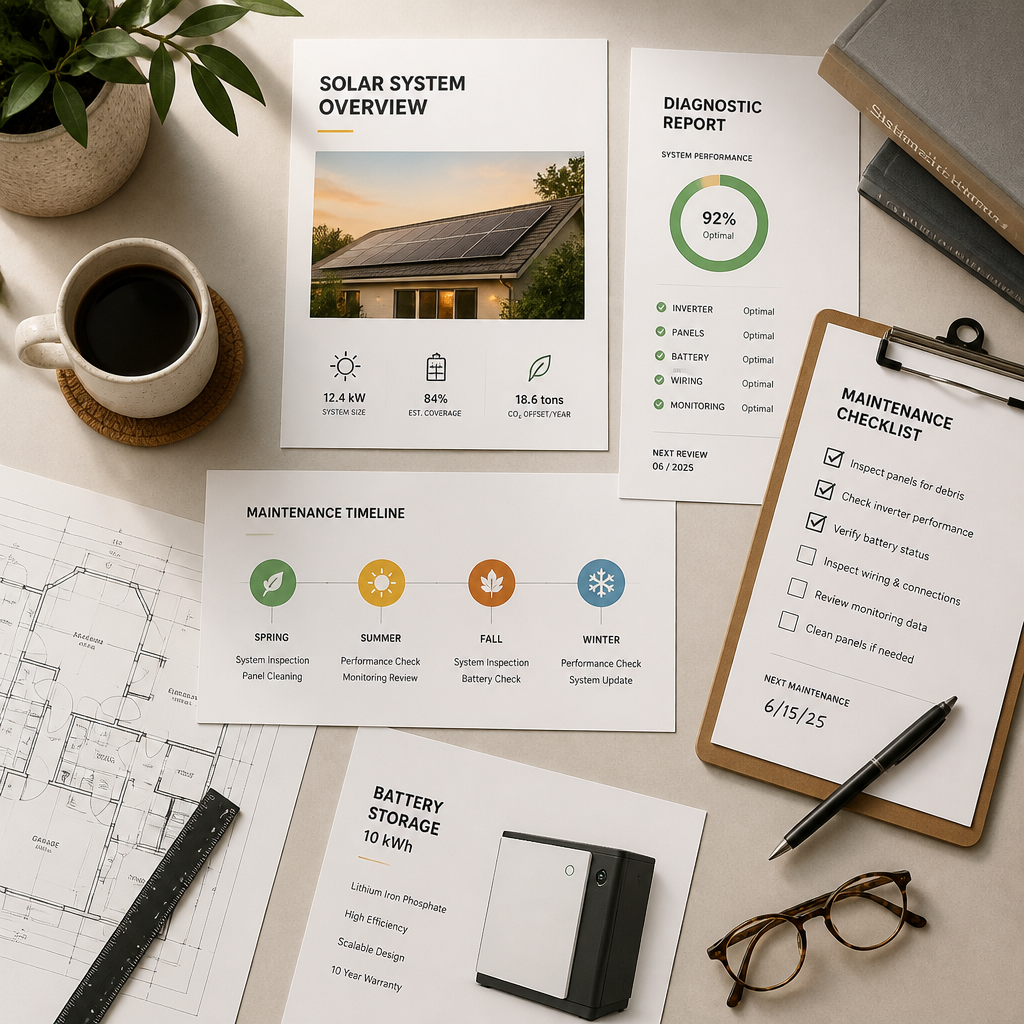
A proper diagnostic for a residential solar system should include a review of monitoring data (production history, not just a spot reading), a visual inspection of panels for physical damage, an electrical test of strings and individual circuits, an inspection of the inverter or microinverter communications, and a check of wiring, connectors, and junction boxes. The U.S. Department of Energy's guidance on operating and maintaining photovoltaic systems emphasizes following best practices for pre-repair inspection to ensure safe and efficient system performance.
What Monitoring Data Tells You That a Visual Inspection Cannot
Monitoring data shows you when the performance drop started, whether it is isolated to specific strings, and whether it correlates with shading, weather events, or equipment changes. A sudden drop in one string points to a wiring or inverter issue. A gradual decline across all strings over two or three years points to panel degradation. Those two situations lead to completely different recommendations.
Pro tip: If your solar system does not have active monitoring, or if access to the monitoring portal was lost when you changed internet providers or the original installer went out of business, get monitoring restored as the first step. You cannot accurately diagnose a system you cannot read. Triple R Energy can assess monitoring gaps as part of a full system diagnostic for homeowners across the Mid-Atlantic.
Red Flags in a Contractor's Diagnostic Process
Be skeptical of any contractor who recommends full replacement without pulling monitoring data or performing electrical tests. Be equally skeptical of one who quotes a repair without inspecting the entire system, because a failed component often indicates stress on adjacent components. A repair-only quote without a system-wide review can result in repeat service calls within months.
Battery Storage and EV Chargers: How They Change the Equation
Many homeowners in Delaware, Maryland, New Jersey, Pennsylvania, Virginia, and Washington, D.C. are now evaluating battery storage and EV charger installation alongside their solar decisions. This changes the repair-versus-replace math in important ways.
If you are planning to add a battery storage system, the compatibility of your existing solar inverter matters enormously. Many older string inverters are not compatible with modern battery systems without an additional AC-coupled inverter, which adds cost and complexity. In that situation, replacing the inverter as part of a battery storage project, rather than repairing the old one, may actually cost less overall when you account for the avoided compatibility hardware.
EV Chargers and Electrical Panel Upgrades
Adding a Level 2 EV charger to a home with an already-loaded electrical panel almost always requires a panel upgrade. If your solar system needs significant work at the same time, it is worth having a licensed electrical contractor evaluate all three projects together: solar repair or replacement, battery storage, and the EV charger and panel upgrade. Doing them in sequence with different contractors usually costs more than scoping them as a single integrated project. This is precisely the kind of work Triple R Energy handles as a licensed electrical contractor and solar service specialist, rather than a sales-focused national operator.
Pro tip: If your electrical panel is under 200 amps and you are adding an EV charger, budget for a service upgrade. A solar repair or replacement project is a natural time to address panel capacity before it becomes the constraint on your home's energy future.
Frequently Asked Questions
How do I know if my solar system needs repair or replacement?
Start with your monitoring data. A sudden production drop that correlates with a specific event (storm, error code on the inverter) points toward a repair. A gradual multi-year decline across the whole array, especially in a system over 15 years old, points toward replacement. A licensed solar contractor can perform a diagnostic that distinguishes between the two with electrical testing and a visual inspection.
What is the average solar repair cost for a residential system?
According to Angi, solar panel repair costs range from roughly $100 for minor fixes to around $4,700 for complex repairs involving inverter replacement and roof work combined. Inverter replacement is consistently the most expensive single repair in residential solar systems.
Can individual solar panels be replaced without replacing the whole system?
Yes, in most cases. A single damaged or underperforming panel can be swapped out without disturbing the rest of the array. The main considerations are whether a matching panel is available (older or discontinued models can be difficult to source) and whether the replacement panel's electrical specifications are compatible with the existing string configuration.
Does solar panel replacement qualify for the federal tax credit?
New solar equipment installed as part of a full system replacement may qualify for the federal Investment Tax Credit. Simple repairs to existing equipment generally do not. The rules depend on what is being replaced and the scope of the project. You should confirm eligibility with both your solar contractor and a tax professional before making your decision based on credit expectations.
How long does a solar system repair typically take?
Most common repairs, including inverter swaps, single panel replacements, and wiring faults, are completed in a single visit or within a few days if parts need to be ordered. More complex repairs involving structural racking, roof penetration resealing, or multiple components can take longer, especially if permits are required. In the Mid-Atlantic states, permit timelines vary by jurisdiction, and your contractor should be familiar with local requirements.
Should I repair my solar system before selling my home?
A non-functioning or significantly underperforming solar system is a liability in a home sale, not an asset. Buyers and their inspectors will flag it. A repair that brings the system back to verified production levels is almost always worth doing before listing. Full replacement before a sale is harder to justify financially unless the system is truly at end of life, because you rarely recover the full replacement cost in the sale price.
If you have been through a solar repair or replacement decision yourself, share what factors mattered most in your situation. Your experience could help another homeowner in the Mid-Atlantic make a better call.
We would love your feedback and any insights you would share with others. What perspective would you add?
References
Angi's breakdown of residential solar panel repair costs by component and project type
SolarMedix overview of when solar repair versus full replacement is the better choice
Residential solar panel repair vs. replacement cost comparison guide
U.S. Department of Energy guidance on operating and maintaining existing photovoltaic systems