Homeowners often ask about a 200-amp upgrade after repeated breaker trips, when planning a Level 2 EV charger, or when considering battery storage, solar equipment, a heat pump, or another major electrical load.
A 100-amp service does not automatically require a 200-amp upgrade. The right answer depends on a load calculation, the condition and configuration of the existing service, the equipment being added, and the requirements of the local authority having jurisdiction (AHJ) and utility.
Triple R Energy provides residential electrical service upgrades, EV-charger work, battery-related electrical services, and solar service throughout Delaware, Maryland, New Jersey, Pennsylvania, Virginia, and Washington, D.C., subject to project scope, local requirements, and appointment availability.
Table of Contents
- What Is a 200-Amp Panel Upgrade?
- Quick Takeaways
- Five Clear Signs You Need an Electrical Panel Upgrade
- What a 200-Amp Upgrade Actually Costs
- EV Chargers, Solar, and Battery Storage: The Upgrade Triggers
- 100-Amp vs. 200-Amp vs. 400-Amp Service
- Permits, Inspections, and Licensed Electrician Requirements
- Frequently Asked Questions
- References
What Is a 200-Amp Panel Upgrade?
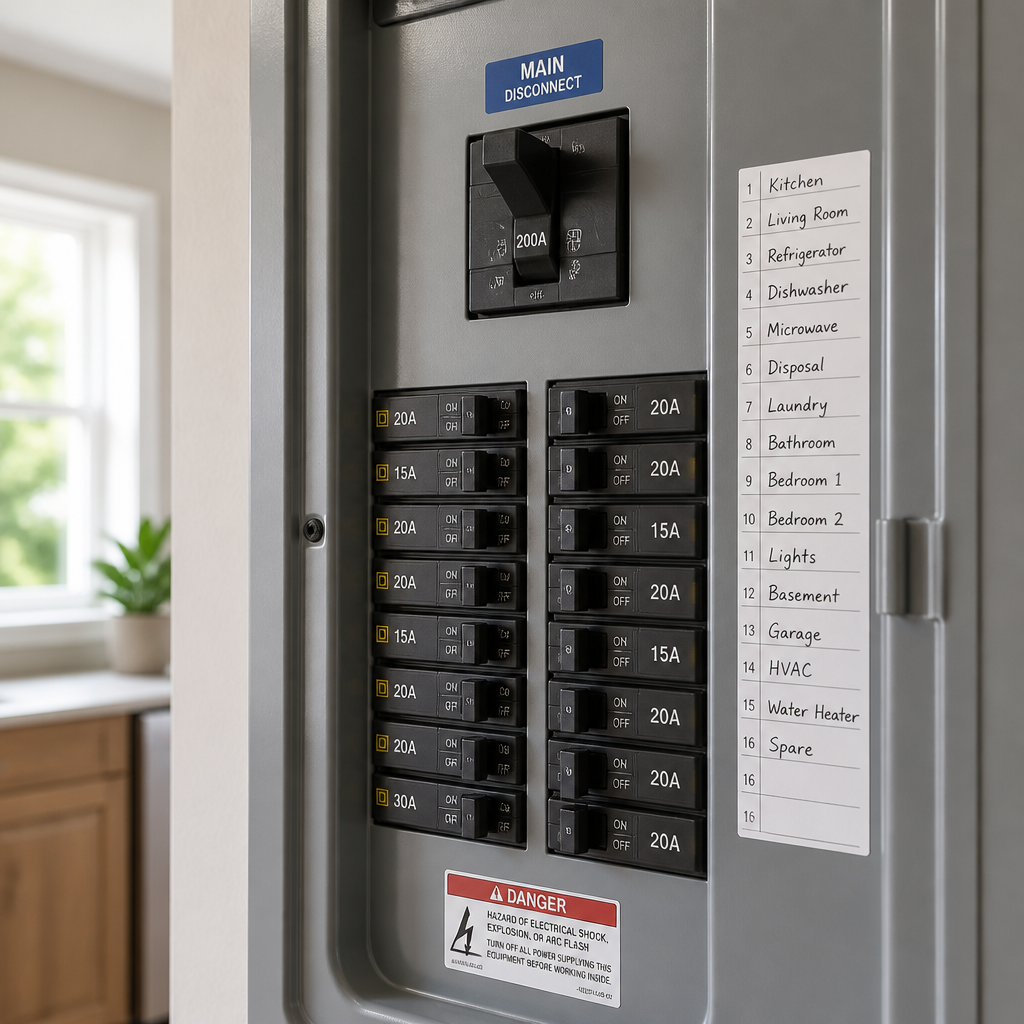
A 200-amp service upgrade increases the electrical capacity of a home from 100 amps to 200 amps. Depending on the existing installation and local requirements, the work may include:
Replacing the main electrical panel
Upgrading the meter socket
Replacing or upgrading service-entrance conductors
Updating grounding and bonding components
Coordinating a utility disconnect and reconnection
Obtaining permits and arranging required inspections
The exact scope varies by property. Installing a 200-amp-rated interior panel does not, by itself, convert a 100-amp service into a 200-amp service. The meter equipment and conductors must also be suitable for the new service rating.
The number of breaker spaces also varies by panel model. A 200-amp panel is not automatically better because it has a particular number of spaces, and a panel with no open spaces does not automatically require a service upgrade. A load review and equipment assessment should come first.
Quick Takeaways
Key Insight | Explanation |
|---|---|
200 amps is the modern baseline | Most homes built after the mid-1990s have 200-amp service. Older homes with 60- or 100-amp panels are frequently undersized for today's electrical loads. |
Level 2 EV chargers are the single most common upgrade trigger | A standard Level 2 charger needs a dedicated 240-volt circuit drawing 40 to 60 amps. On a fully loaded 100-amp panel, that circuit simply cannot be added safely. |
The meter socket and service entrance must match the panel | Installing a 200-amp panel but leaving a 100-amp meter socket limits you to 100 amps. The upgrade must cover the full service, not just the interior panel. |
Permits are non-negotiable in Delaware, Maryland, Pennsylvania, and Virginia | Unpermitted panel work can void your homeowner's insurance and result in fines. A licensed electrician handles permitting as part of the job. |
Cost ranges from roughly $1,300 to $3,000 for most 100-to-200-amp upgrades | Complexity, meter socket condition, and whether drywall repairs are needed all affect the final price. Budget separately for permits and utility coordination fees. |
Resale value improves with an upgraded panel | Buyers and home inspectors flag undersized or outdated panels. A 200-amp service signals that the home can support modern appliances, EV charging, and future additions. |
Battery storage and solar almost always require a load calculation first | Adding a battery backup system or solar inverter to a 100-amp panel frequently requires a service upgrade before installation can proceed legally and safely. |
Five Clear Signs You Need an Electrical Panel Upgrade
Not every home with a 100-amp panel needs to upgrade immediately. But there are specific, observable warning signs that mean you have moved past "maybe someday" into "this needs to happen before something fails." If you are seeing any of these, do not wait for a more dramatic event to force the issue.
Breakers Trip Regularly Under Normal Use
If running the dishwasher, a window AC unit, and the microwave at the same time causes a breaker to trip, your panel is operating near its capacity. A breaker that trips is doing its job, but a panel that forces you to manage your appliance use to avoid outages is telling you it has no margin left. Adding anything new, an EV charger, a heat pump, a home office circuit, will push it past the limit.
You Have a Fuse Box or a Panel Older Than 25 to 30 Years
Fuse panels and very old breaker panels from certain manufacturers have been flagged for safety issues by insurance companies and home inspectors across Maryland, Pennsylvania, and neighboring states. Even if yours is still functioning, insurers may surcharge your policy or decline to renew it. Replacing an aging panel with a modern 200-amp system resolves both the safety concern and the insurance friction.
Your Panel Has No Open Slots
A common mistake is installing tandem breakers (two breakers sharing one slot) to squeeze in additional circuits. This is a short-term workaround, not a solution. If your panel has no open slots and you need a dedicated circuit for an EV charger, a battery system, or any other major load, a service upgrade is the right answer, not another tandem breaker.
Lights Dim or Flicker When Large Appliances Start
Visible voltage fluctuation when a motor-driven appliance starts, like an air conditioner compressor, a well pump, or a refrigerator, indicates the panel is struggling to supply the momentary surge. This kind of stress, repeated over years, shortens the life of sensitive electronics and can damage appliances.
You Are Planning a Major Electrical Addition
An EV charger, a battery storage system, a heat pump water heater, central air conditioning, or a home addition all require dedicated capacity. If your load calculation (which any competent licensed electrician will do before pulling a permit) shows your current service is within 20 percent of its maximum, you need to upgrade before adding any of these loads.

What a 200-Amp Upgrade Actually Costs
Homeowners searching for panel upgrade costs online find a wide range of numbers, and the confusion is understandable. The real cost depends on what "upgrade" actually includes in your specific situation. Here is how to think about it clearly.
The Core Labor and Materials Cost
For a straightforward upgrade from a 100-amp to a 200-amp panel in a home where the meter socket and service entrance wiring can also be upgraded without major structural complications, most homeowners in the Mid-Atlantic region pay somewhere in the range of $1,300 to $3,000 total. This figure covers the new panel, breakers, service entrance conductors, meter socket if needed, labor, and typically the permit fee.
Larger 400-amp upgrades for all-electric homes or homes with significant added load, like a detached garage, a workshop, or multiple EV chargers, run higher. The job also costs more if the panel is in a finished basement or utility room that requires opening walls to run new conduit, or if the existing wiring is in poor condition and needs remediation alongside the upgrade.
Hidden Costs That Catch Homeowners Off Guard
Permits are required in virtually every Mid-Atlantic jurisdiction and are not optional. Beyond the permit, your utility company may charge a fee to disconnect and reconnect the meter. If the service entrance runs through conduit that is damaged, corroded, or undersized, that conduit needs to be replaced as part of the job. And if your panel is in a finished space, some drywall repair may be needed after the new service entrance is run. A thorough estimate from a licensed electrician will itemize all of these. An estimate that skips them is not a good deal. It is an incomplete scope of work.
A panel upgrade is not just about the box on the wall. It is about the entire path electricity takes from the street into your home. Addressing only part of that path leaves the other part as the weak link.
When the Upgrade Pays for Itself
The return on a 200-amp service upgrade is not purely in monthly energy savings. It comes from what you can now install. An EV charger that saves you from paying commercial charging rates. A battery storage system that protects against outages and, depending on your utility, allows you to store cheap off-peak power. A solar system that requires a properly sized interconnection point. If any of those additions are in your near-term plans, the cost of the service upgrade is a prerequisite investment, not a standalone expense.
Pro tip: Always ask your electrician for a load calculation before signing any contract. If they quote you a 200-amp upgrade without checking your current load, that is a red flag. The load calculation determines whether 200 amps is the right size or whether your situation calls for a larger service.
EV Chargers, Solar, and Battery Storage: The Upgrade Triggers
EV Chargers
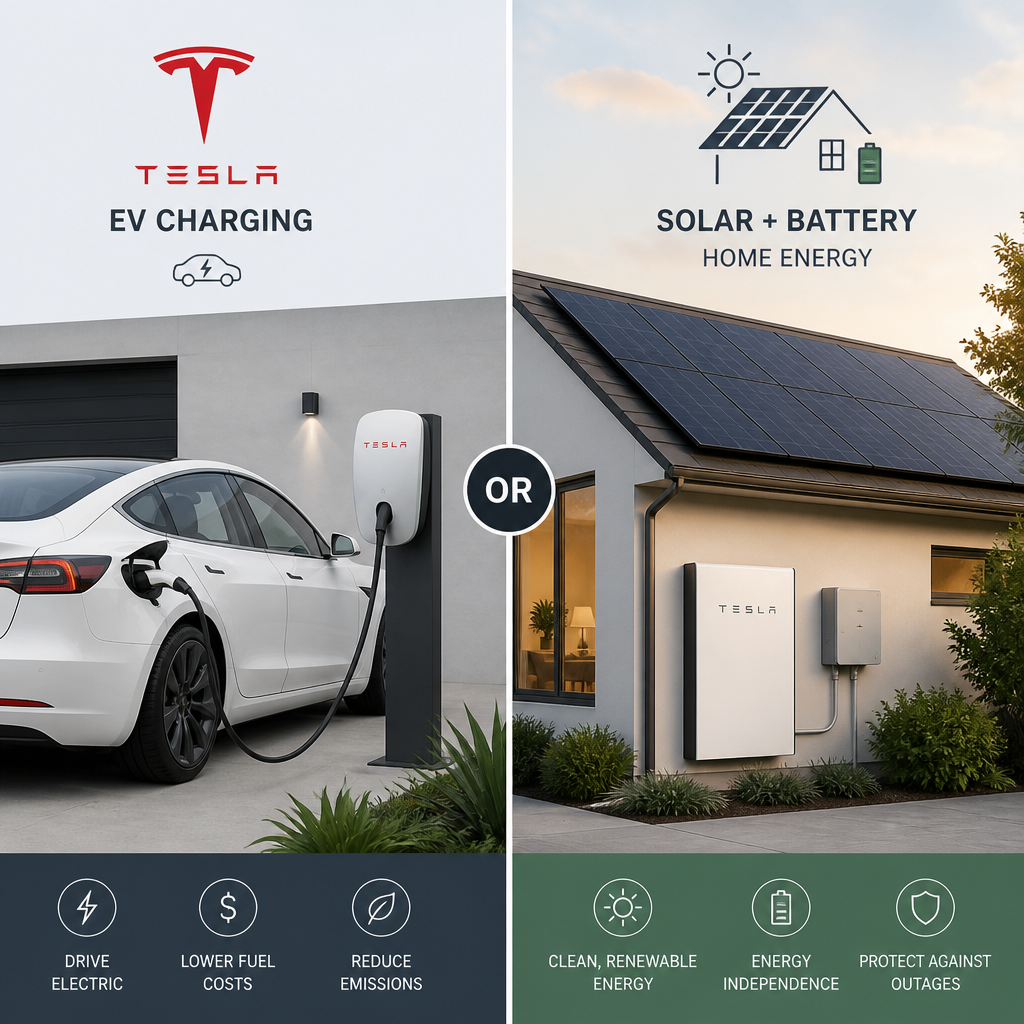
Many Level 2 home chargers use a 240-volt circuit, but the required circuit size and operating current depend on the charger, its configured output, the vehicle, installation method, and local requirements.
A 100-amp service may support an EV charger in some homes and may not support it in others. The answer depends on the calculated load, existing appliances, charging settings, and the installation conditions. Possible approaches can include:
Installing the charger after confirming available capacity
Configuring a lower charging current when permitted by the equipment
Using an approved load-management or energy-management system
Using circuit-sharing equipment where allowed and appropriate
Adding a subpanel where suitable
Upgrading the electrical service
These options are not interchangeable for every home. The charger manufacturer's requirements, the electrical design, and local rules must be reviewed before installation.
Solar and Battery Storage
Solar inverters, batteries, backup equipment, transfer equipment, and associated disconnects must be designed for the specific electrical system. Some projects can use an existing service; others require a panel change, service upgrade, load management, or a different backup configuration.
Utility interconnection and inspection requirements also vary. A solar or battery project should be reviewed together with the home's existing service, planned loads, equipment ratings, and utility requirements. A 100-amp service should not be approved or rejected based only on the service label.
100-Amp vs. 200-Amp vs. 400-Amp Service
Service size | May be appropriate for | Important limitation |
|---|---|---|
100 amps | Homes with a lower calculated demand and limited electric equipment | May have less capacity for new high-demand equipment; a load evaluation is required before additions. |
200 amps | Many single-family homes and homes with planned modern electrical loads | May still be insufficient for a large all-electric home, multiple EV chargers, or substantial outbuilding loads. |
400 amps | Properties with unusually high calculated demand or multiple major loads | Higher project cost and more utility coordination; not necessary for most homes. |
Square footage can be one factor in an electrical design, but it is not a substitute for a load calculation. The same service size may be appropriate for two homes of different sizes, while similar-sized homes may need different service capacities because their appliances and heating systems differ.
Permits, Inspections, and Licensed Electrician Requirements
Permit and inspection requirements vary by state and local jurisdiction. Utility procedures may also apply when the service rating, meter equipment, or service entrance changes. Confirm the applicable requirements with the local AHJ and utility before work begins.
For example, Delaware law generally requires electrical work to receive a certificate of inspection unless an exemption applies. The specific process still depends on the project and the applicable inspection agency. Delaware electrical inspection statute
When comparing contractors, ask for:
A written scope of work
The proposed service size and reason for it
The load-calculation approach
Permit and inspection responsibilities
Utility-disconnect and reconnection responsibilities
A list of exclusions and possible additional costs
Proof of applicable licensing and insurance for the project location
Triple R Energy can review residential service-upgrade and EV-charger requirements and explain the available project options. Permit management, utility coordination, engineering, and inspection services should be confirmed as part of the written scope for each project.
Frequently Asked Questions
How long does a 200-amp panel upgrade take?
Most straightforward 100-to-200-amp service upgrades take between four and eight hours of work. You will be without power for the duration of the installation. The permit and utility scheduling process before the job begins can add days to the overall timeline, which is why starting that process early matters. Plan around the outage and arrange for any work-from-home needs in advance.
Do I need a panel upgrade before installing a Level 2 EV charger?
Not always. If you already have a 200-amp panel with available capacity and open breaker slots, a Level 2 charger can often be added without a panel upgrade. The charger needs a dedicated 240-volt circuit drawing 40 to 60 amps. The question is whether your existing service can support that circuit without pushing the overall load past safe limits. A load calculation before installation answers that question definitively. If you have a 100-amp panel that is already heavily loaded, a service upgrade is almost certainly required first.
Will a 200-amp panel upgrade increase my home's resale value?
Yes, in practical terms. Buyers and their home inspectors consistently flag undersized or aging panels as deficiencies. An updated 200-amp service signals that the home can support modern appliances, EV charging, and future additions without immediate electrical work. It removes a negotiating chip from a buyer's hand. Whether that translates to a precise dollar amount depends on your market, but it eliminates a liability rather than just adding an asset.
Can I add a battery storage system to a 100-amp panel?
In many cases, no, at least not a whole-home backup system. Battery storage systems and their associated inverters and transfer switches require dedicated circuit connections. If your 100-amp panel is already near capacity with no available slots, there is no safe or code-compliant way to connect a battery system without first upgrading the service. Some smaller, limited-backup battery systems may be installable in specific configurations, but that is a conversation to have with a licensed electrician who can review your actual panel and load data, not a general rule.
What is the difference between a panel upgrade and a panel replacement?
A panel replacement swaps out the existing panel for a new one of the same amperage, typically to address a faulty, recalled, or aging panel. A panel upgrade replaces the panel and increases the service amperage, usually from 100 amps to 200 amps, and includes upgrading the service entrance conductors and meter socket to match. A service upgrade is a more involved job because it changes the capacity of the entire electrical service into the home, not just the interior panel hardware.
Is it worth upgrading to 400 amps instead of 200 amps?
For most single-family homes in the Mid-Atlantic, 200 amps is the right answer. A 400-amp service makes sense if you are running multiple EV chargers simultaneously, have a large all-electric home with significant workshop or outbuilding loads, or are installing a large solar-plus-battery system on a property with high existing demand. The cost premium for 400-amp service is real, and so is the utility coordination complexity. Do a load calculation first. If 200 amps gets you comfortably through your planned additions with room to spare, stop there.
If you have gone through a panel upgrade in the Mid-Atlantic region or are currently weighing whether your home's service needs an upgrade before adding an EV charger or battery system, share what questions came up in your process. Your experience might be exactly what another homeowner needs to read.
We would love your feedback and any insights you would share with others. What perspective would you add?
References
This Old House: Electrical panel upgrade cost breakdown and what drives pricing
EnergySage: How to determine if your panel can handle an EV charger
Home Depot: 100-amp vs. 200-amp panel comparison including NEC wiring specs
Angi: Cost factors for upgrading to a 200-amp electrical service
M.T. Ruhl: Permit requirements and costs for electrical panel upgrades in the Mid-Atlantic