If you just bought an electric vehicle in Pennsylvania and you're staring at your garage wall wondering what comes next, you're not alone. EV charger installation in Pennsylvania involves more than buying a unit off a shelf and plugging it in. You need the right circuit, the right permit, and in many cases a panel upgrade before you ever charge your first kilowatt-hour at home. The good news is that the process is well-defined once you know the steps. This guide covers exactly what Pennsylvania homeowners face: permit requirements, realistic costs, what a licensed electrician actually does during installation, and how to avoid the mistakes that delay projects by weeks.
Table of Contents
- Quick Takeaways
- Why Permits Matter in Pennsylvania
- Level 1 vs. Level 2: Which Charger Do You Actually Need
- EV Charger Installation Costs in Pennsylvania
- Electrical Panel and Service Upgrade Requirements
- The Permit Process for Philadelphia and Beyond
- Charger Type Comparison
- Incentives and Rebates Available to Pennsylvania Homeowners
- What to Expect on Installation Day
- Frequently Asked Questions
- References
Quick Takeaways
Key Insight | Explanation |
|---|---|
A permit is required in Pennsylvania for Level 2 charger installations | Any new dedicated circuit work requires an electrical permit from your local municipality. Skipping this creates liability and can void your homeowner's insurance coverage. |
Level 2 chargers require a dedicated 240V circuit | You cannot share this circuit with other appliances. The National Electrical Code (NEC) requires it to be dedicated, and Pennsylvania follows NEC standards. |
Panel upgrades are common for older Pennsylvania homes | Homes built before the 1980s frequently have 100-amp or smaller panels that cannot safely support a 40-50 amp EV charger circuit without an upgrade. |
Installation costs vary significantly by location and panel condition | A straightforward Level 2 install in a modern home runs roughly $400 to $900 in labor. Panel upgrades can add $1,500 to $4,000 or more to that figure. |
Philadelphia has its own permitting process through the Department of Licenses and Inspections | The City of Philadelphia L&I issues EV charger electrical permits separately from surrounding municipalities. Processing times and fees differ from suburban PA townships. |
The federal EV charger tax credit can offset installation costs | The Alternative Fuel Vehicle Refueling Property Credit (Section 30C) covers up to 30% of equipment and installation costs, subject to IRS income and location requirements. |
Outdoor installations require weatherproof-rated equipment and conduit | Pennsylvania's freeze-thaw cycles and humidity mean outdoor charger installations must use listed weatherproof enclosures and appropriate wiring methods per NEC code. |
Why Permits Matter in Pennsylvania
Every licensed electrician working in Pennsylvania will tell you the same thing: pull the permit, get the inspection, and document everything. This is not bureaucratic caution. It is practical protection for you as a homeowner.
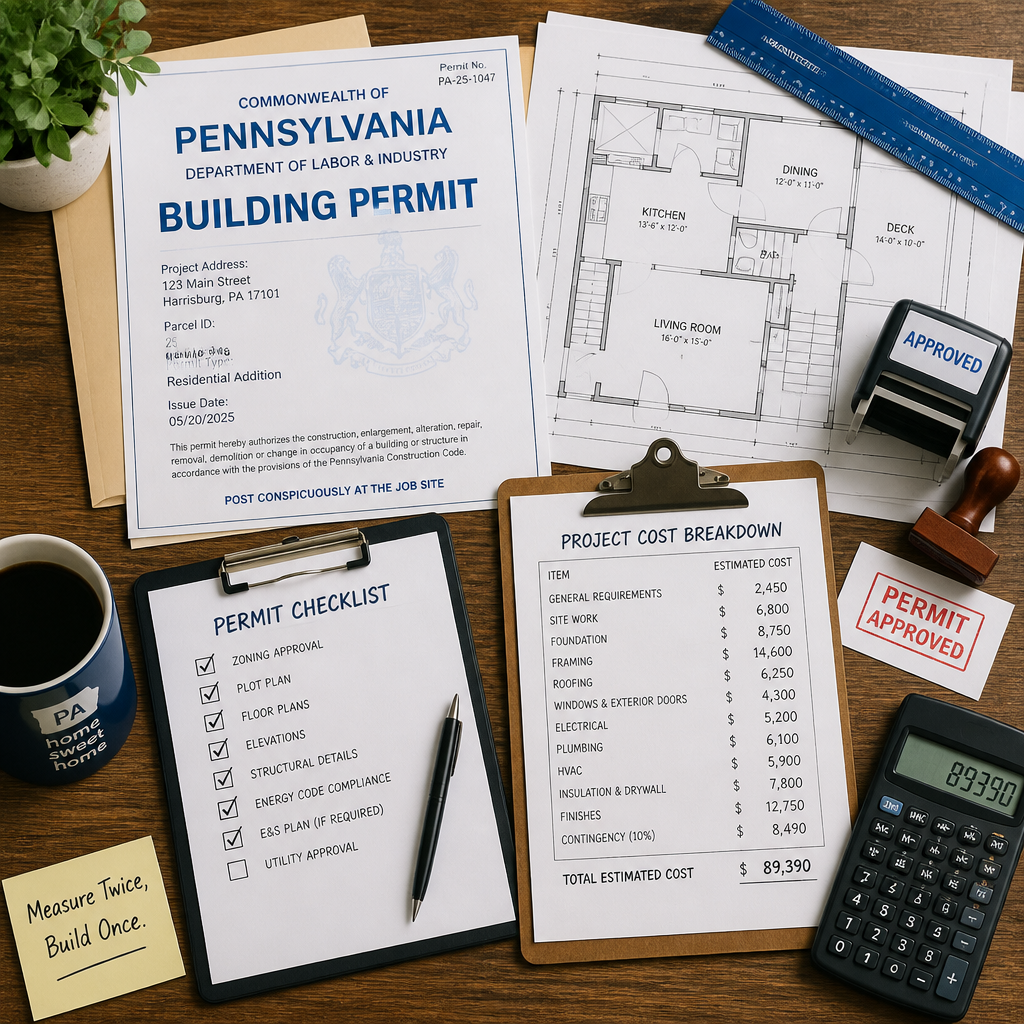
A permit ensures a municipal inspector reviews the work before the wall is closed and before you start drawing 40 or 50 amps through new wiring every night. If something is wired incorrectly and a fire results, an insurance company will look for the permit. If there is no permit on file, your claim is at serious risk. Beyond insurance, an unpermitted electrical installation can complicate a home sale. Buyers' attorneys flag open permits and unpermitted work routinely in Pennsylvania real estate transactions.
In practice, the permit for a standard Level 2 EV charger installation is not complicated to obtain. Your licensed electrician handles the application. The cost for an electrical permit at the municipal level in most Pennsylvania townships and boroughs is modest, often ranging from around $50 to $150 depending on the jurisdiction and scope of work. Philadelphia, as a first-class city, has its own permitting structure through the Department of Licenses and Inspections, with different fee schedules and inspection workflows than suburban townships in Montgomery County, Chester County, or Delaware County.
Pro tip: Always ask your electrician to confirm they have pulled the permit before installation begins, not after. Some contractors obtain the permit retroactively, which creates a gap in documentation and can mean the inspector cannot verify rough-in work that is already inside the wall.
Level 1 vs. Level 2: Which Charger Do You Actually Need
Most Pennsylvania homeowners who are serious about daily EV use need a Level 2 charger. The case for Level 1 is narrow and specific.
Level 1 Charging: When It Makes Sense
Level 1 charging uses a standard 120V household outlet and adds roughly 3 to 5 miles of range per hour. If you drive fewer than 30 to 40 miles daily and your vehicle sits plugged in for 10 or more hours overnight, Level 1 can technically keep pace. No new circuit is required, and in most cases no permit is triggered if you are using an existing outlet. For a plug-in hybrid with a small battery, this is often perfectly adequate.
For a long-range battery-electric vehicle like a standard Tesla Model 3, a Chevy Equinox EV, or a Ford F-150 Lightning, Level 1 will not realistically restore a depleted battery overnight in normal use. You will constantly be chasing range.
Level 2 Charging: The Right Choice for Most Homes
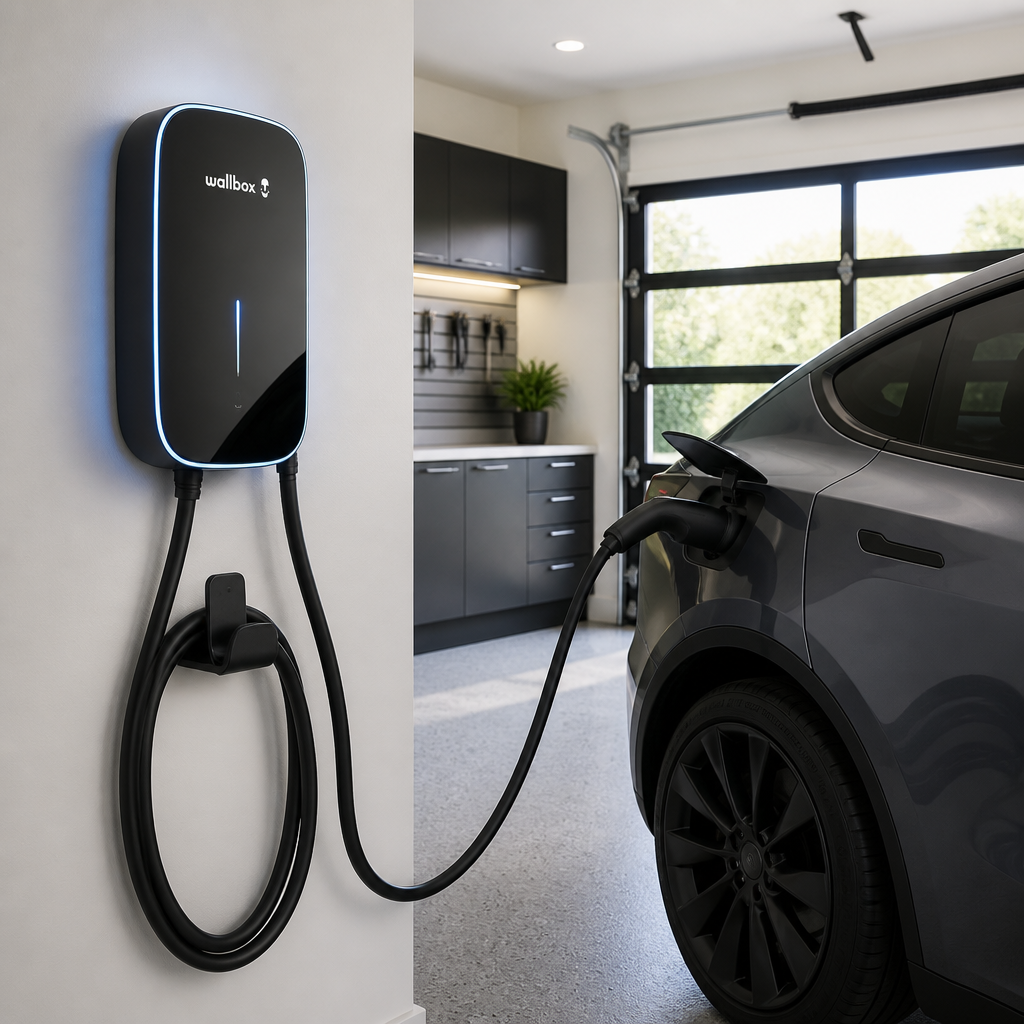
Level 2 chargers operate on 240V and deliver between 16 and 50 miles of range per hour depending on the charger's output and the vehicle's onboard charger capacity. Most Level 2 home chargers are rated at 32 to 48 amps. A 48-amp charger on a 60-amp dedicated circuit can add well over 200 miles overnight for most vehicles. This is what makes an EV practical for households in the Mid-Atlantic, where commutes, errands, and weekend trips vary.
Level 2 installation requires a licensed electrician, a dedicated 240V circuit, a proper breaker sized to the charger, and a permit in Pennsylvania. The charger itself must be a listed product, meaning it carries a UL or equivalent listing, and it must be installed per the manufacturer's instructions and NEC Article 625, which governs EV charging equipment.
Pro tip: Size your circuit for the future, not just for today's charger. If your panel can support it, installing a 60-amp circuit for a 48-amp charger costs only marginally more than a 40-amp circuit, and it gives you flexibility if you add a second EV or upgrade to a higher-output charger later.
EV Charger Installation Costs in Pennsylvania
Cost is where the widest variation exists, and it comes down almost entirely to the condition of your existing electrical infrastructure.
What Drives the Cost Range
A homeowner with a modern 200-amp panel, an attached garage directly adjacent to the electrical panel, and short wire runs will pay significantly less than a homeowner with a 100-amp panel, a detached garage 60 feet from the house, and wiring that needs to be run through finished walls. Both situations are common in Pennsylvania's varied housing stock, which spans everything from century-old rowhouses in Philadelphia and Allentown to 1990s suburban colonials in Bucks County and newer construction in the outer suburbs.
As a general range based on market conditions across the Mid-Atlantic region, expect the following:
Basic Level 2 installation, modern panel, short run, attached garage: roughly $400 to $900 in labor, plus the cost of the charger unit itself (commonly $300 to $700 for quality residential units).
Installation with a longer conduit run, finished walls to navigate, or an outdoor mount: add $200 to $600 to the labor estimate.
Installation requiring an electrical panel upgrade (100-amp to 200-amp service): add $1,500 to $4,000 depending on utility coordination requirements and whether a meter upgrade is needed.
Permit Fees and Inspection Costs
Permit fees in Pennsylvania municipalities are generally modest for residential electrical work. Most suburban township permits for an EV charger circuit run between $50 and $150. Philadelphia's L&I fee schedule is structured differently and can be higher. Your electrician's quote should include permit costs. If it does not, ask explicitly before signing.
The single biggest variable in a Pennsylvania EV charger installation is not the charger itself. It is the condition and capacity of the home's existing electrical service. Get that assessed first.
Electrical Panel and Service Upgrade Requirements
This is the section most homeowners underestimate, and it is where the real cost surprises happen.
When a Panel Upgrade Is Required
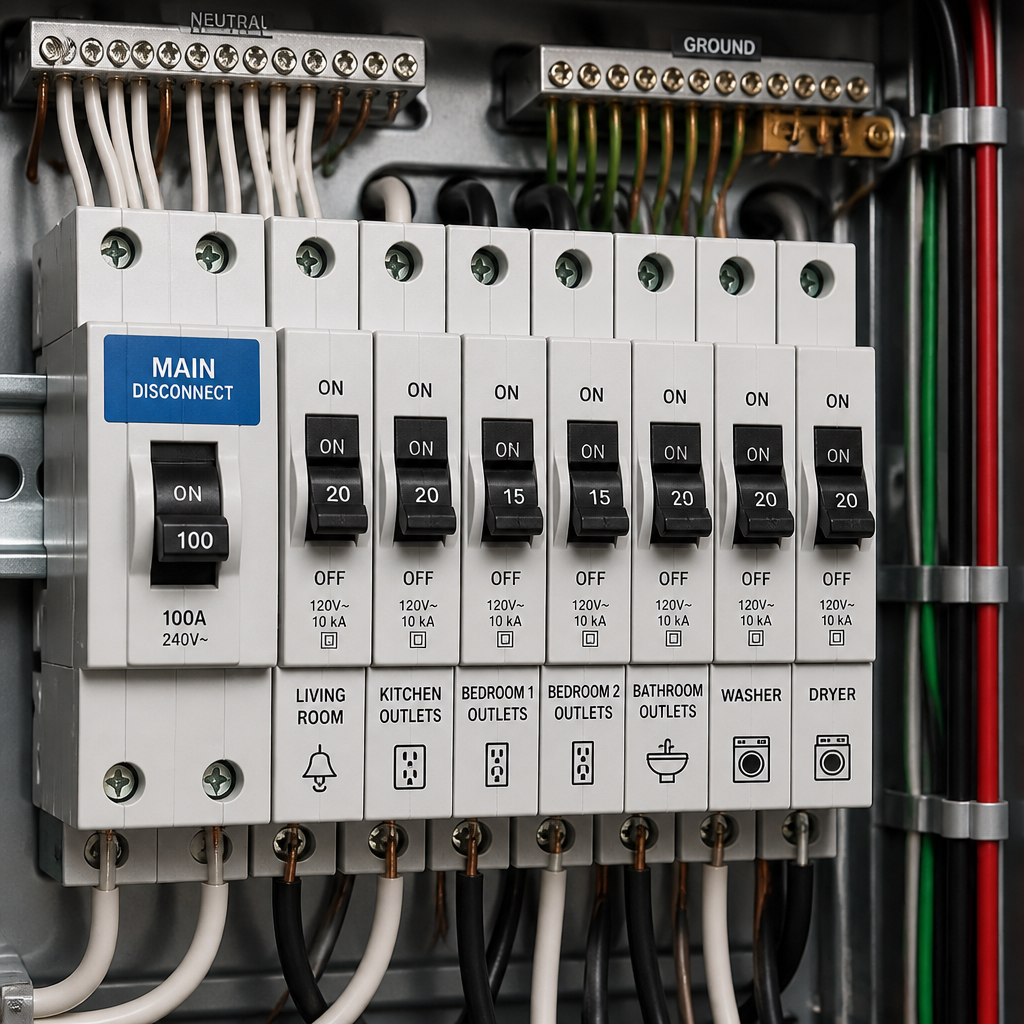
Pennsylvania has an enormous number of homes built between the 1940s and 1970s. Many of those homes were originally wired with 60-amp or 100-amp service. Adding a 40-amp or 48-amp dedicated circuit for an EV charger to a 100-amp panel that is already serving a water heater, an HVAC system, a clothes dryer, and a kitchen is not a simple calculation. In many cases it is not possible without an upgrade.
A 200-amp service upgrade gives you the headroom to add an EV charger circuit comfortably and still support other existing loads. In some cases, where a panel upgrade is not immediately practical, a load management system can allow the charger to share capacity with other circuits by automatically reducing charging speed when other large loads are active. This is a legitimate middle-ground solution for some homes, though it adds complexity and cost.
Working With Pennsylvania Utilities
If your service upgrade requires a new meter socket or utility coordination, your electrician works with your utility company, such as PECO in southeastern Pennsylvania or PPL Electric in central and eastern Pennsylvania, to coordinate the service upgrade. This can add time to the project. Utility scheduling timelines vary and can sometimes push a project out by several weeks, especially during busy seasons. Plan accordingly and do not expect an EV charger installation requiring utility coordination to be completed in a single week.
The Permit Process for Philadelphia and Beyond
Philadelphia homeowners deal with the City of Philadelphia Department of Licenses and Inspections for electrical permits. The City of Philadelphia has an EV charger permit standard (document reference PB_020_F) that outlines requirements for residential EV charger electrical installations. Work must be performed by a licensed electrical contractor, and the installation is subject to inspection before the circuit is energized for regular use.
Suburban Pennsylvania Municipalities
Outside Philadelphia, the permit process runs through individual municipalities, townships, and boroughs. Pennsylvania has hundreds of them, and the process varies in detail though not in substance. Your electrical contractor applies for a permit with the local building or zoning office, pays the fee, performs the work, and schedules an inspection. Inspections for straightforward EV charger circuits are usually quick, often completed at the panel and charger location in under an hour.
A common mistake is assuming that because a neighbor had an EV charger installed without a permit and nothing happened, the permit is optional. This reasoning works until it does not. The inspection is also genuinely useful: it catches errors like incorrect breaker sizing, inadequate wire gauge, or missing GFCI protection that could cause real problems over years of nightly charging cycles.
NEC Code Requirements in Pennsylvania
Pennsylvania adopts the National Electrical Code (NEC). EV charging equipment is governed primarily by NEC Article 625. Key requirements include: the EV charger must be listed equipment, the circuit must be dedicated, GFCI protection is required for certain outdoor and accessible locations, and the wiring method must be appropriate for the installation environment. Outdoor installations in Pennsylvania require weatherproof-rated equipment, given the state's climate ranges from humid summers to sub-freezing winters.
Charger Type Comparison
Charger Type | Circuit Requirement | Best For |
|---|---|---|
Level 1 (120V) | Standard 120V outlet, 15 or 20 amps. No new circuit needed in most cases. No permit typically required. | Plug-in hybrids with small batteries; drivers with very short daily commutes (under 30 miles); homes where panel capacity is severely limited. |
Level 2 Hardwired (240V) | Dedicated 240V circuit, typically 40-60 amps. Permit and licensed electrician required in Pennsylvania. | Battery-electric vehicles with larger packs; daily drivers who want a full charge overnight; homeowners who want to maximize charging speed and future-proof the installation. |
Level 2 Plug-In (240V NEMA 14-50) | Dedicated 240V circuit with NEMA 14-50 outlet, 50 amps. Permit required. Charger plugs into outlet rather than being hardwired. | Homeowners who want the option to take the charger with them if they move; renters in some situations; homeowners who prefer flexibility over a permanent hardwired install. |
Incentives and Rebates Available to Pennsylvania Homeowners
The federal Section 30C Alternative Fuel Vehicle Refueling Property Credit is the most significant financial incentive available to Pennsylvania homeowners installing an EV charger. As of current federal tax law, this credit covers up to 30% of the combined cost of the equipment and installation, with a cap of $1,000 for residential installations. There are income and census tract eligibility requirements, so verify your specific situation with a tax professional rather than assuming you qualify automatically.
Pennsylvania utility companies periodically offer rebate programs for residential EV charger installation. PECO, PPL Electric, and other utilities serving Pennsylvania have offered or piloted rebate programs at various times. These programs change, so check directly with your utility provider for current availability. Do not rely on a Google search result that may be months old for the specific dollar amounts and eligibility windows.
Some EV manufacturers offer installation credits or partnerships with electricians as part of vehicle purchase packages. These are generally limited in scope but worth asking about at the time of vehicle purchase.
Pennsylvania does not currently have a statewide residential EV charger rebate program that applies broadly, though this policy landscape continues to evolve. Checking with a licensed installer familiar with the Mid-Atlantic market is the most reliable way to get current incentive information at the time of your installation.
Pro tip: Keep all receipts and documentation for both the charger equipment and the installation labor. The Section 30C credit applies to both, and the IRS requires documentation of costs when you claim it. Your electrician should provide an itemized invoice that separates equipment from labor.
What to Expect on Installation Day
For a standard Level 2 installation in a home with an adequate panel and a straightforward wire run, installation typically takes between two and four hours. Here is what a licensed electrician actually does during that time.
First, the electrician assesses the panel to confirm available capacity and selects the correct breaker slot. They run the appropriate gauge wire (typically 8-gauge copper for a 40-amp circuit or 6-gauge for a 50-60 amp circuit) from the panel to the charger location, using conduit where required by code or the installation environment. They mount the charger unit, make the connections at both ends, install the breaker, and verify the circuit with testing equipment before the charger is activated.
If the installation requires fishing wire through finished walls, adding a subpanel in a detached garage, or coordinating with a utility for a service upgrade, the timeline extends accordingly. Be realistic about this. A job that involves running conduit through a finished basement ceiling and out to a detached garage is a half-day or full-day project, not a two-hour visit.
After installation, the electrician schedules the municipal inspection. In most Pennsylvania municipalities this happens within a few days to a week of the installation. You do not need to be deeply involved in the inspection itself; your electrician handles it. What you should do is confirm with your electrician that the inspection was completed and passed, and ask for a copy of the inspection record for your files.
Triple R Energy handles every stage of this process for homeowners across Pennsylvania, from the initial panel assessment through permit filing, installation, and inspection coordination. Unlike large national solar companies that sometimes subcontract electrical work, Triple R Energy is a licensed electrical contractor, which means the people who pull your permit and do your work are the same team accountable for the result.
Frequently Asked Questions
Do I need a permit for an EV charger installation in Pennsylvania?
Yes. Any installation of a new 240V dedicated circuit for a Level 2 EV charger requires an electrical permit from your local Pennsylvania municipality. This applies whether you are in Philadelphia, suburban townships in the counties surrounding the city, or anywhere else in the state. The permit ensures a licensed inspector reviews the work, which protects you from fire risk, insurance complications, and problems at resale.
What does a home EV charger installation cost in Philadelphia?
For a straightforward installation in a Philadelphia rowhouse or attached home with adequate panel capacity and a short wire run, expect to pay roughly $400 to $900 in labor plus the cost of the charger unit. Philadelphia's older housing stock means panel upgrades are common, which can add $1,500 to $4,000 or more. The City of Philadelphia L&I permit adds a fee on top of installation costs. Get an itemized quote from a licensed Philadelphia-area electrician rather than relying on national cost averages.
Can I install a Level 2 EV charger myself in Pennsylvania?
Technically, a homeowner can perform their own electrical work in Pennsylvania on their own primary residence in some circumstances, but this is strongly inadvisable for a 240V EV charger circuit. The work must still be permitted and inspected. More practically, errors in high-amperage wiring create fire and shock hazards, and insurance companies look for licensed contractor documentation when evaluating claims. Use a licensed electrical contractor.
How long does EV charger installation take in Pennsylvania?
The physical installation of a Level 2 charger in a home with a modern panel and a short wire run takes roughly two to four hours. Add time for panel upgrades, longer conduit runs, or utility coordination. The full project timeline including permit processing and final inspection typically spans one to two weeks from the initial quote, though utility-coordinated service upgrades can take longer.
Will I need a panel upgrade to install an EV charger in my Pennsylvania home?
Possibly. Homes with 200-amp panels that are not already near capacity generally do not need an upgrade. Homes with 100-amp panels or older 60-amp service almost always require an upgrade before a Level 2 EV charger can be added safely. Your electrician should perform a load calculation before installation to determine whether your current service can support the additional circuit. Do not skip this step.
What incentives are available for EV charger installation in Pennsylvania?
The most reliable incentive is the federal Section 30C tax credit, which can cover up to 30% of equipment and installation costs for qualifying homeowners, up to a $1,000 residential cap. Pennsylvania utility companies including PECO and PPL Electric have periodically offered rebate programs, though availability changes. Confirm current rebate availability directly with your utility company at the time of installation.
Does Triple R Energy install EV chargers in Pennsylvania?
Yes. Triple R Energy is a licensed electrical contractor serving Pennsylvania, including the Philadelphia metro area and surrounding region. The company handles the complete installation process including panel assessment, permit filing, circuit installation, charger mounting, and inspection coordination. As a specialist in residential electrical work and EV charging, Triple R Energy works with homeowners across the Mid-Atlantic states.
If you have had an EV charger installed in Pennsylvania, we would love to hear what surprised you most about the process or what you wish you had known before the job started.