Many Washington DC area homeowners invested in solar systems years ago and are now encountering a familiar set of problems: panels producing less power than expected, inverters throwing fault codes, battery systems that never received their first inspection, and EV chargers that were never installed because no licensed electrician would commit to the job. Solar service Washington DC residents can actually rely on is harder to find than the original installation was, and that gap has real financial consequences. This guide addresses the three most pressing issues for Mid-Atlantic homeowners: keeping an existing solar system performing at full capacity, adding battery storage that qualifies for current federal incentives, and installing a Level 2 EV charger that meets local code requirements across Delaware, Maryland, New Jersey, Pennsylvania, Virginia, and Washington DC.
Table of Contents
- Quick Takeaways
- Solar System Repairs in the DC Area: What Goes Wrong and When
- Battery Storage for DC, MD, and VA Homeowners
- EV Charger Installation in the DC Area
- Electrical Panel and Service Upgrades That Support It All
- Comparing Your Service Options: National Providers vs. Regional Specialists
- Frequently Asked Questions
- References
Quick Takeaways
Key Insight | Explanation |
|---|---|
Federal tax credit for battery storage is currently 30% | The Residential Clean Energy Tax Credit covers 30% of qualifying battery storage system costs for property placed in service before January 1, 2026, per the IRS and ENERGY STAR. |
Battery capacity must meet a minimum threshold to qualify | Qualified battery storage technology must have a capacity of not less than 3 kilowatt hours to be eligible for the federal tax credit. |
Solar diagnostics should precede any repair quote | A proper diagnostic identifies whether underperformance stems from soiling, shading, inverter degradation, or wiring faults. Skipping this step results in misapplied repairs. |
A licensed electrical contractor is required for EV charger installation | All DC area jurisdictions require permitted, inspected EV charger installation. Unpermitted work can void homeowner insurance coverage and complicate a future home sale. |
Panel upgrades are frequently the hidden prerequisite | Older homes in the Mid-Atlantic region commonly carry 100-amp service panels that cannot support simultaneous solar, battery, and EV charging loads without an upgrade. |
Regional licensure matters across state lines | A contractor licensed in Virginia may not be permitted to work in Maryland or DC without separate state licensure. Triple R Energy holds licenses across all six Mid-Atlantic service states. |
Rental properties do not qualify for the battery storage tax credit | The Residential Clean Energy Tax Credit applies only to a taxpayer's primary residence or qualifying second home, not to rental units. |
The sections below move from diagnostics and repair through battery storage, EV charging, and panel work, following the order in which most DC area homeowners encounter these needs. Each section includes the specific details that determine whether a project succeeds or stalls.
Solar System Repairs in the DC Area: What Goes Wrong and When
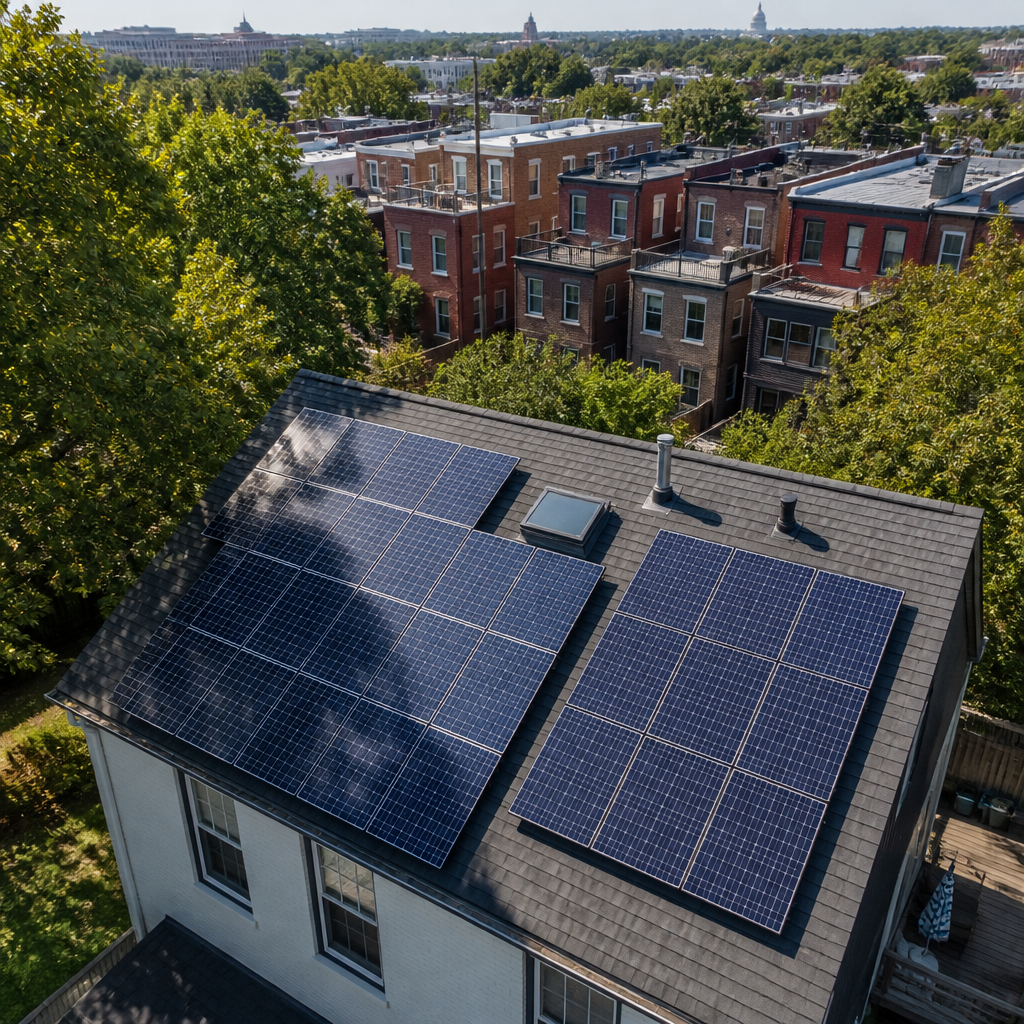
Solar panels installed in the DC metro area between 2010 and 2018 are now well into their expected service life, and a predictable set of failure patterns has emerged across the region. Understanding these patterns helps homeowners distinguish between a minor calibration issue and a component replacement that requires a licensed technician.
Common Failure Points in Mid-Atlantic Solar Systems
Inverter failure is the most common cause of complete system shutdown. String inverters typically carry 10-year warranties, meaning systems installed before 2015 may be operating on expired coverage. Microinverter systems tend to fail at individual units, producing partial output losses that are harder for homeowners to detect without monitoring software review.
Wiring degradation is a less visible but equally serious problem. Conduit runs exposed to the temperature swings common across Maryland, Virginia, and DC are subject to insulation cracking over time. A competent solar service technician will inspect not only the panels and inverter but also the DC wiring, disconnects, and junction boxes as part of any diagnostic visit.
Panel soiling and physical damage are often misattributed to system failure when performance monitoring shows a gradual decline. The DC area's tree canopy, particularly in neighborhoods such as Chevy Chase and Bethesda, means that shading analysis should be repeated after any significant tree growth or removal event.
Pro tip: Request a full production report covering the trailing 12 months before scheduling any repair. A sharp single-day drop points to a discrete failure such as a tripped breaker or failed inverter. A gradual multi-month decline suggests soiling, shading, or module degradation, each of which has a different resolution path.
What a Proper Solar Diagnostic Includes
A credible solar diagnostic in the DC area covers four items: production data review against the system's original design output, a physical inspection of all roof-mounted components, a continuity and insulation resistance test on DC wiring, and an inverter error log review. Any service visit that omits the data review is incomplete, regardless of what the technician observes on the roof.
Triple R Energy provides solar system diagnostics and repairs for existing residential systems across Delaware, Maryland, New Jersey, Pennsylvania, Virginia, and Washington DC, including systems originally installed by contractors who are no longer in business.
Battery Storage for DC, MD, and VA Homeowners
Battery storage adoption in the Mid-Atlantic region has accelerated, driven by a combination of grid reliability concerns, time-of-use rate structures from utilities such as Pepco and Dominion Energy, and a federal tax credit that makes the upfront cost substantially more manageable. Understanding the incentive structure before signing a contract is essential.
The Federal Tax Credit for Battery Storage
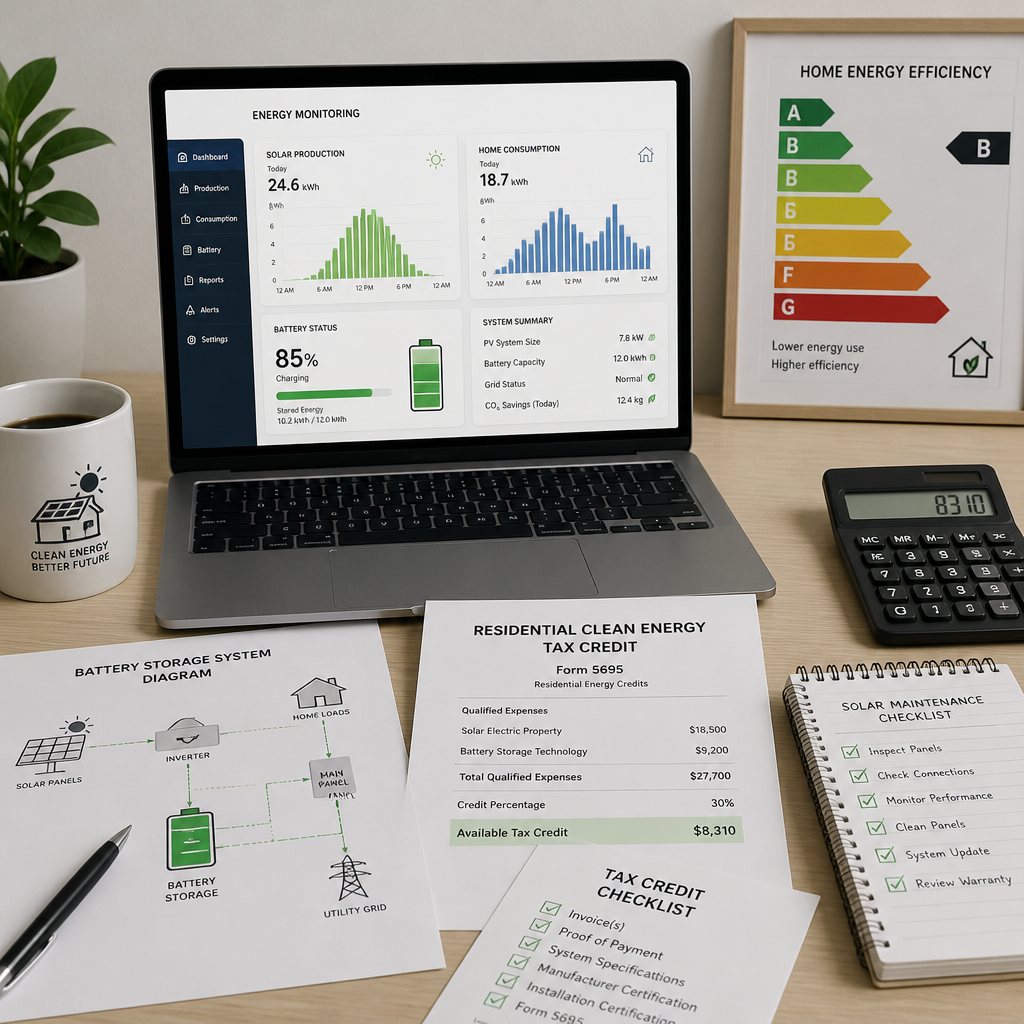
The Residential Clean Energy Tax Credit, confirmed by ENERGY STAR and the IRS, covers 30% of the cost of qualifying battery storage technology for property placed in service after December 31, 2021, and before January 1, 2026. The credit is nonrefundable but can be carried forward.
Eligibility requirements are specific. The battery system must have a minimum capacity of 3 kilowatt hours. The credit applies to existing homes and new construction, and to both principal residences and qualifying second homes. Rental properties are explicitly excluded. The home must be located in the United States. Homeowners claim the credit using IRS Form 5695.
A battery storage system must have a capacity of not less than 3 kilowatt hours to qualify for the Residential Clean Energy Tax Credit. Rental properties do not qualify. The credit rate is 30% for systems placed in service before January 1, 2026. (Source: ENERGY STAR, U.S. Department of Energy)
Because the credit rate is scheduled to step down after 2025, homeowners who are already considering battery storage have a financial incentive to complete installation before that deadline. A project that takes longer than expected to permit and install can miss the window if planning begins too late in 2025.
Selecting the Right Battery Capacity for a DC Area Home
The 3 kilowatt-hour minimum for tax credit eligibility is a floor, not a recommendation. Most DC area homes require meaningfully more storage to achieve a practical backup window for critical loads such as refrigeration, sump pumps, and medical equipment. A properly sized system starts with a load analysis of the specific home, not a standard package.
Pro tip: Before selecting a battery capacity, identify which loads must run during an outage and for how long. A home with a sump pump in a flood-prone area near Rock Creek or the Anacostia River has different backup requirements than a home relying on battery storage primarily to shift peak utility rates.
EV Charger Installation in the DC Area
The DC metropolitan area has one of the highest rates of electric vehicle adoption on the East Coast, and the demand for residential Level 2 charging has grown correspondingly. However, EV charger installation is not a simple plug-and-play task for most homes built before 2010, and the permitting requirements vary by jurisdiction across the region.
Level 1 vs. Level 2 Charging: The Practical Difference
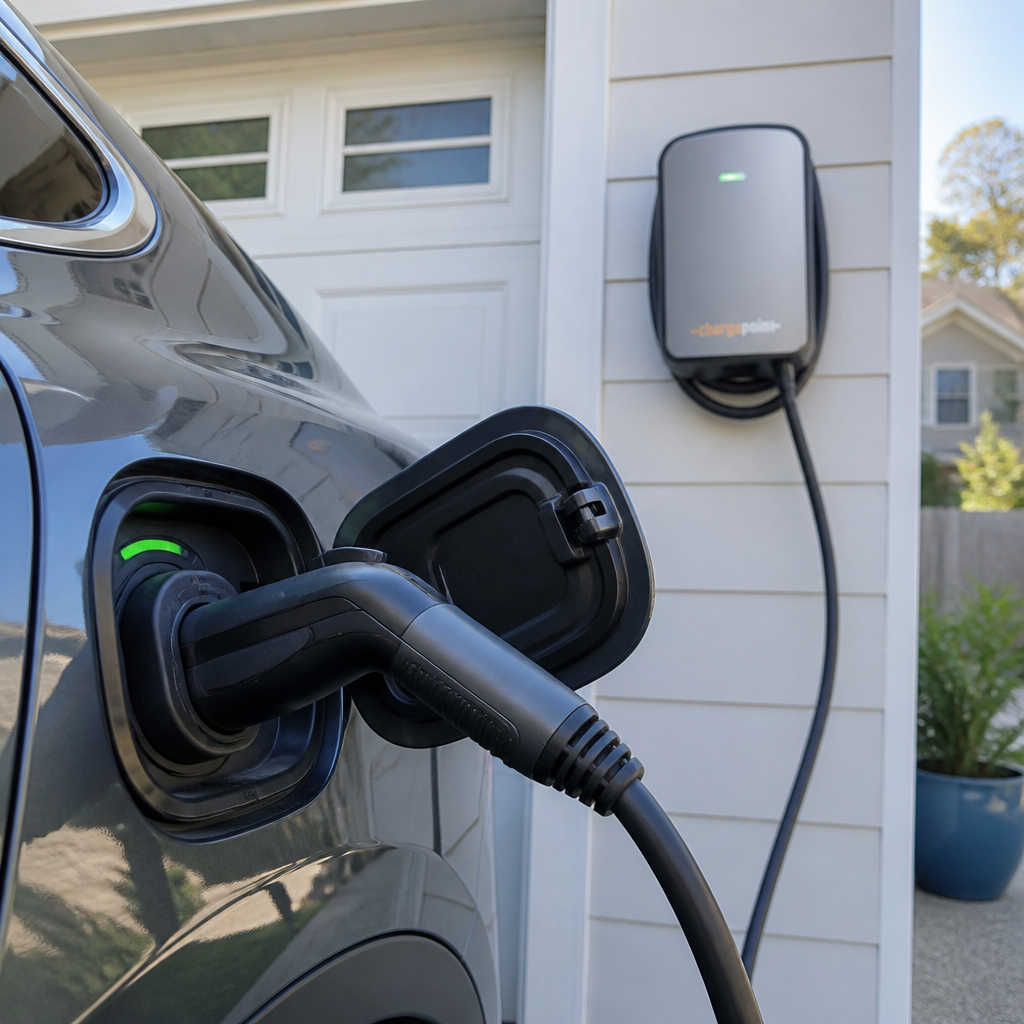
Level 1 charging uses a standard 120-volt outlet and adds roughly 3 to 5 miles of range per hour. For a commuter driving 30 to 40 miles per day in and around DC, Level 1 charging overnight is marginally functional but leaves no buffer for higher-use days. Level 2 charging operates on a 240-volt circuit and typically adds 20 to 30 miles of range per hour depending on the charger and vehicle, making it the practical standard for residential installation.
A Level 2 charger requires a dedicated 240-volt circuit, a compatible electrical panel with available capacity, and in most DC area jurisdictions, a permit and inspection. Installing without a permit is not a minor administrative shortcut. Unpermitted electrical work can void homeowner insurance coverage and creates disclosure obligations during a future property sale.
Permit and Code Requirements Across DC, MD, and VA
Washington DC, Montgomery County, Prince George's County, Arlington County, and Fairfax County each have their own permit processes for EV charger installation. The timelines and inspection requirements differ. A licensed electrical contractor familiar with the specific jurisdiction handles the permit application as part of the project, not as an afterthought.
Triple R Energy is licensed to perform EV charger installations across all six Mid-Atlantic states in its service area, which means one contractor can handle a homeowner's needs whether the property is in Northwest DC, Alexandria, Bethesda, or Wilmington.
Electrical Panel and Service Upgrades That Support It All
Electrical panel capacity is the variable that most often determines whether a battery storage or EV charger project proceeds smoothly or requires additional work before installation can begin. Many homes in the DC area, particularly those built in the 1950s through the 1980s in neighborhoods such as Petworth, Capitol Hill, and Silver Spring, were built with 60-amp or 100-amp service panels designed for a fraction of the electrical load now placed on them.
A 100-amp service panel may be adequate for a home without a battery system, EV charger, or electric heating. Add a 9.6 kW battery inverter and a 48-amp EV charger, and that panel is operating at or near its rated capacity before accounting for the home's baseline load. The result is nuisance tripping at best and a genuine fire risk at worst.
Upgrading to 200-amp or 400-amp service resolves this constraint and future-proofs the home for additional electrification. In most DC area jurisdictions, a service upgrade also requires coordination with the local utility, which adds scheduling time to the project timeline. Planning the upgrade before the battery or EV charger installation avoids delays that push projects past incentive deadlines.
Pro tip: When requesting quotes for battery storage or EV charger installation, ask each contractor to specify in writing whether a panel upgrade is included in the scope or whether it will be identified only after installation begins. Contractors who do not assess panel capacity before quoting are not giving an accurate total project cost.
Comparing Your Service Options: National Providers vs. Regional Specialists
DC area homeowners evaluating solar service, battery storage, and EV charger installation have three broad categories of contractor to consider: large national solar companies, regional electrical and solar specialists, and general electricians without solar-specific experience. Each has a distinct profile of strengths and limitations.
Provider Type | Strengths | Limitations for DC Area Homeowners |
|---|---|---|
National Solar Companies (e.g., Sunrun, Sunnova, Vivint Solar) | Brand recognition, financing options, large installation crews | Service and repair responsiveness varies significantly after installation; technician availability in specific DC area jurisdictions is not guaranteed; lease/PPA structures can complicate battery add-ons and home sales |
Regional Licensed Electrical and Solar Specialists (e.g., Triple R Energy) | Multi-state licensure across the Mid-Atlantic; handles solar diagnostics, battery storage, EV chargers, and panel upgrades under one contractor; direct accountability to local customers | Smaller crew capacity than national firms for large simultaneous deployments |
General Electricians Without Solar Experience | Often available for EV charger and panel work; familiar with local permit offices | Typically not qualified to diagnose solar system faults, configure battery storage systems, or assess inverter compatibility; cannot provide integrated solar and electrical service |
The practical implication for a DC area homeowner who already has a solar system and wants to add battery storage and an EV charger is clear. Using a single licensed contractor with expertise across all three systems eliminates the coordination risk between separate solar, battery, and electrical contractors, and it reduces the number of separate permit applications and inspection scheduling events.
Frequently Asked Questions
Does the federal battery storage tax credit apply if I already have solar panels?
Yes. The Residential Clean Energy Tax Credit covers qualifying battery storage technology regardless of whether it is installed alongside a new solar system or added to an existing one. The battery must have a minimum capacity of 3 kilowatt hours, the property must be a qualifying residence (not a rental), and the system must be placed in service before January 1, 2026 to receive the current 30% credit rate. Homeowners claim the credit using IRS Form 5695.
How do I know whether my solar system needs repairs or a full replacement?
A proper diagnostic distinguishes between the two. Component-level failures such as a failed inverter, a damaged module, or a faulty disconnect are repair items. Systemic degradation across most of the array, particularly in systems more than 20 years old with panels that have lost significant output capacity, may make replacement more cost-effective. A credible solar service company will provide a diagnostic report before recommending either path, not after signing a contract.
What Level 2 EV charger amperage is recommended for DC area homeowners?
A 48-amp Level 2 charger installed on a 60-amp dedicated circuit is the standard recommendation for most residential applications, as it provides maximum charging speed compatible with the majority of current electric vehicles. Homeowners with older panels or shared service should have a capacity assessment performed before selecting charger amperage, since a 48-amp charger on an undersized circuit will trip breakers or require a panel upgrade.
Are there local incentives for battery storage or EV chargers beyond the federal tax credit?
Maryland, Virginia, and DC have each offered various incentive programs for clean energy equipment, and utility companies including Pepco, BGE, and Dominion Energy have periodically offered rebates. These programs change frequently and are subject to funding availability. A licensed contractor active in these jurisdictions will be aware of current program status, but homeowners should independently verify incentive availability with the relevant utility or state energy office before making purchasing decisions based on a specific rebate amount.
Can Triple R Energy service a solar system that was installed by a different company?
Yes. Triple R Energy performs solar system diagnostics and repairs on existing systems regardless of the original installer. This is particularly relevant for homeowners whose original installer has closed, been acquired, or stopped servicing the DC area. A diagnostic visit establishes the current system condition, documents any warranty status for individual components, and identifies the repair or maintenance work needed to restore full performance.
How long does EV charger installation typically take once the permit is approved?
For a home with an adequate electrical panel and a straightforward wiring run to the garage or driveway, the physical installation of a Level 2 EV charger is typically completed in a single day. Permit approval timelines vary by jurisdiction across DC, Maryland, and Virginia, ranging from a few days to several weeks depending on the local permit office workload. Panel upgrade work, if required, adds additional scheduling time. Planning two to four weeks from contract signing to operational charger is a reasonable baseline for most DC area projects.
If you are navigating solar repairs, battery storage decisions, or EV charger installation in the DC, Maryland, or Virginia area, we welcome your questions and feedback in the comments below.
We would love your feedback and any insights you would share with others. What perspective would you add?