Thousands of Virginia homeowners have installed solar systems over the past decade, drawn by falling equipment costs, rising utility rates, and state-level clean energy commitments. Yet the volume of new installations has outpaced the availability of qualified service contractors, leaving many homeowners without a reliable path forward when their systems underperform, go offline, or need repair. Solar service in Virginia is not simply a matter of calling the original installer. Warranties expire, companies consolidate, and electrical work requires a licensed contractor under Virginia law. Understanding what to expect from solar repair in VA, and from the contractors you hire, protects both your investment and your home.
Table of Contents
- Quick Takeaways
- Why Solar Service Is Different from Installation
- Common Solar System Problems in Virginia
- Understanding Your Solar Warranty Coverage
- Virginia Solar Incentives That Affect Repair Decisions
- Choosing a Solar Contractor in Northern Virginia and Beyond
- Solar Service Options Compared
- Frequently Asked Questions
- References
Quick Takeaways
Key Insight | Explanation | |
|---|---|---|
Licensed electrical contractors must perform solar repairs in Virginia | Solar systems are electrical systems. Any repair, rewiring, or panel-level work must be carried out by a contractor holding a valid Virginia electrical contractor license. | |
Inverter and optimizer failure is the most frequent repair category | String inverters and power optimizers account for the majority of residential solar service calls. Monitoring alerts or unexplained production drops are the most common first signs. | |
Manufacturer warranties rarely cover labor costs | Most panel and inverter manufacturers will replace defective parts at no cost, but labor, shipping, and reinstallation charges typically fall on the homeowner unless the installer's own workmanship warranty covers them. | |
Northern Virginia counties offer local property tax exemptions for solar | Fairfax, Loudoun, and Prince William counties provide property tax exemptions for qualifying solar equipment, which can affect the financial case for repairing versus replacing older systems. | |
SRECs create a financial reason to keep systems producing at full capacity | Virginia's Solar Renewable Energy Credit market means a system producing below its rated output is losing both utility savings and SREC income simultaneously. | |
Third-party ownership (leases and PPAs) complicates repairs | Homeowners with leased systems or power purchase agreements may find that service responsibilities rest with the financing company, which can cause significant delays when repairs are needed. |
Why Solar Service Is Different from Installation
A solar installation is a coordinated project with a defined start and end date, a site survey, permits, and a commissioning inspection. Solar service and repair work operates under entirely different conditions. A technician arrives at a system that may be years old, installed by a company that may no longer exist, and running firmware that has not been updated since commissioning. The diagnostic process requires a combination of electrical knowledge, system-specific monitoring expertise, and familiarity with the equipment brands common in the Mid-Atlantic region.
In Virginia, all electrical work on a residential property must be performed by or under the direct supervision of a licensed electrical contractor. This requirement applies fully to solar systems. Homeowners who hire unlicensed technicians for solar repair in VA risk voiding their remaining equipment warranties, failing local inspections, and creating liability issues that affect homeowner insurance coverage.
The practical implication is clear: when evaluating solar service companies in Virginia, the first qualification to verify is the contractor's Virginia electrical contractor license, not simply a solar certification or manufacturer training credential. The two are not equivalent.
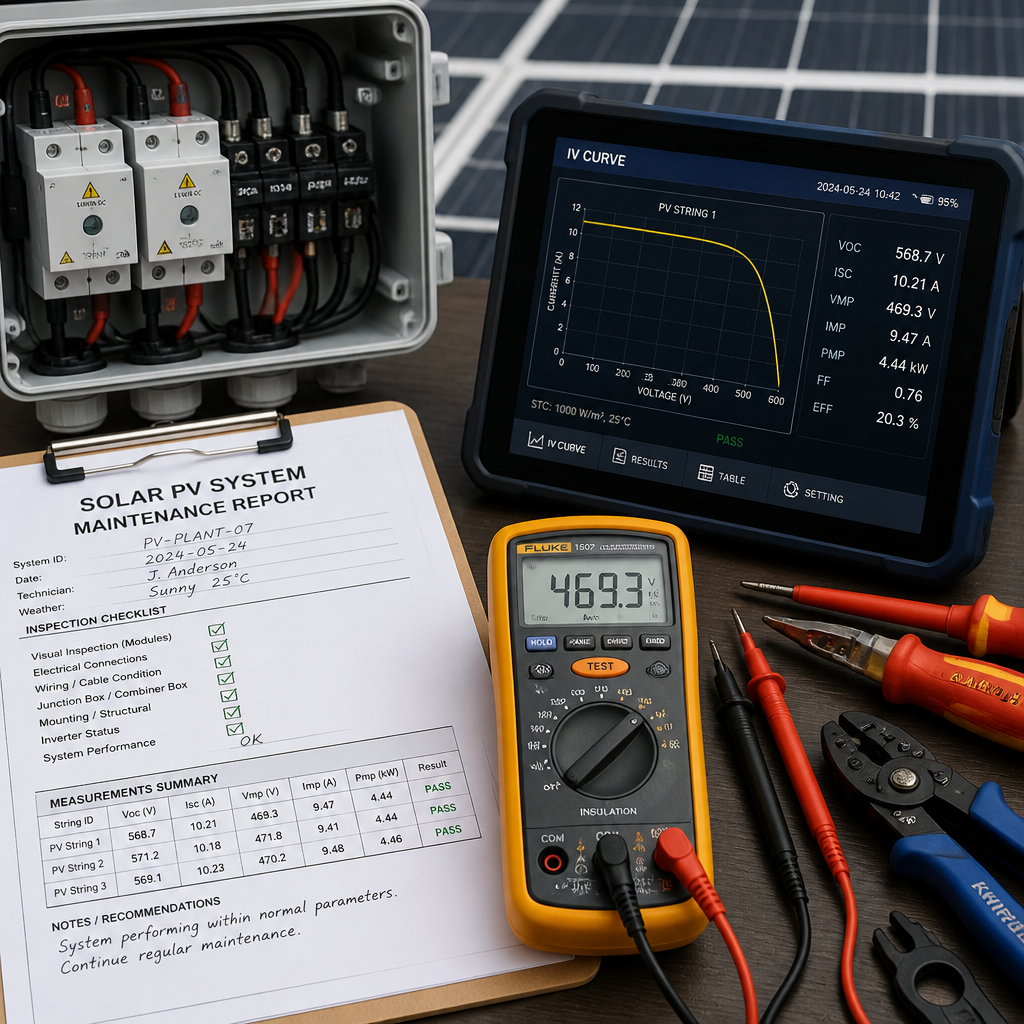
Pro tip: Before scheduling any solar service visit, request the contractor's Virginia electrical contractor license number and verify it through the Virginia Department of Professional and Occupational Regulation (DPOR) online lookup tool. This takes under two minutes and confirms the license is current and in good standing.
Common Solar System Problems in Virginia
Virginia's climate presents a specific combination of stressors for rooftop solar systems. Hot, humid summers, periodic ice storms, and significant pollen and debris loads from deciduous tree cover create failure conditions that differ from those in drier western states. Knowing which problems appear most often allows homeowners to interpret monitoring alerts and communicate effectively with service contractors.
Inverter and Power Optimizer Failures
Inverter-related failures are the most common category of residential solar service call across the Mid-Atlantic region. String inverters typically carry a 10-year manufacturer warranty, while microinverters and power optimizers are often warranted for 25 years. However, warranty coverage for the hardware component does not automatically cover the labor to diagnose and replace it. A system that goes offline due to an inverter fault can lose weeks of production while parts are sourced and a qualified technician is scheduled.
For systems using microinverters, individual unit failures are identifiable through monitoring software at the panel level. A common diagnostic pattern is a single panel showing zero output while all surrounding panels perform normally. Communication failures between the monitoring gateway and individual microinverters can mimic hardware failures, so software diagnostics should always precede physical replacement.
Wiring Faults, Ground Faults, and Arc Faults
Ground faults occur when electrical current travels an unintended path to ground, most often due to damaged or degraded wiring insulation. Arc faults involve unintended electrical discharge at a connection point and present a fire risk. Both fault types trigger automatic system shutdowns via built-in protection circuits, which is the correct response, but the underlying wiring issue requires a licensed electrician to diagnose and repair safely.
In Virginia's humid climate, connector degradation at rooftop junction points is a documented failure mode, particularly in systems that are five or more years old. Rodent damage to wiring runs in attic and soffit spaces is also reported frequently, especially in wooded suburban areas across Northern Virginia and the Piedmont region.
Soiling, Shading, and Physical Panel Damage
Pollen accumulation during Virginia's spring season can measurably reduce system output for weeks at a time. Physical damage from hail, falling branches, or ice loading can crack panel glass or damage mounting hardware. These issues require inspection by someone working at roof level with the system safely de-energized. A solar system diagnostic inspection is the appropriate first step before any cleaning or physical repairs are attempted.
Understanding Your Solar Warranty Coverage
Solar system warranties operate in layers, and most homeowners are not fully aware of what each layer covers until they need to file a claim. Understanding these layers before a problem occurs prevents surprises during a service event.
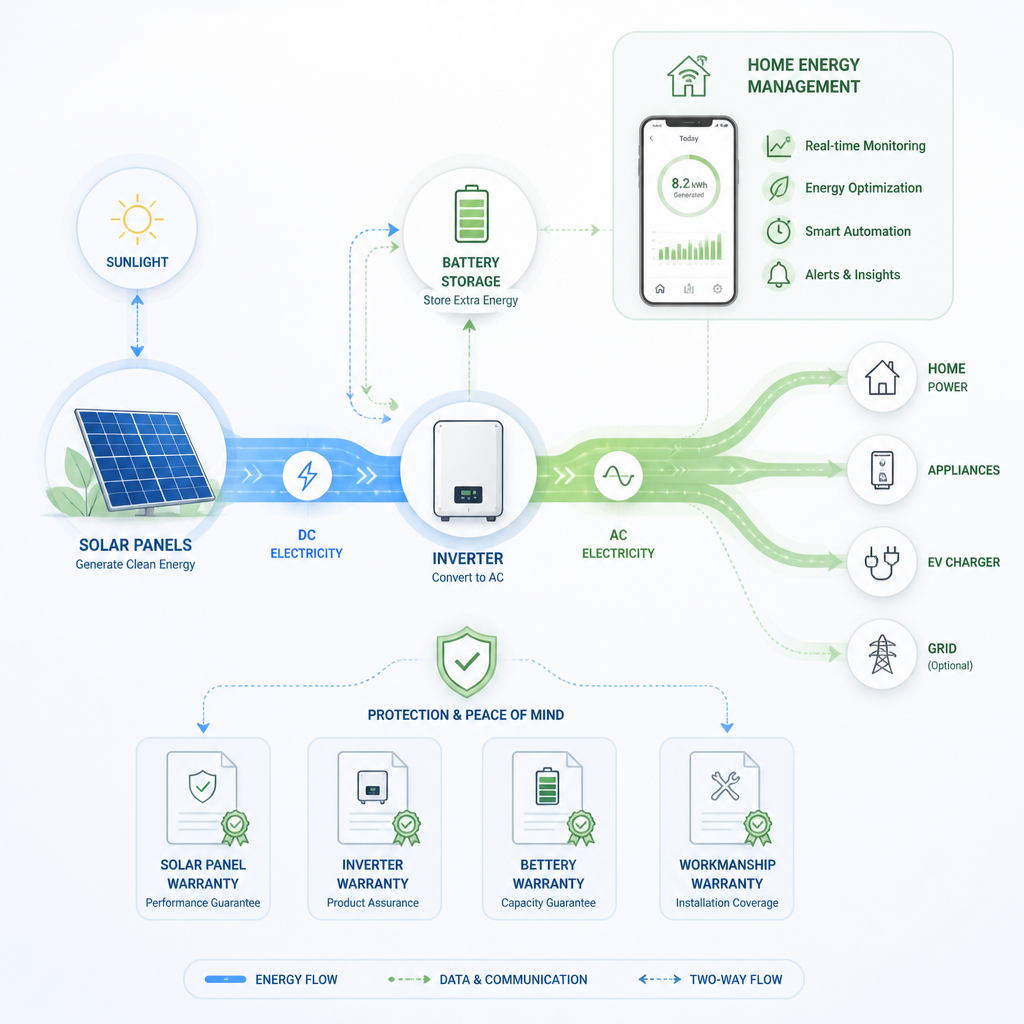
There are generally three distinct warranty types covering a residential solar installation. The panel product warranty covers defects in materials and workmanship in the panel itself, typically for 10 to 12 years. The panel performance warranty guarantees that the panel will retain a specified percentage of its rated output, typically 80 to 90 percent, over 25 years. The installer's workmanship warranty covers the quality of the installation itself, including roof penetrations, wiring, and mounting hardware, and typically runs for 1 to 10 years depending on the installer.
A solar product warranty covers the physical components of your system, such as the panels, inverters, or batteries. Product warranties guarantee free part replacements in case of a defect or malfunction. However, manufacturer warranties rarely reimburse the labor and shipping costs required to reinstall repaired or replaced equipment.
The practical gap in most warranty structures is labor. Manufacturers will replace a defective inverter or a failed optimizer, but the cost of the service visit, the technician's time, and any ancillary electrical work falls outside the product warranty. This is where an installer's own service agreement or an extended service plan has real value. Homeowners whose original installers are no longer in business have no workmanship warranty backstop and must rely entirely on manufacturer product warranties, with all labor costs out of pocket.
Pro tip: Locate your original installation contract, permit documentation, and all equipment serial numbers before any service call. A technician who can access your monitoring portal with the correct system credentials will complete a diagnostic much faster than one starting from scratch. Store these documents in digital form alongside your homeowner insurance policy.
Virginia Solar Incentives That Affect Repair Decisions
Virginia's current solar incentive landscape directly influences whether repairing an aging system, upgrading components, or adding battery storage makes financial sense. The incentive structure rewards system output, so a system running below rated capacity is losing more than just utility savings.
Federal Investment Tax Credit
The federal solar Investment Tax Credit (ITC) currently allows homeowners to claim 30 percent of the cost of a qualifying solar installation against their federal income tax liability. Importantly, battery storage systems added to an existing solar installation also qualify for the 30 percent credit when installed after the original system. This makes a storage retrofit a more economically rational choice than it was before the expanded credit provisions.
Virginia Solar Renewable Energy Credits
Virginia's SREC market allows homeowners to earn one credit for each megawatt-hour of solar electricity their system generates. These credits can be sold to utilities that need them to meet renewable portfolio standards under the Virginia Clean Economy Act. SREC market prices fluctuate with demand, but a system operating below capacity is generating fewer SRECs than it should, compounding the financial loss beyond the utility bill impact.
Local Property Tax Exemptions in Northern Virginia
Several Northern Virginia counties, including Fairfax, Loudoun, and Prince William, offer property tax exemptions for qualifying solar energy equipment. These exemptions apply to the assessed value of the solar equipment added to a property and reduce the carrying cost of the installation over its useful life. When evaluating whether to repair or replace a significantly degraded system, the continued availability of these exemptions for upgraded equipment is a relevant financial consideration.
Choosing a Solar Contractor in Northern Virginia and Beyond
The solar contractor landscape in Virginia includes national installers, regional companies, and independent electrical contractors with solar specializations. Each category has distinct characteristics that affect the service experience.
National Solar Companies versus Local Service Specialists
Large national solar providers such as Sunrun, Sunnova, and Vivint Solar have significant installation footprints in the Mid-Atlantic region, but their service infrastructure for existing customers is often centralized and slow to respond at the local level. Homeowners with systems installed by national providers frequently report extended wait times for service visits and difficulty reaching technicians familiar with their specific system configuration.
A local solar contractor in Northern Virginia who operates as a licensed electrical contractor brings a different set of capabilities. They can perform electrical panel work, diagnose and repair wiring issues, and manage permit filings with local jurisdictions, all within a single service relationship. For homeowners dealing with aging systems or systems originally installed by companies that have since exited the market, a licensed local electrical contractor with solar expertise is often the most effective service path.
What to Ask Before Hiring a Solar Service Contractor
Before engaging any contractor for solar repair in VA, confirm the following: that the company holds a current Virginia electrical contractor license; that they carry general liability insurance and workers' compensation coverage; that they are familiar with the specific inverter brand and monitoring platform on your system; and that they will pull the required permits for any work that requires them. A contractor who proposes to skip permitting for work that legally requires it is creating a compliance risk that the homeowner ultimately bears.
Triple R Energy operates as a licensed electrical contractor serving Virginia, Delaware, Maryland, New Jersey, Pennsylvania, and Washington, D.C. With direct expertise in solar system diagnostics and repairs, battery storage installation, and EV charger installation, Triple R brings the full electrical credential set required to service residential solar systems across the commonwealth without the service delays common to national provider networks.
Solar Service Options Compared
Virginia homeowners seeking solar system service have three primary pathways available. The table below compares the key characteristics of each to assist in evaluating which approach fits a given situation.
Service Pathway | Best Suited For | Key Limitations |
|---|---|---|
Original Installer (if still operating) | Systems still under active workmanship warranty; routine maintenance within warranty coverage period | Company may be out of business; response times for service calls often measured in weeks; limited electrical upgrade capability |
National Solar Provider Service Desk | Leased systems or PPAs where the provider retains system ownership and service obligation | Centralized scheduling with long lead times; technicians may have limited familiarity with older system configurations; electrical panel work typically outside scope |
Licensed Local Electrical Contractor with Solar Expertise | Systems out of workmanship warranty; orphaned systems from defunct installers; battery storage additions; panel upgrades alongside solar service | Must verify solar-specific diagnostic capability in addition to electrical license; fewer in number than general solar installers |
Frequently Asked Questions
How do I know if my solar system is underperforming?
The most reliable indicator is a comparison of your system's actual production, visible through your monitoring app or inverter display, against its modeled or historical production for the same period. A sustained drop of 10 percent or more relative to historical averages for the same season warrants a professional diagnostic inspection. Unexplained increases in your utility bill alongside unchanged energy habits are a secondary signal worth investigating.
Can any electrician repair a solar system in Virginia?
A licensed Virginia electrical contractor can legally perform the electrical work associated with solar repairs, including wiring, disconnects, and panel-level electrical connections. However, effective solar diagnostics also require familiarity with specific inverter platforms, monitoring software, and solar-specific code requirements. The combination of an active electrical contractor license and demonstrated solar service experience is the appropriate qualification set to look for.
My original solar installer is no longer in business. What are my options?
If your original installer has closed, your workmanship warranty is effectively void, but manufacturer product warranties on panels, inverters, and optimizers remain in effect and are honored directly by the manufacturer. You will need to engage a qualified independent contractor for service calls, with labor costs falling outside manufacturer warranty coverage. Gather your equipment serial numbers, original permit records, and any monitoring account credentials before reaching out to a service contractor, as this documentation significantly reduces diagnostic time and cost.
Does adding battery storage to my existing Virginia solar system require a permit?
Yes. Battery storage systems are electrical installations subject to local building and electrical permit requirements across Virginia jurisdictions. The work must be performed by a licensed electrical contractor, and the installation must pass inspection before the system is energized. The permit and inspection process protects the homeowner by ensuring the installation meets current safety codes, and it is a prerequisite for the installation to qualify for the federal Investment Tax Credit.
How does the Virginia SREC market affect the financial case for solar repairs?
Every megawatt-hour of electricity your system fails to produce due to a fault or underperformance is a lost Solar Renewable Energy Credit in addition to a lost utility bill reduction. SREC values fluctuate with market demand, but the combined financial impact of a degraded or offline system includes both the utility cost and the foregone credit income. For most Virginia homeowners with grid-tied systems, prompt repair is financially rational even when repair costs are significant, because the alternative is continued dual revenue loss for every month the system underperforms.
What is the typical lifespan of a solar inverter, and when should I plan for replacement?
String inverters generally carry a manufacturer warranty of 10 years and have a functional lifespan in the range of 10 to 15 years under normal operating conditions. Microinverters and power optimizers are typically warranted for 25 years and tend to have longer service lives than string inverters. Virginia homeowners with systems installed between 2010 and 2014 should treat inverter replacement as a near-term planning item, whether or not the inverter has yet shown signs of failure. Proactive replacement avoids the extended production loss associated with an unplanned failure and parts sourcing delay.
If you have had experience navigating solar service or repair in Virginia, sharing what you found most useful in selecting a qualified contractor will help other homeowners in the region make better-informed decisions.
We would love your feedback and any insights you would share with others. What perspective would you add?
References
Virginia solar installer data and average system costs from EnergySage
Overview of solar panel warranty types and what homeowners need to know from EnergySage
Common solar inverter problems, diagnostic steps, and repair guidance from GreenLancer
Homeowner's guide to solar system warranty coverage from Enphase Energy