Most homeowners in Delaware, Maryland, New Jersey, Pennsylvania, Virginia, and Washington, D.C. underestimate what goes into a proper EV charger installation. They buy the charger, call an electrician, and then discover their panel is maxed out, the permit process is longer than expected, or their garage wiring simply cannot support a dedicated 240-volt circuit. Following a clear EV charger installation checklist before anyone picks up a drill saves weeks of back-and-forth and can prevent costly surprises. This guide walks you through every step, specific to the Mid-Atlantic region's permitting landscape, older housing stock, and utility programs.
Table of Contents
- Quick Takeaways
- Step 1: Assess Your Electrical Panel
- Step 2: Choose the Right Charger Level
- Step 3: Understand Mid-Atlantic Permitting Requirements
- Step 4: Plan Your Installation Site
- Step 5: Explore Incentives and Rebates
- Comparing Charger Installation Approaches
- Home EV Charger Setup Mistakes to Avoid
- Frequently Asked Questions
- References
Quick Takeaways
Key Insight | Explanation |
|---|---|
Panel capacity comes first | Confirm you have a 200-amp service panel before purchasing any equipment. Homes with 100-amp panels in older Mid-Atlantic neighborhoods often need a service upgrade before a Level 2 charger can be added. |
Level 2 is the standard for home charging | A 240-volt Level 2 charger on a dedicated 40-to-60-amp circuit provides overnight charging for virtually every EV on the market. Level 1 (standard outlet) is too slow for daily driving needs. |
Permits are required in every Mid-Atlantic jurisdiction | Maryland, Virginia, Pennsylvania, Delaware, New Jersey, and D.C. all require an electrical permit for a new circuit installation. Using an unlicensed installer voids the permit and may void your homeowner's insurance. |
Conduit matters for future-proofing | Running the circuit inside conduit (rather than direct-burial cable) lets you upgrade wire gauge later if you add a second EV or switch to a higher-amp charger. It costs little extra upfront and saves significant labor later. |
Load management can replace a panel upgrade | Smart load management devices allow your charger to share an existing circuit with high-draw appliances, eliminating the need for a full panel replacement in many cases. |
Licensed electricians are non-negotiable | In Maryland, a valid Maryland Master Electrician's license is required to pull an electrical permit. Similar licensing requirements exist in every other Mid-Atlantic state. This is not a DIY project. |
Step 1: Assess Your Electrical Panel
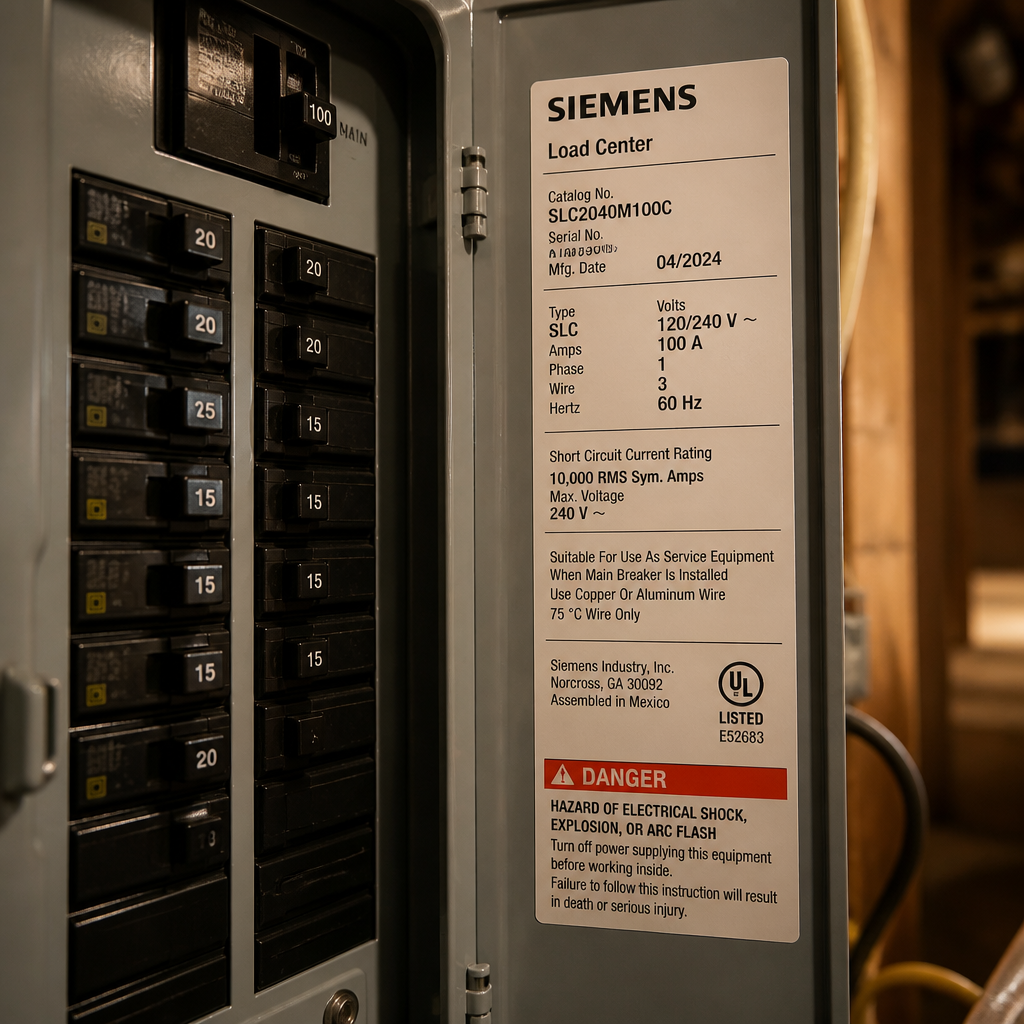
Your electrical panel is the single biggest variable in a home EV charger setup. Before you look at charger brands or mounting locations, open your breaker panel and find the main breaker. The number stamped on it, typically 60, 100, or 200, tells you your service capacity. Most modern homes with a 200-amp panel can support an EV charger without a service upgrade, provided enough open breaker slots exist. Homes with 100-amp service, which are common in older neighborhoods throughout Philadelphia, Baltimore, and Northern Virginia, frequently need an upgrade first.
If your panel is full but your service is already 200 amps, a subpanel in the garage is often the cleanest solution. It avoids the cost and utility coordination of a full service upgrade while giving you dedicated breaker space. If you genuinely have a 100-amp panel feeding a home with multiple HVAC systems, electric water heating, or an induction range, a service upgrade to 200 amps is the right move before adding any more large loads.
What to Look for During a Panel Assessment
A qualified electrician will check available breaker slots, the ampacity of the existing wiring from the utility connection to the panel, and whether the panel itself is a model with a history of recalls or safety concerns. Panels from certain older manufacturers have known reliability issues and are worth replacing even if capacity appears adequate on paper.
At Triple R Energy, our licensed electricians perform this assessment as part of every EV charger consultation across Delaware, Maryland, New Jersey, Pennsylvania, Virginia, and D.C. We never spec the charger until we know exactly what the panel can support.
Pro tip: Take a photo of your panel's main breaker label and any open slots before calling an installer. It lets your electrician give you a far more accurate estimate over the phone and saves a trip just for an initial look.
Step 2: Choose the Right Charger Level
There are three levels of EV charging, but only two are relevant to home installations. Level 1 uses a standard 120-volt household outlet and adds roughly 3 to 5 miles of range per hour. Level 2 uses a 240-volt dedicated circuit and adds 20 to 30 miles per hour, depending on the charger's amperage rating and the vehicle's onboard charging capacity. Level 3 (DC fast charging) requires commercial-grade infrastructure not practical for residential use.
For most Mid-Atlantic homeowners, Level 2 is the correct answer. The only exception is a driver who covers very few miles daily and owns a plug-in hybrid. In that case, Level 1 may be sufficient. For a full battery-electric vehicle used for commuting, Level 1 is rarely adequate as a long-term solution.
Matching Charger Amperage to Your Vehicle
Level 2 chargers are available with output ratings ranging from 16 amps to 80 amps. Most homeowners do well with a 40-to-50-amp charger on a dedicated 50-to-60-amp circuit. Owners of larger EVs like full-size electric trucks who want maximum overnight charging speeds may benefit from a higher-amperage unit, but this also requires confirming the vehicle's onboard charger can accept that rate. Adding capacity your vehicle cannot use is a waste of money on both hardware and wiring.
Connector Standards: J1772 vs. NACS
Connector compatibility is a real consideration for 2024 and newer vehicles. Many newer EVs use the North American Charging Standard (NACS) port. If your vehicle has a NACS port and you purchase a charger with a standard J1772 connector, you will need an adapter. Some newer charger models now ship with NACS connectors directly. Confirm which connector your vehicle requires before ordering hardware.
The difference between a properly sized Level 2 charger and an oversized one is not speed for most drivers. It is the cost of unnecessary electrical work. Match the charger to the vehicle and the vehicle's actual daily mileage needs, not to a theoretical maximum.
Step 3: Understand Mid-Atlantic Permitting Requirements
Permitting is where many homeowners get tripped up, especially when relying on out-of-state or large national solar-and-EV companies that are less familiar with local jurisdictions. Every Mid-Atlantic state requires an electrical permit for a new circuit installation that includes EV charger wiring. The specific requirements vary by jurisdiction, but the underlying rule is consistent: a new 240-volt dedicated circuit requires a permit and inspection.
Maryland
In Maryland, an electrical permit must be applied for by someone with a valid Maryland Master Electrician's license. Montgomery County requires permits for any residential EV charging station that is not using an existing outlet. The permit must be applied for online through the relevant county permitting system. Inspections follow installation, and the county inspector will verify code compliance before signing off.
Washington, D.C.
In D.C., a licensed electrician can install a Level 2 charger on private residential property provided the proper permits are obtained through the D.C. Department of Buildings. If you rely on street parking rather than a private driveway or carport, the options are more limited, and curbside Level 2 installation may require additional approvals depending on your neighborhood.
Pennsylvania, Delaware, Virginia, and New Jersey
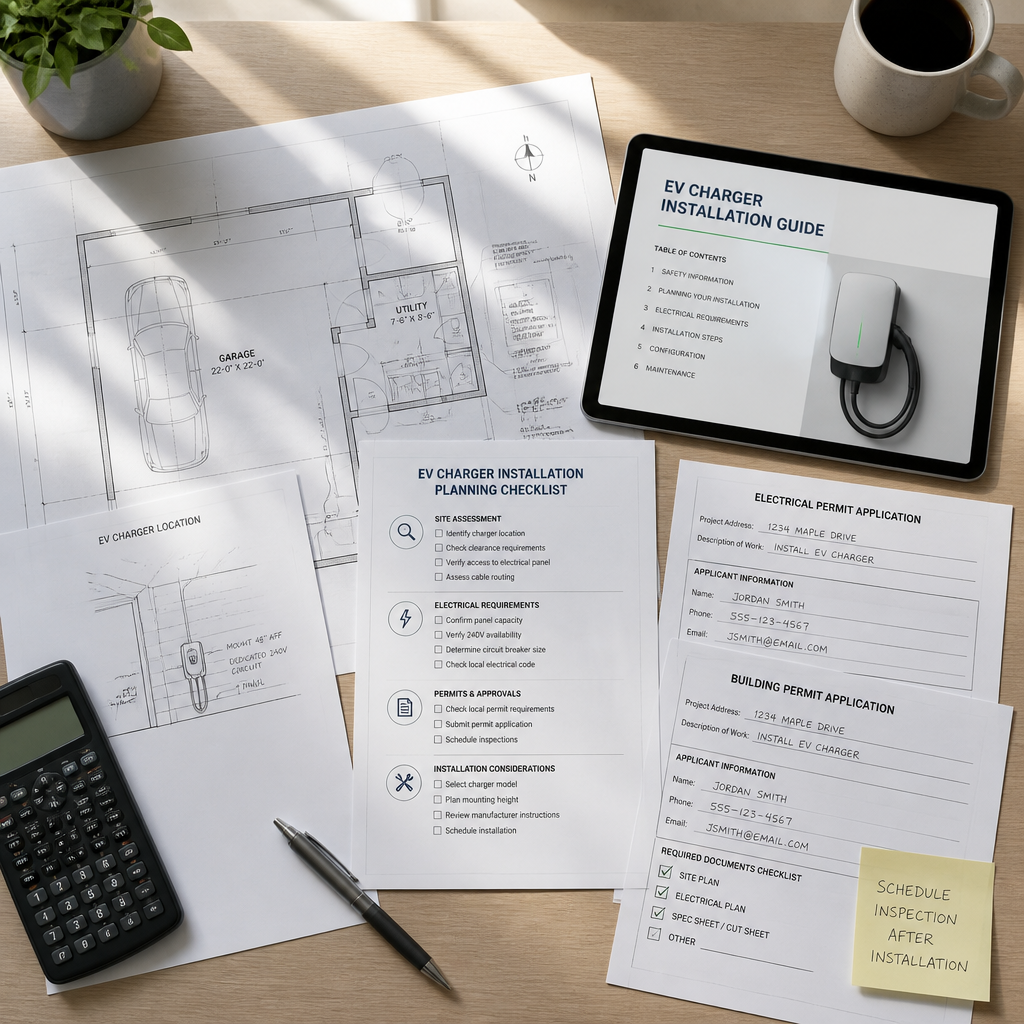
These states follow similar frameworks: a licensed electrician must pull the electrical permit, work must meet the National Electrical Code (NEC) as adopted locally, and a final inspection is required before the installation is considered complete. In practice, the timeline from permit application to final inspection ranges from a few days to several weeks depending on the municipality's workload. Major metro areas like Philadelphia and Northern Virginia suburbs can move quickly; more rural jurisdictions may take longer.
Pro tip: Never accept an EV charger installation quote from a contractor who says you do not need a permit. In every Mid-Atlantic jurisdiction, a new 240-volt dedicated circuit requires one. An unpermitted installation creates liability at the time of home sale and can complicate insurance claims after an electrical incident.
Step 4: Plan Your Installation Site
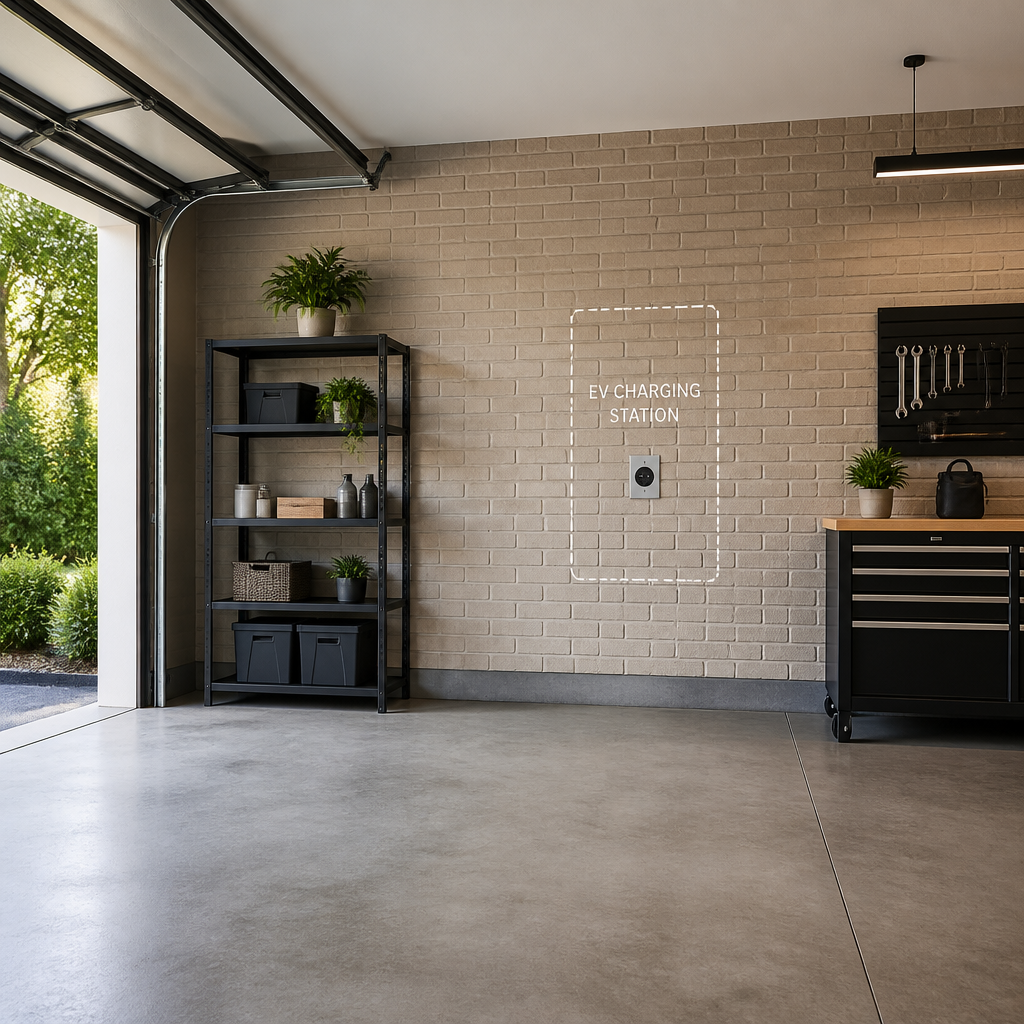
Where the charger mounts and how far the circuit needs to run directly affect the total installation cost. The shorter the run from your electrical panel to the charger location, the lower the material and labor cost. A charger mounted on a garage wall near the panel is the most straightforward scenario. A charger mounted on the side of a house, in a detached garage, or at a driveway pedestal significantly increases wiring complexity.
Indoor vs. Outdoor Mounting
Most Level 2 chargers are rated for both indoor and outdoor installation, but outdoor units must be in weatherproof enclosures. In the Mid-Atlantic region, temperature swings from well below freezing in January to humid heat in August mean your charger should be rated for the full range. Check the operating temperature specifications before purchasing an outdoor unit.
Conduit vs. Direct-Burial Cable
For runs that go underground (common with detached garages), conduit is the better long-term choice even though it costs more upfront. Running the wiring inside conduit means a future amperage upgrade is a wire-pull job, not an excavation project. Direct-burial cable is cheaper initially but eliminates that flexibility.
Garage Floor and Wall Clearance
Mount the charger at a height and position that keeps the charging cable off the floor and away from vehicle tires. A common installation mistake is mounting too low, which causes the cable to drag across the garage floor and wear prematurely. Standard practice is to mount the unit at 48 inches or higher and confirm the cable reaches the vehicle's charging port without pulling taut.
Step 5: Explore Incentives and Rebates
The EV charger Mid-Atlantic market benefits from overlapping incentive programs that can meaningfully offset installation costs. The federal 30C Alternative Fuel Vehicle Refueling Property Tax Credit is the most significant. Under the Inflation Reduction Act, eligible homeowners in qualifying census tracts (generally low-income or non-urban areas) can claim 30% of the total cost of the charger and installation labor, up to $1,000. The credit applies to installations completed by June 30, 2026.
In addition to the federal credit, several Mid-Atlantic utilities offer their own rebates and incentive programs for residential EV charger installation. These vary by utility and change periodically, so confirm current availability directly with your utility provider. Pepco, BGE, Dominion Energy, PECO, Delmarva Power, and PSE&G all serve the region and have historically offered some form of EV-related program, though specific program details and availability should be verified with each utility at the time of installation planning.
How to Stack Incentives Correctly
Federal tax credits and utility rebates are generally stackable, meaning you can claim both. The key is that the federal credit is calculated on the net cost after rebates in some interpretations, so document all costs and rebates carefully and discuss the filing approach with a tax advisor. Do not assume an installer will handle tax credit documentation for you. You will need the charger model number, the installation receipt, and confirmation of the installation address for IRS Form 8911.
Comparing Charger Installation Approaches
Not every installation scenario is the same. Below is a practical comparison of the three most common approaches Mid-Atlantic homeowners face when getting a Level 2 charger installed.
Approach | Best For | Key Considerations |
|---|---|---|
Standard panel installation (200-amp service, open slots) | Most newer homes with modern electrical service and an attached garage | Lowest cost and fastest timeline. Typically just the charger, circuit wiring, and permit. No panel work required. |
Panel upgrade plus charger installation | Older homes (pre-1980s) with 100-amp service common in Philadelphia rowhouses, Baltimore neighborhoods, and older Northern Virginia suburbs | Higher upfront cost due to service upgrade. Requires utility coordination. Adds time to project. Worthwhile if the panel is already near capacity from other appliances. |
Smart load management with existing panel | Homes where panel service is adequate but breaker slots are full, or where a panel upgrade is not practical or affordable immediately | A load management device monitors total home electrical demand and throttles EV charging during peak usage to prevent overloading. Avoids a panel replacement in many cases. Best paired with off-peak charging schedules. |
Home EV Charger Setup Mistakes to Avoid
After handling installations across Delaware, Maryland, New Jersey, Pennsylvania, Virginia, and D.C., certain mistakes come up repeatedly. Knowing them in advance saves money and time.
Buying the Charger Before the Electrical Assessment
Many homeowners purchase a charger online and then discover their panel cannot support it without upgrades. The charger sits in a box for weeks while the electrical work is sorted out. Always complete the electrical assessment first. The assessment determines what amperage the circuit will support, which informs which charger models make sense to buy.
Choosing the Cheapest Bid Without Verifying Licensing
Competitors in this market sometimes send unqualified subcontractors, particularly large national installers who treat the Mid-Atlantic as a volume market rather than a place with specific licensing requirements. In Maryland, only a licensed Master Electrician can pull a permit. In every other Mid-Atlantic state, equivalent licensing requirements apply. Ask for license numbers and verify them with the state licensing board before signing any contract.
Skipping the Load Calculation
A load calculation determines how much electrical capacity your home already uses so an electrician can confirm the panel can handle the charger's additional demand. Skipping this step and simply installing a charger on an already-loaded panel can cause nuisance tripping, premature breaker wear, or in worst cases, overheating in the panel itself. Insist that your contractor performs a load calculation as part of the installation process.
Not Planning for a Second Vehicle
Multi-EV households are increasingly common. If there is any chance you will have two electric vehicles within the next five years, mention it during the installation planning stage. Running conduit with a slightly larger-gauge wire now, or at least stubbing out conduit for a second circuit, costs far less during the initial installation than returning later to retrofit the garage.
Pro tip: Ask your installer to leave labeled wire tags and a circuit diagram inside the panel door. It makes future service calls faster and is a selling point when you list the home, because a buyer's home inspector will be able to see the installation was done professionally.
Frequently Asked Questions
Do I need a permit to install a Level 2 EV charger in Maryland, Virginia, or Pennsylvania?
Yes. Every Mid-Atlantic jurisdiction requires an electrical permit for a new dedicated circuit installation, which is what a Level 2 charger requires. The permit must be pulled by a licensed electrician, and the work must pass a final inspection before the installation is considered complete. There are no exceptions for homeowner self-installation of 240-volt circuits in these states.
How long does the EV charger installation process take from start to finish?
For a straightforward installation where the panel is adequate, wiring runs are short, and permits are processed quickly, the timeline from initial assessment to completed installation is typically one to two weeks. Panel upgrades, longer wiring runs, or slower permit offices in certain municipalities can extend that timeline to four to six weeks. Planning ahead of when you take delivery of your vehicle is strongly recommended.
Can I install a Level 2 EV charger in a rented home or condo?
In a rented single-family home, you need written permission from the landlord, and the work must still be permitted and performed by a licensed electrician. In a condo, you will likely need approval from the HOA or condo association and confirmation that your unit's electrical service can support the circuit. Some condos have shared electrical infrastructure that makes individual unit charger installation complicated. A licensed electrician can assess what is feasible before you pursue approvals.
Will I need an electrical panel upgrade to add a Level 2 EV charger?
Not necessarily. Most homes with a 200-amp panel and available breaker slots can accommodate a Level 2 charger without any panel work. Homes with older 100-amp service, or with panels that are already at or near capacity, may need a service upgrade or a smart load management solution. A licensed electrician can assess your specific situation and tell you exactly what is needed before any equipment is purchased.
How do Triple R Energy's EV charger installations differ from national installers?
Triple R Energy is a licensed electrical contractor, not a solar subscription company that added EV installation to a product menu. We hold the electrical licenses required in each Mid-Atlantic state we serve, we pull our own permits, and our technicians are employees rather than regional subcontractors. That means accountability stays local and the work is done by people who know Maryland's county-by-county permitting quirks, Virginia's utility coordination timelines, and Philadelphia's inspection process firsthand.
Have you already started planning your EV charger installation, or are you still in the early research phase? Share where you are in the process and what questions came up that this guide did not answer.
References
EnergySage guide on whether your electrical panel needs an upgrade before EV charger installation
Plug In America overview of the federal 30C EV charger tax credit under the Inflation Reduction Act
Rewiring America guide to the 30C residential EV charger tax credit eligibility and deadlines
Montgomery County Maryland permitting requirements for residential EV charging station installation