Many homeowners planning to add solar panels or an EV charger focus almost entirely on equipment costs and installation timelines, overlooking a step that determines whether either upgrade will actually work safely: a residential electrical inspection. Electrical systems installed decades ago were never sized to handle sustained high-amperage loads from vehicle charging or the bidirectional demands of a grid-tied solar array. Skipping a pre-installation electrical safety inspection risks equipment damage, permit rejections, and, in the most serious cases, electrical fires. This article explains what inspectors look for, why the findings matter, and how to act on them before committing to any upgrade.
Table of Contents
- Quick Takeaways
- Why a Residential Electrical Inspection Matters Before Any Major Upgrade
- What a Pre-Solar Electrical Check Actually Evaluates
- Common Electrical Deficiencies Found in Mid-Atlantic Homes
- Inspection Findings and the Path to a Panel Upgrade
- Comparing Inspection Approaches: What Each Method Covers
- EV Charger-Specific Electrical Requirements
- Battery Storage Installation and Electrical Readiness
- Frequently Asked Questions
- References
Quick Takeaways
Key Insight | Explanation |
|---|---|
Older panels are frequently undersized for modern loads | Homes built before the 1990s often have 100-amp or smaller service panels, which cannot safely support solar inverters, battery storage, and EV charging simultaneously. |
Permit approval depends on passing electrical review | Most jurisdictions in Delaware, Maryland, New Jersey, Pennsylvania, Virginia, and D.C. require an electrical inspection as part of the solar or EV charger permit process. Deficiencies discovered mid-installation cause costly delays. |
A pre-solar electrical check identifies wiring hazards before they become liabilities | Aluminum branch wiring, double-tapped breakers, and improper grounding are common findings that must be resolved before new equipment is connected. |
EV charging requires a dedicated 240V circuit at minimum | A Level 2 charger draws 30 to 50 amps continuously. Without a properly rated circuit, breakers trip or wiring overheats under sustained load. |
Battery storage systems add significant electrical complexity | Coupling a battery system with solar requires careful load calculations, proper disconnect equipment, and in most cases an upgraded main panel or subpanel. |
Inspection findings protect homeowner insurance coverage | Many insurers will not cover fire or equipment damage resulting from unpermitted or uninspected electrical work. Documentation of a passed inspection provides a clear record. |
Electrical safety inspections can surface code violations that predate the homeowner | Previous owners or unlicensed contractors may have made modifications that are now non-compliant. Finding these before adding new loads prevents compounding the risk. |
Why a Residential Electrical Inspection Matters Before Any Major Upgrade
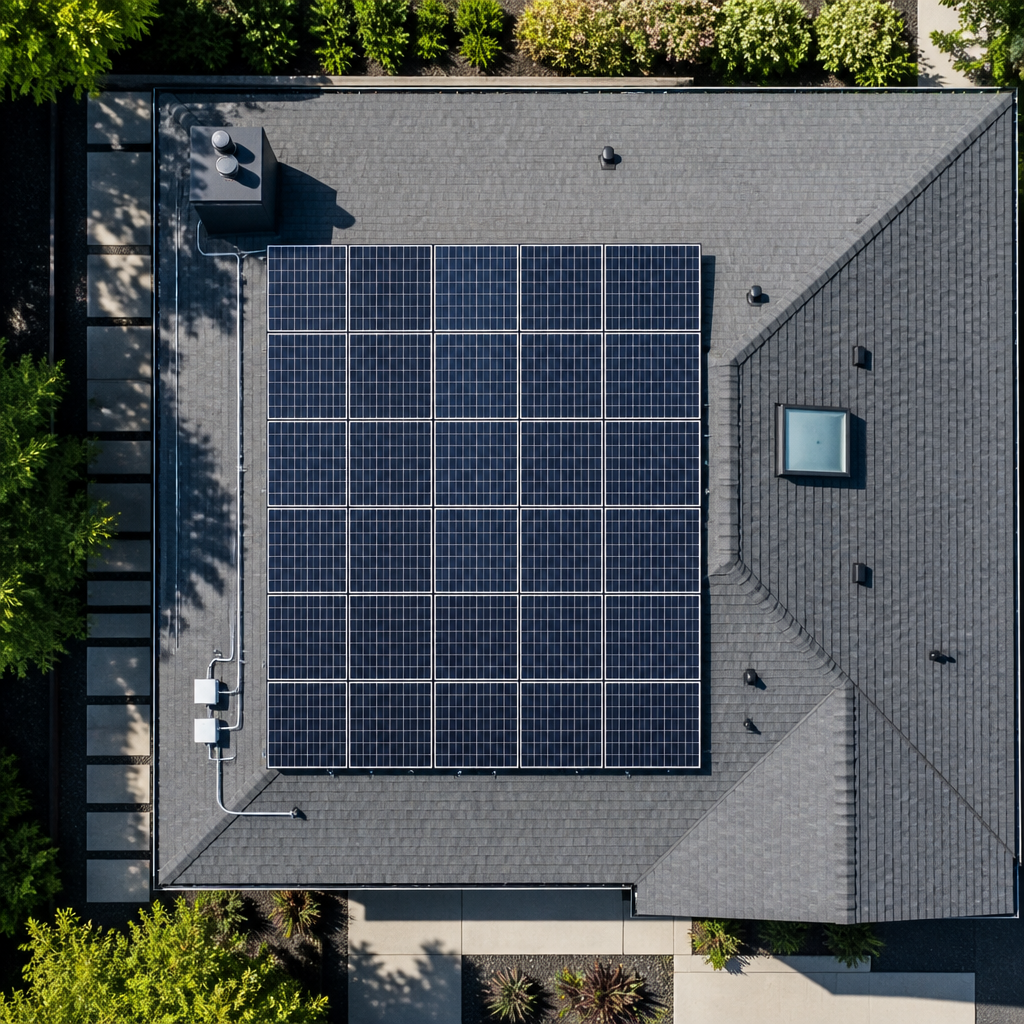
A residential electrical inspection is not a bureaucratic formality. It is a structured technical assessment of whether a home's existing electrical infrastructure can safely absorb new, sustained loads. Solar arrays, EV chargers, and battery storage systems all introduce continuous high-amperage demand that a typical household circuit was never designed to carry.
In the Mid-Atlantic region, housing stock spans a wide range of construction eras. A home built in the 1960s in Delaware or suburban Maryland may still have its original service panel and branch wiring. Adding a modern solar inverter or a 48-amp EV charger to that infrastructure without first assessing its condition is comparable to running a high-draw appliance through an extension cord: the components may function briefly, but the risk of failure is material and ongoing.
A home's electrical system should be evaluated not just for what it currently carries, but for what it will be asked to carry continuously for the next 25 years once solar, storage, and EV charging are in place.
The electrical safety inspection step also has a direct effect on project timelines. Permit offices in Pennsylvania, New Jersey, Virginia, and Washington, D.C. routinely require documentation of electrical readiness before issuing installation permits for solar or EV charging equipment. Discovering a deficiency after equipment has been ordered, or worse, after installation has begun, can add weeks to a project and increase costs substantially.
Pro tip: Schedule the electrical inspection before signing any equipment purchase agreement. Findings may change the scope of the installation, and it is far simpler to adjust a proposal before purchase than to renegotiate after a deposit has been made.
What a Pre-Solar Electrical Check Actually Evaluates
A thorough pre-solar electrical check covers several interconnected systems, each of which affects the safety and performance of any upgrade added downstream. Understanding what inspectors examine helps homeowners prepare and set realistic expectations for the findings.
Service Panel Capacity and Condition
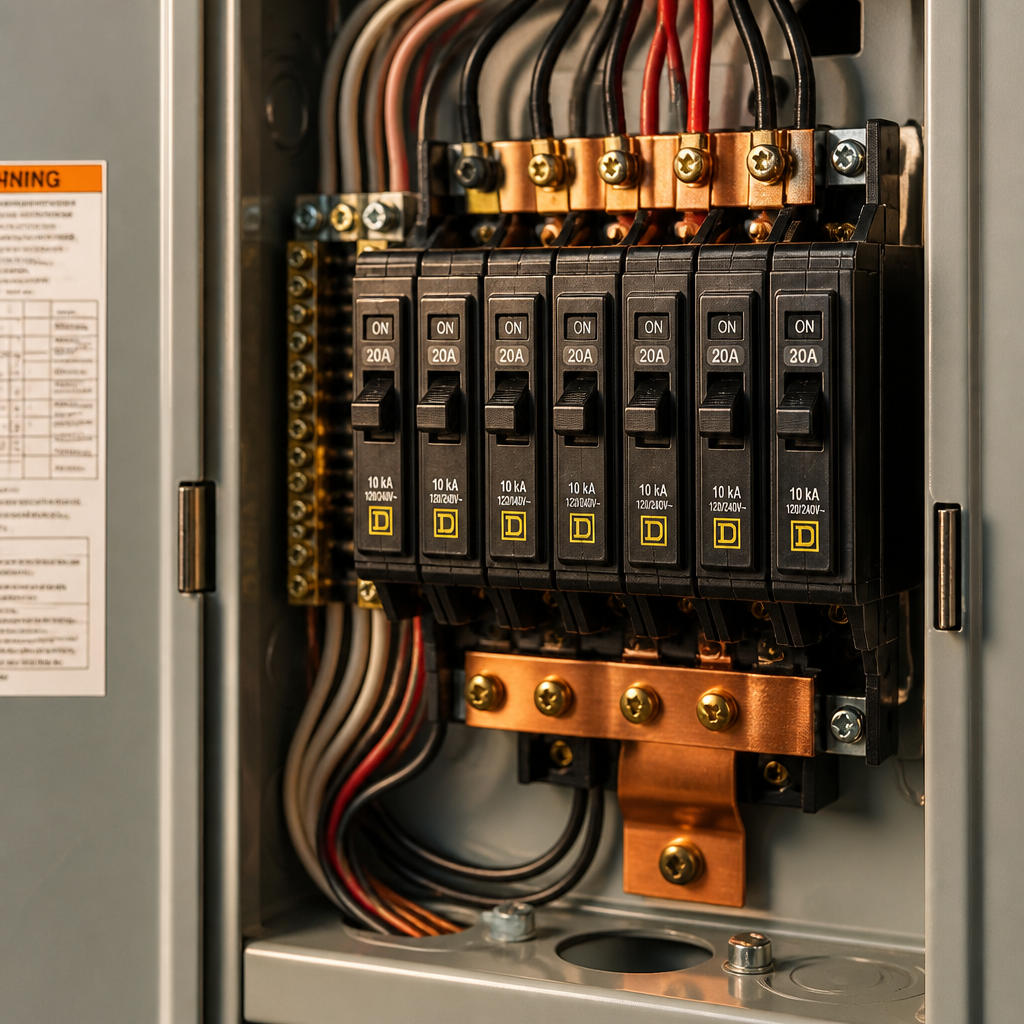
The service panel is the central point of evaluation. Inspectors confirm the panel's amperage rating, verify that the main breaker matches the service entrance rating, and check for physical signs of heat damage, corrosion, or moisture intrusion. Panels with known manufacturing defects are flagged regardless of age.
A 200-amp service panel is generally the minimum practical starting point for a home that will run solar with battery storage and one or more EV chargers. Homes with 100-amp or 150-amp service panels almost always require an upgrade before installation can proceed safely.
Branch Circuit Wiring Assessment
Beyond the panel, inspectors trace the condition of branch circuit wiring accessible through the panel, attic spaces, and outlet boxes. Aluminum branch wiring, common in homes built during the 1960s and 1970s, requires specific connection hardware and periodic inspection because it behaves differently from copper under load cycling. Double-tapped breakers, where two conductors share a single breaker terminal not rated for two, represent a direct fire hazard and appear frequently in older homes where circuits were added informally over the years.
Grounding and Bonding
Solar systems and battery storage equipment require robust grounding to function safely and to meet National Electrical Code requirements. Inspectors verify that the grounding electrode system is intact, that the neutral-to-ground bond is properly established only at the main panel, and that any subpanels are correctly isolated. Deficiencies in this area are not cosmetic. They affect both personnel safety and equipment longevity.
Common Electrical Deficiencies Found in Mid-Atlantic Homes
After working across Delaware, Maryland, New Jersey, Pennsylvania, Virginia, and Washington, D.C., certain patterns in residential electrical deficiencies appear with regularity. Knowing what is common helps homeowners understand why the inspection step is not a formality but a genuine discovery process.
Undersized service entrances are the most frequent finding in homes built before 1990. The baseline residential electrical load has increased substantially over the decades as households have added HVAC systems, tankless water heaters, and multiple home office setups. Adding solar and EV charging to an already-stressed service is not viable without upgrading the service entrance first.
Federal Pacific and Zinsco panels, both of which have documented reliability concerns, are still present in a meaningful share of older Mid-Atlantic homes. When these are found, replacement is strongly recommended before any additional load is connected, not because replacement is required by every jurisdiction, but because the risk of breaker failure under high continuous load is not acceptable in a system that will run an EV charger overnight or a solar export circuit during peak hours.
Pro tip: If the home was built before 1985 and has not had a documented panel replacement or service upgrade, treat a full panel inspection as non-negotiable before requesting solar or EV charger proposals. The findings will directly shape what equipment can be specified.
Improper or absent GFCI protection in garages and exterior locations is another common finding. EV chargers installed in garages require GFCI protection under current code, and homes that lack it will need that wiring brought up to standard as part of the charger installation.
Inspection Findings and the Path to a Panel Upgrade
An electrical safety inspection does not always result in a recommendation to upgrade the panel, but when it does, the upgrade is foundational rather than optional. A panel upgrade resolves capacity constraints, replaces compromised equipment, and creates the physical space for the new circuit breakers that solar inverters, battery systems, and EV chargers each require.
In practice, the sequence matters. The inspection produces a findings report. That report informs the scope of any necessary remediation. The remediation, whether it is a panel replacement, service upgrade, or targeted rewiring, is completed and inspected before the solar or EV charger installation begins. This sequencing prevents the scenario where a deficiency is discovered during the final solar inspection, requiring rework and reinspection of multiple systems simultaneously.
For homeowners in states like Maryland and Virginia where utility interconnection applications require documentation of electrical readiness, the inspection report also serves as supporting evidence for the interconnection process. Having that documentation organized from the outset reduces delays at the utility review stage.
Comparing Inspection Approaches: What Each Method Covers
Inspection Approach | What It Covers | Best Suited For |
|---|---|---|
Licensed Electrical Contractor Assessment | Full panel evaluation, branch circuit review, grounding assessment, load calculation, and upgrade recommendations specific to the planned installation. Produces a written report usable for permit applications. | Homeowners planning solar, battery storage, EV charging, or any combination. Provides the most actionable findings for project scoping. |
General Home Inspector Electrical Review | Visual inspection of accessible components. Identifies obvious deficiencies such as missing cover plates, exposed wiring, and tripped GFCI outlets. Does not include load calculations or solar/EV-specific assessment. | General home purchase due diligence. Not sufficient as a standalone basis for solar or EV charger planning. |
Municipal Electrical Inspector Visit | Code compliance verification against the applicable adopted code edition. Confirms whether completed work meets permit requirements. Occurs after work is done, not before. | Final sign-off on completed installations. Not a planning tool for identifying what upgrades are needed before work begins. |
The distinction between these approaches is material. A general home inspection report stating "electrical system appeared functional" is not a substitute for a licensed contractor's load analysis and pre-installation assessment. The two documents answer different questions, and only the contractor assessment answers the questions relevant to solar and EV charger planning.
EV Charger-Specific Electrical Requirements
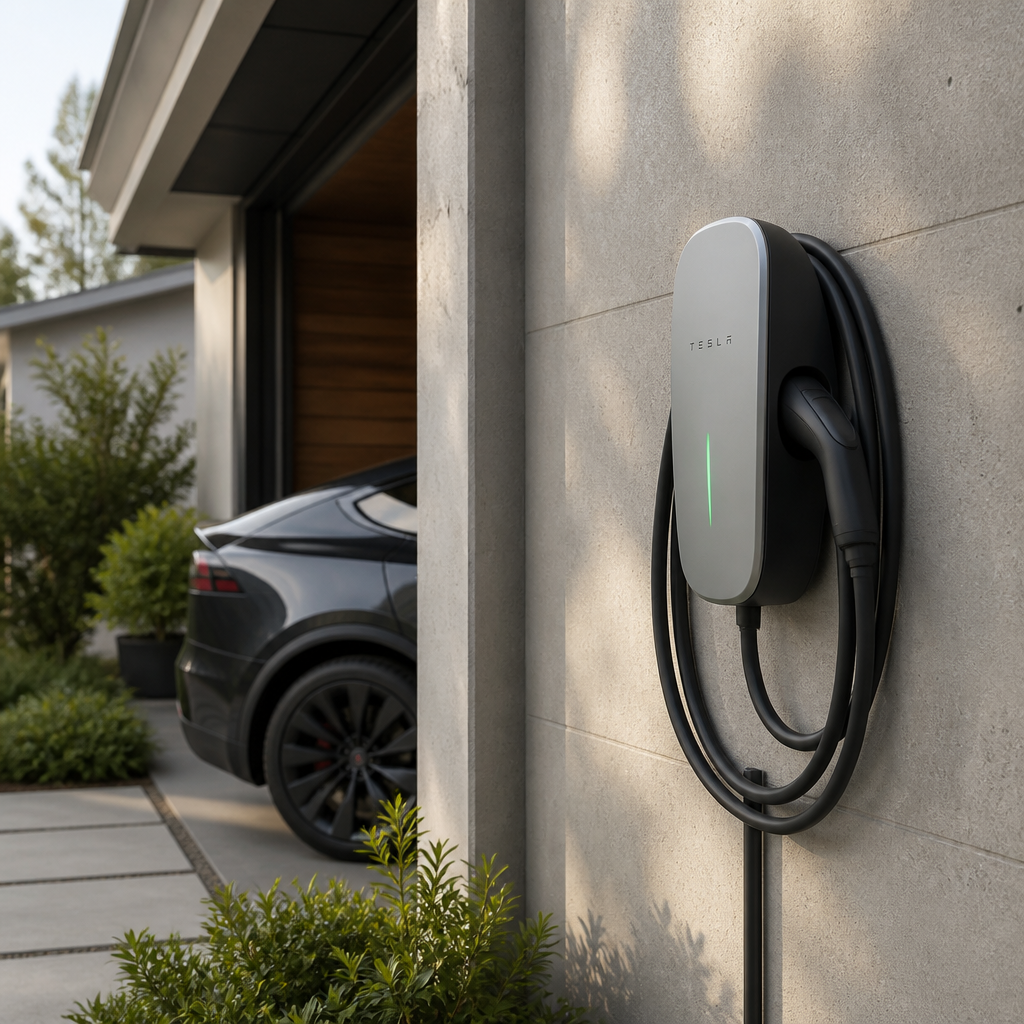
EV charger installations present a specific set of electrical requirements that a pre-installation inspection must address directly. A Level 2 home charger typically operates at 240 volts and draws between 24 and 50 amps depending on the unit and the vehicle's onboard charger capacity. That load must be carried continuously, often for six to ten hours overnight, which places sustained demand on both the dedicated circuit and the main panel.
The inspection should confirm that the panel has available breaker slots and sufficient remaining capacity to accommodate the charger circuit without pushing total demand past the service entrance rating. If load calculations indicate the panel is already near capacity under normal household operation, adding a 40- or 50-amp EV charger circuit will exceed the service rating, and a panel or service upgrade must be completed first.
Garage wiring condition is also evaluated. Conduit routing from the panel to the charger location, the condition of any existing garage circuits, and the physical installation pathway all affect both cost and feasibility. Homes with finished garages or long runs from the panel may require more extensive work than homes with open, accessible utility areas.
In jurisdictions served by Triple R Energy, including Delaware, Maryland, New Jersey, Pennsylvania, Virginia, and Washington, D.C., the EV charger installation permit process requires a licensed electrical contractor to pull the permit, perform the installation, and have the work inspected. Homeowners who attempt to self-install or hire unlicensed contractors face permit failures, insurance gaps, and potential liability if the charger circuit is involved in an incident.
Battery Storage Installation and Electrical Readiness
Battery storage systems introduce the most complex electrical requirements of the three upgrade categories. A home battery installation involves not only the battery unit itself but also a battery management system, interconnection hardware, and in most cases a critical loads panel or subpanel that isolates the circuits the battery will back up during a grid outage.
The pre-installation electrical check for battery storage must confirm that the main panel has space and capacity for the inverter-charger or hybrid inverter that manages the battery. It must also verify that the proposed critical loads panel configuration is feasible given the existing wiring layout. In older homes where the panel is already crowded or where the wiring to key circuits is not accessible without significant work, the scope of the installation expands accordingly.
Battery storage systems that are installed without adequate load analysis frequently trip main breakers under simultaneous charging and household demand, defeating the purpose of the backup power investment entirely.
Proper electrical readiness for battery storage also has an effect on the system's performance during outages. A battery system connected to a panel that cannot safely handle its charge and discharge cycles will either underperform or trigger protective shutdowns at the moments when reliable backup power matters most. The inspection step is what prevents that outcome.
Triple R Energy's approach to battery storage installations begins with exactly this kind of pre-installation assessment, confirming that the existing electrical infrastructure supports the planned system before any equipment is ordered or installed. Homeowners interested in learning more about battery storage readiness can review the services available at Triple R Energy's battery storage page or explore EV charger installation requirements at the EV charger installation page.
Frequently Asked Questions
What is a residential electrical inspection and how is it different from a standard home inspection?
A residential electrical inspection is a detailed technical assessment performed by a licensed electrical contractor or municipal electrical inspector. It evaluates service panel capacity, branch circuit condition, grounding systems, and load capacity relative to planned new equipment. A standard home inspection covers electrical components visually but does not include load calculations or upgrade-specific analysis. For solar, EV charger, or battery storage planning, the licensed contractor assessment is the appropriate starting point.
How long does a pre-solar electrical check take for a typical home?
For a typical single-family home, a thorough pre-installation electrical assessment takes between one and two hours on site. The time varies based on the age and complexity of the home's electrical system, the number of planned upgrades, and how accessible the panel and branch wiring are. Homes with finished basements or heavily modified electrical systems may require additional time.
Will the inspection always find problems that require additional work?
Not necessarily. Homes with recently upgraded 200-amp panels, modern wiring, and documented code-compliant work may pass the assessment with only minor notes. However, in homes built before the mid-1990s that have not had panel replacements or service upgrades, the inspection does frequently identify at least one issue requiring attention before a solar or EV charger installation can proceed. The inspection's value lies precisely in identifying those issues before they cause delays or create safety hazards.
Do I need a separate electrical inspection for each upgrade, or can one inspection cover solar, EV charging, and battery storage together?
A single comprehensive pre-installation assessment can cover all three systems if the scope is defined that way from the outset. In fact, combining the assessment for all planned upgrades produces more accurate load calculations, since the inspector evaluates the cumulative effect of all new loads together rather than each in isolation. This approach typically results in a more efficient remediation plan and avoids the need to revisit the panel multiple times.
What happens if I proceed with solar or EV charger installation without a pre-installation electrical inspection?
Proceeding without an electrical inspection creates several specific risks. The installation may fail the required permit inspection, requiring costly rework. Deficiencies discovered during installation rather than before it tend to extend timelines significantly. More seriously, connecting high-amperage loads to an electrical system that has unidentified deficiencies creates fire and equipment damage risk. In some cases, homeowner's insurance claims related to electrical fires have been denied when unpermitted or uninspected work was found to be a contributing factor.
Is an electrical inspection required by law before adding solar in Delaware, Maryland, Virginia, or other Mid-Atlantic states?
The specific permit and inspection requirements vary by jurisdiction and municipality within each state, but across Delaware, Maryland, New Jersey, Pennsylvania, Virginia, and Washington, D.C., solar and EV charger installations consistently require an electrical permit, and the permit process includes an inspection of the completed electrical work by a municipal inspector. What the licensing contractor's pre-installation assessment adds is the planning step before the permit is pulled, identifying what work is needed before installation begins rather than discovering it during the permit inspection.
If you have recently had a residential electrical inspection before a solar or EV charger installation, sharing your experience can help other homeowners in the Mid-Atlantic region understand what to expect from the process.