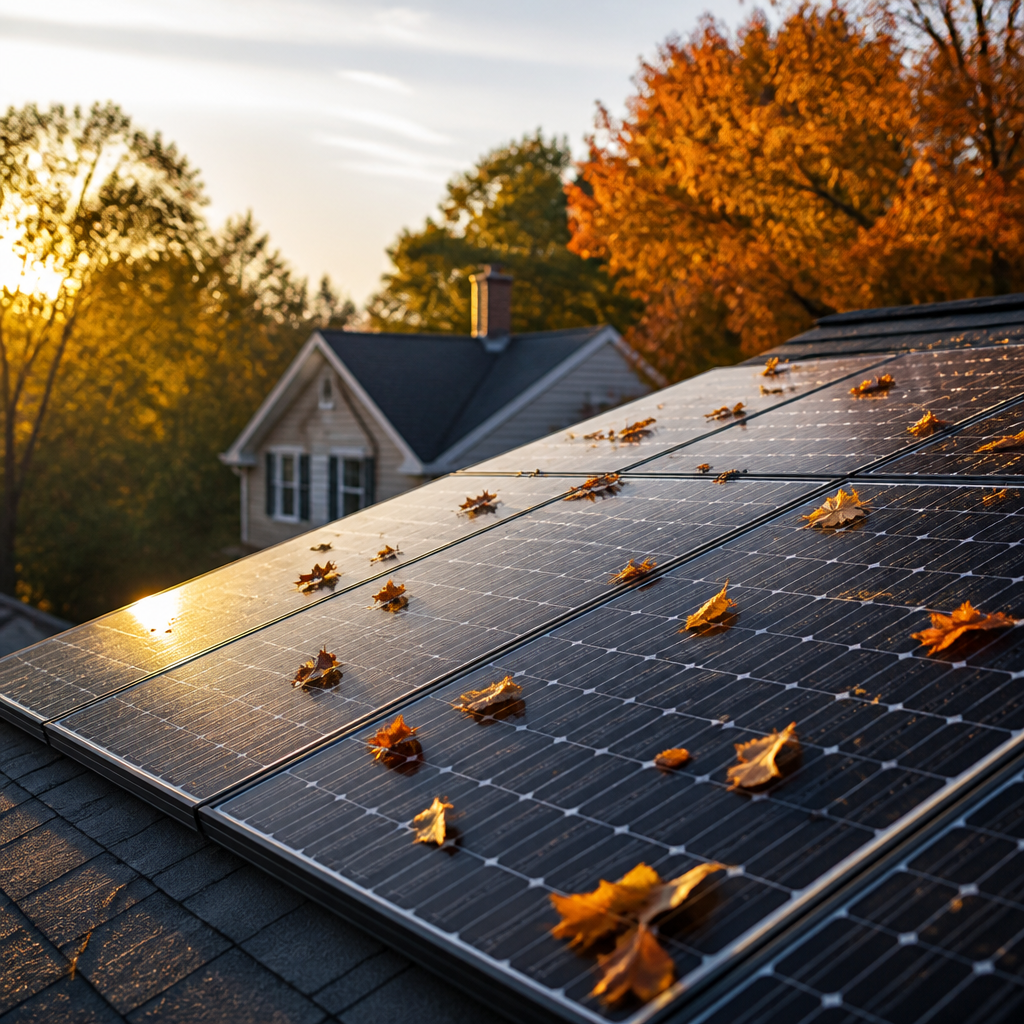
Autumn brings shorter days, lower sun angles, and a steady fall of leaves onto roofs and ground-mounted arrays across Delaware, Maryland, New Jersey, Pennsylvania, Virginia, and Washington, D.C. Many homeowners notice a decline in their monitoring data during October and November and assume the system has failed. In most cases, the decline has identifiable causes, and several of them are within the homeowner's control. This article explains how solar panel debris fall affects production, how to separate debris losses from normal seasonal decline, and which maintenance steps are safe and effective for Mid-Atlantic properties.
Table of Contents
- Quick Takeaways
- How Fall Changes Solar Output
- How Leaves and Debris Reduce Panel Output
- Telling Debris Losses From Normal Seasonal Decline
- Safe Cleaning Practices for Mid-Atlantic Homes
- Trimming Trees and Checking Tilt
- Fall Production, Batteries, and EV Charging
- Comparing Fall Maintenance Options
- Frequently Asked Questions
- References
Quick Takeaways
Key Insight | Explanation |
|---|---|
Location of debris matters more than volume | A small leaf cluster that crosses all three electrical sections of a panel can reduce output more than a larger patch confined to one section. |
Some fall decline is expected | Daylight hours shorten through autumn, and output in November can sit roughly 30 to 50 percent below peak summer months in many areas. |
Compare clear days with clear days | Evaluate production against similar weather conditions over two to three weeks before concluding that debris or a fault is the cause. |
Clean from the ground with plain water | A garden hose and a soft brush handle most light debris. Pressure washers and abrasive tools can damage glass and seals. |
Trim branches before leaf drop | Pruning overhanging limbs reduces both shade and the volume of debris that reaches the array during peak leaf fall. |
Review battery and EV charging settings | Reduced autumn output lowers the energy available for storage and vehicle charging, so schedules should be adjusted after seasonal changes. |
How Fall Changes Solar Output
Solar output follows the sun, and the sun's influence changes noticeably between September and November. Across the Mid-Atlantic, shorter days, lower sun angles, and more frequent cloud cover produce a gradual decline that appears on monitoring dashboards before its cause is clear. Leaf debris adds a second factor on top of these seasonal conditions, so the two effects are often confused.
Shorter Days and Daylight Hours
Daylight is the largest seasonal variable. Published fall guidance from one solar installer notes that daylight may run roughly 14 to 15 hours in June or July, drop to 12 to 13 hours in September, and fall to 9 to 10 hours by November in most areas. Production in November can therefore sit around 30 to 50 percent below peak summer months, which is an expected seasonal pattern rather than a fault.
The reduction in daylight affects every day of the week equally, so it does not explain sharp, isolated drops. Those drops require a different diagnosis. A homeowner who sees a gradual, steady decline across October is usually observing the calendar at work.
Lower Sun Angle and Panel Incidence
As the sun moves lower in the sky, its rays strike the panel surface at a less direct angle. Less direct light carries less energy per unit of module surface, which reduces output across the day. The effect is most visible at midday, when production would otherwise be strongest.
In practice, this change is gradual and predictable. It should not be mistaken for a fault in the inverter or wiring, and it cannot be corrected by cleaning alone.
Overcast Days and Fall Weather
Fall weather in the region tends to bring more frequent cloud cover and rain systems. Panels still generate electricity on overcast days, but published guidance places overcast output at roughly 10 to 25 percent of peak capacity. A string of cloudy days can therefore produce a sharper dip than the calendar alone would suggest.
For this reason, production should be judged over several weeks rather than a single day. A single cloudy afternoon carries little diagnostic value.
How Leaves and Debris Reduce Panel Output
Leaves and debris reduce output through two mechanisms. The first is shading, which can cover a small area but produce a disproportionate loss. The second is surface soiling, where fine particles and residue reduce the light reaching the photovoltaic cells across a wider area. Both are common in autumn, and both can be addressed.
Why Partial Shade Costs More Than Its Area
A standard residential module contains 64 or 72 cells connected together within the panel. Each module is divided into three sections, and each section has its own bypass diode. If shade touches even part of one section, the output of that section is affected, while the other two sections may continue to produce electricity.
A shadow that crosses all three sections can reduce a panel to little or no output. A telephone wire may cast a shadow that covers only a few cells, yet that shadow still affects a larger share of the panel if it spans every section. Leaves lying across the top or middle of a panel can create the same pattern.
Surface Debris, Dust, and Pollen
Fallen leaves, dust, and other particles can block sunlight from reaching the cells, which lowers production even when no solid shadow forms. Wet leaves that stick to the glass are especially difficult, because moisture and decomposing material form a film that rain alone often does not remove. Tree sap and pollen residue can add to the effect during the autumn months.
Light soiling is usually spread across the array and produces a modest, even reduction. Heavy, uneven buildup creates localized losses that show up as differences between strings or sections of the same system.
A small area of shade can cost a disproportionate share of output when it crosses the electrical sections of a panel, so a clear path for light matters more than the number of leaves.
Telling Debris Losses From Normal Seasonal Decline
Not every fall decline signals a debris problem. A reliable diagnosis separates expected seasonal decline from losses caused by shading or soiling. The most useful evidence comes from comparing production under similar conditions, using the monitoring data that most systems already record.
Reading Daily Production Against Weather
Start by comparing production on days with similar cloud cover. A clear day in late October should be compared with another clear day in October, not with a clear day in July. If production on clear days drops sharply within a short period, and cloud cover does not explain the change, debris or shading becomes a more likely cause.
Record the date, weather conditions, and daily output for two to three weeks to establish a usable baseline. A written log makes it easier to identify when the change began and whether it coincides with a storm, a windy period, or a heavy leaf drop.
Pro tip: Compare individual strings or inverters where the monitoring platform allows it. When one section of the array falls behind its neighbors under identical weather, a localized cause such as a leaf pile or a branch shadow is more likely than a system-wide issue.
Spotting Shade Patterns Over Several Weeks
Shade from trees changes with the sun's path, so losses often appear at predictable times of day. A drop that begins late in the afternoon points to obstructions to the west of the array, while losses in the morning point to obstructions to the east. These timing patterns narrow the search, but they do not identify the physical source.
Confirm any pattern with a site walk. Fall shading also changes as leaves thin, so a loss that eases after most leaves have dropped may have been caused by temporary debris rather than a permanent obstruction.
Safe Cleaning Practices for Mid-Atlantic Homes
Cleaning is the most direct response to debris, but the method matters. Improper cleaning can scratch glass, damage seals, or create a fall hazard. The practices below reflect common field guidance for residential systems in the region.
Timing and Water Use
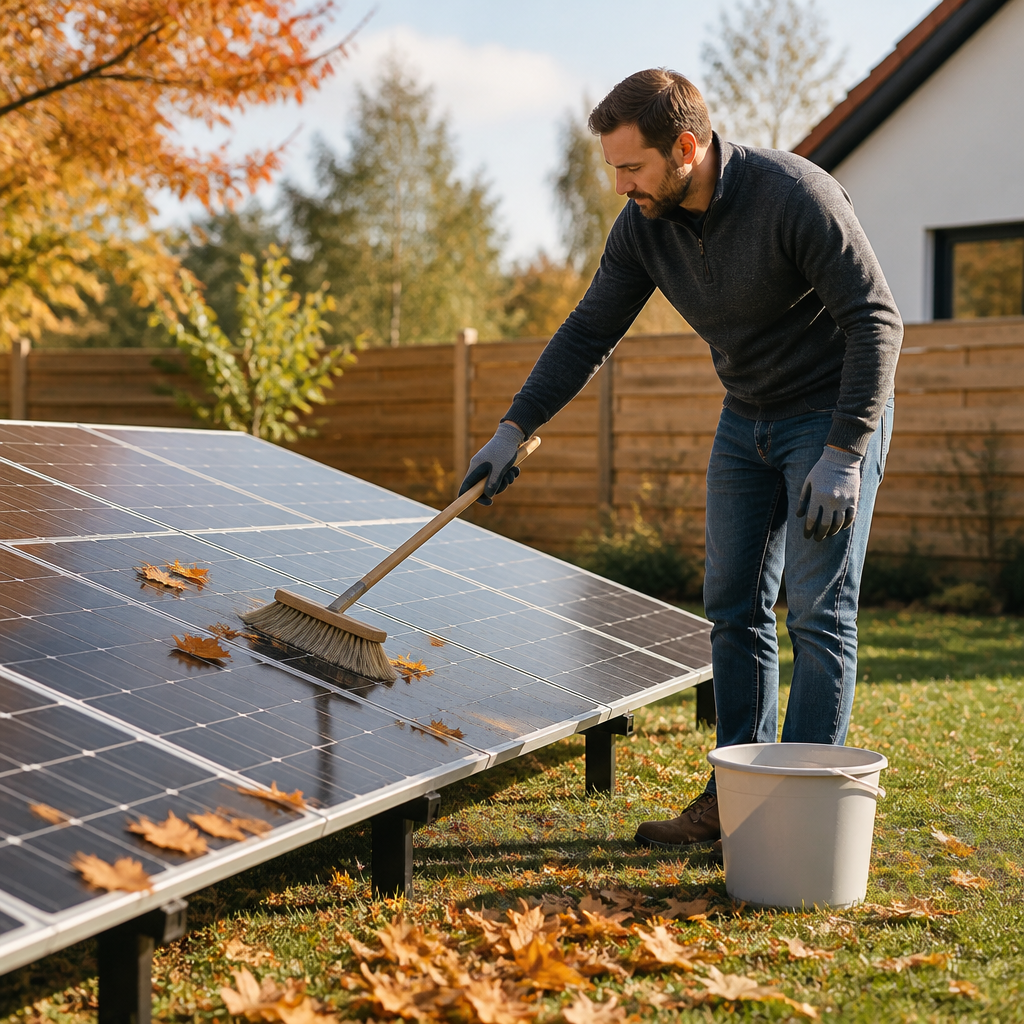
Clean in the early morning or late afternoon, when panels are cooler. Rinsing hot glass with cold water is generally avoided because of the risk of thermal stress, so the hottest part of a summer or early autumn day is the wrong time for a rinse. Use a garden hose with plain water and a soft brush or sponge for residue that does not loosen with a rinse.
Avoid pressure washers, abrasive pads, and harsh detergents. High-pressure water can force moisture past seals, and abrasive materials can damage the glass surface. Some manufacturer warranties specify approved cleaning methods, so the owner's documentation should be reviewed before any cleaning begins.
Pro tip: Clean only the parts of the array that can be reached safely from the ground. Attempting to clean a steep roof section with a hose and a ladder creates more risk than the debris usually justifies.
When to Call a Licensed Professional
Ground-level rinsing covers most light debris. Professional help is the better option when panels are beyond safe reach, when debris is caked or biological, or when the roof pitch and height create a fall risk. A licensed electrical contractor can also inspect connections, wiring, and inverter behavior while accessing the array, which a rinse does not address.
If cleaning does not restore expected production, the diagnosis should move to electrical testing rather than repeated cleaning. Repeated rinsing cannot correct a fault in the electrical system.
Trimming Trees and Checking Tilt
Debris control starts before leaves reach the array. Trimming and tilt decisions are longer-term measures, but they affect how much debris and shade a system receives each autumn.
Managing Overhanging Branches Before Leaf Drop
Trim branches that overhang the array or sit in the path of the sun before leaf drop begins. Thinning a canopy can reduce both shade and the volume of leaves that reach the panels. Pruning is most effective when completed before the peak of leaf fall, which often occurs in the weeks after the first hard frosts.
Large limbs and work near utility lines should be handled by a qualified arborist or the utility's contracted crew. Removing a tree is a larger decision that should weigh shade, roof condition, and the property's overall energy needs.
Tilt Angle and Seasonal Sun Position
A steeper tilt can help panels align better with the lower autumn and winter sun, which can improve output during those months. Published guidance on fall performance describes this alignment effect, but tilt is set during installation to account for roof pitch, structure, and wind loads.
Homeowners should not attempt to change mounting angles themselves. A licensed installer can evaluate whether the existing angle is appropriate and whether any future racking change is practical for the property.
Fall Production, Batteries, and EV Charging
Lower solar output changes how a home uses stored and grid electricity. Homeowners who have added battery storage or an electric vehicle charger should plan for these shifts before they affect daily routines.
Battery Reserve Planning for Shorter Days
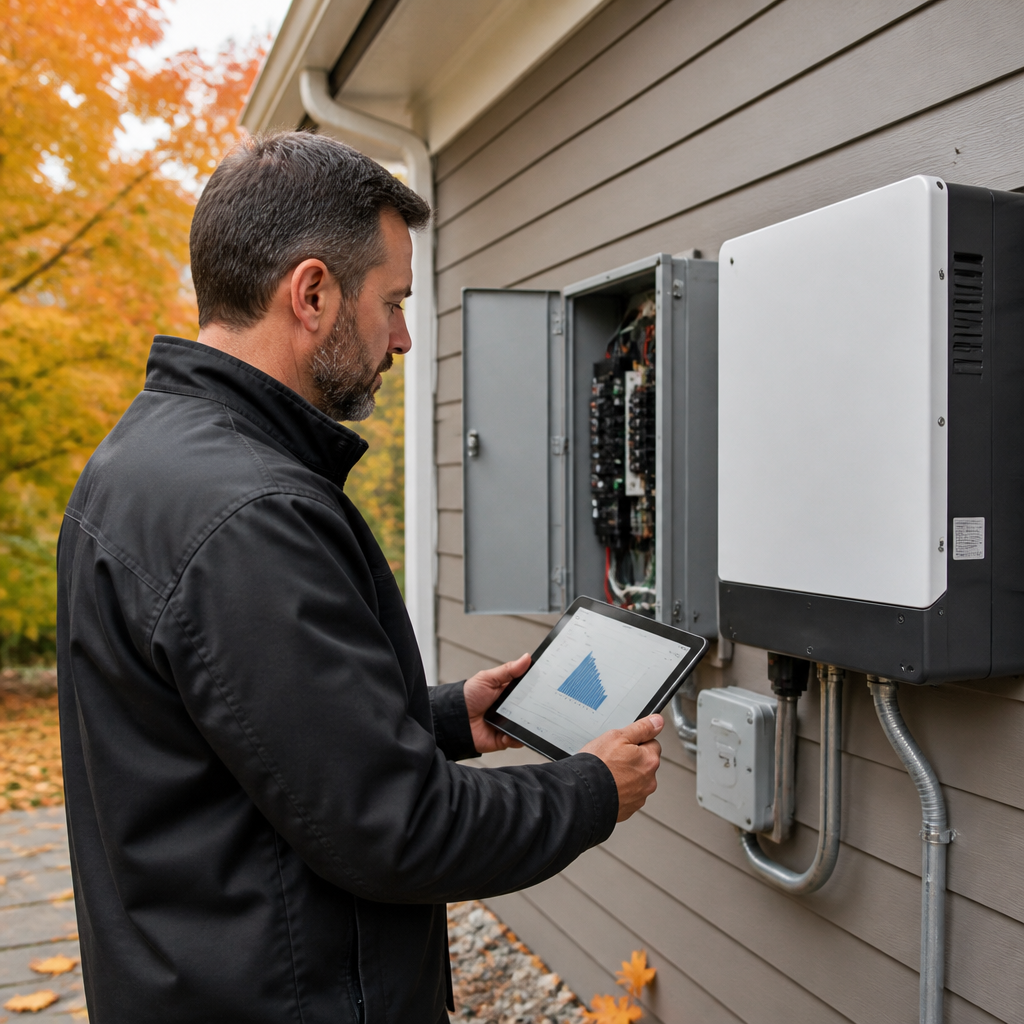
A battery charges from solar production, so reduced output in October and November leaves less energy available to carry the home through evening hours. Review the battery's reserve setting and charging priorities so that the system does not draw down heavily during late-day peak use.
If a battery consistently fails to reach its expected state of charge on sunny days, the cause may involve panel soiling, shading, or a configuration issue. Such a pattern warrants a diagnostic visit rather than a change in settings alone.
Scheduling EV Charging Around Lower Solar Output
Charging an electric vehicle with solar energy works best when production is strong. In autumn, a practical approach is to schedule most charging for midday and set a grid-based overnight window as a backstop. Homeowners who rely on solar for most charging should expect fewer solar-only miles in late autumn.
After any seasonal change, confirm charger schedules and load settings. A charger sized correctly for the home's electrical service supports both the vehicle's charging plan and the panel's daily demand.
Comparing Fall Maintenance Options
Three approaches account for most fall debris management on residential systems. Each has a different cost, risk profile, and diagnostic value. The right choice depends on roof access, the amount of debris, and whether production problems persist after cleaning.
Approach | Best Suited For | Key Limitation |
|---|---|---|
Ground-level hose rinse | Light leaf dust and loose debris on reachable arrays | Does not identify wiring, inverter, or shading faults |
Professional cleaning and inspection | Heavy buildup, biological growth, or panels beyond safe reach | Involves scheduling and cost, and quality depends on the provider's licensing and insurance |
Monitoring review with electrical diagnostics | Persistent output loss after cleaning or unexplained drops on clear days | Requires access to system data and a site visit for physical findings |
A practical sequence starts with data review, moves to a ground-level rinse where the array is reachable, and escalates to professional inspection when losses persist. Reversing that order often wastes time, because cleaning cannot correct a fault that lies in the electrical system.
Frequently Asked Questions
How much can fall leaves reduce solar panel output?
The effect depends on where leaves land and how many cells they cover. A few leaves on one section may cause a small loss, while leaves that cross all three sections of a panel can reduce its output substantially. Monitoring data across several clear days is the most reliable way to measure the impact on a specific system.
Is a drop in solar production in October normal?
A gradual decline is expected as daylight hours shorten and the sun sits lower in the sky. A sharp change on clear days, however, is not explained by daylight alone and should be investigated.
How often should solar panels be cleaned in autumn?
Many residential systems do not require frequent cleaning when rainfall is regular. A visual check after heavy leaf drop, followed by a rinse when visible buildup remains, is a practical schedule. Panels that stay visibly coated after rain should be cleaned or inspected.
Can I use a pressure washer on my solar panels?
No. High-pressure water can damage seals, glass, and mounting components. A garden hose with plain water and a soft brush is the safer method for homeowners.
Will rain clean my solar panels after leaves fall?
Rain removes some dust and light residue, but it often leaves wet leaves, sap, and film in place. Rain does not reliably clear shade from leaves stuck to the glass or lodged along the frame.
Should I trim trees before the fall season?
Trimming overhanging branches before leaf drop can reduce both shade and debris. Large limbs and work near utility lines should be handled by a qualified arborist or utility crew.
We welcome readers in the Mid-Atlantic to share which cleaning method or diagnostic step produced the clearest results for their property this autumn.