Homeowners who receive an estimate for new electrical work often see two terms that sound interchangeable: panel replacement and electrical service upgrade. The distinction matters because the two describe different parts of the electrical system, and the scope, cost, and shutdown time can differ substantially. A proposal for a new panel may resolve a damaged-equipment problem without increasing the home's capacity. Conversely, an electrical service upgrade may be the correct solution for a household adding an EV charger or heat pump, even when the existing panel is still in working condition. This guide explains where each term applies, how to evaluate a proposal, and what residential electrical upgrades involve across Delaware, Maryland, Pennsylvania, Virginia, and Washington, D.C.
Table of Contents
- Quick Takeaways
- What the Electrical Panel Does
- What Panel Replacement Means
- What a Service Upgrade Covers
- Capacity Depends on Loads, Not a Default Number
- When Panel-Only Replacement Fits
- When the Service Becomes Part of the Project
- Comparing the Approaches
- Shutdown, Permits, and Coordination
- Common Mistakes When Comparing Proposals
- Frequently Asked Questions
- References
Quick Takeaways
Key Insight | Explanation |
|---|---|
Panel replacement changes the panel | Replacement removes the existing enclosure, breakers, and bus, then installs new equipment. It does not by itself increase the service capacity that enters the home. |
An electrical service upgrade addresses capacity | A service upgrade covers the equipment and conductors that bring utility power into the home, which may include the meter base, service conductors, mast, and main disconnect. |
A load review should drive the decision | Calculated demand, existing appliances, and planned additions such as EV chargers, heat pumps, and electric water heaters determine the rating the home requires. |
Open breaker spaces do not prove capacity | Empty slots show physical room in the panel only. They do not confirm that the service can carry additional continuous load. |
Small panels warrant a service review | Homes with panels under 100 amps frequently need a closer review before modern appliances or EV charging are added. |
Scope should be stated in writing | A proposal should state whether it covers the panel only, the service entrance, or both, with utility coordination, permits, and inspections listed separately. |
What the Electrical Panel Does
The electrical panel is the central point where power entering the home is distributed to individual branch circuits. Each circuit breaker protects its circuit by interrupting power during an overload or certain fault conditions. Because the panel sits between the utility connection and every circuit in the house, changes to it affect the entire electrical system.
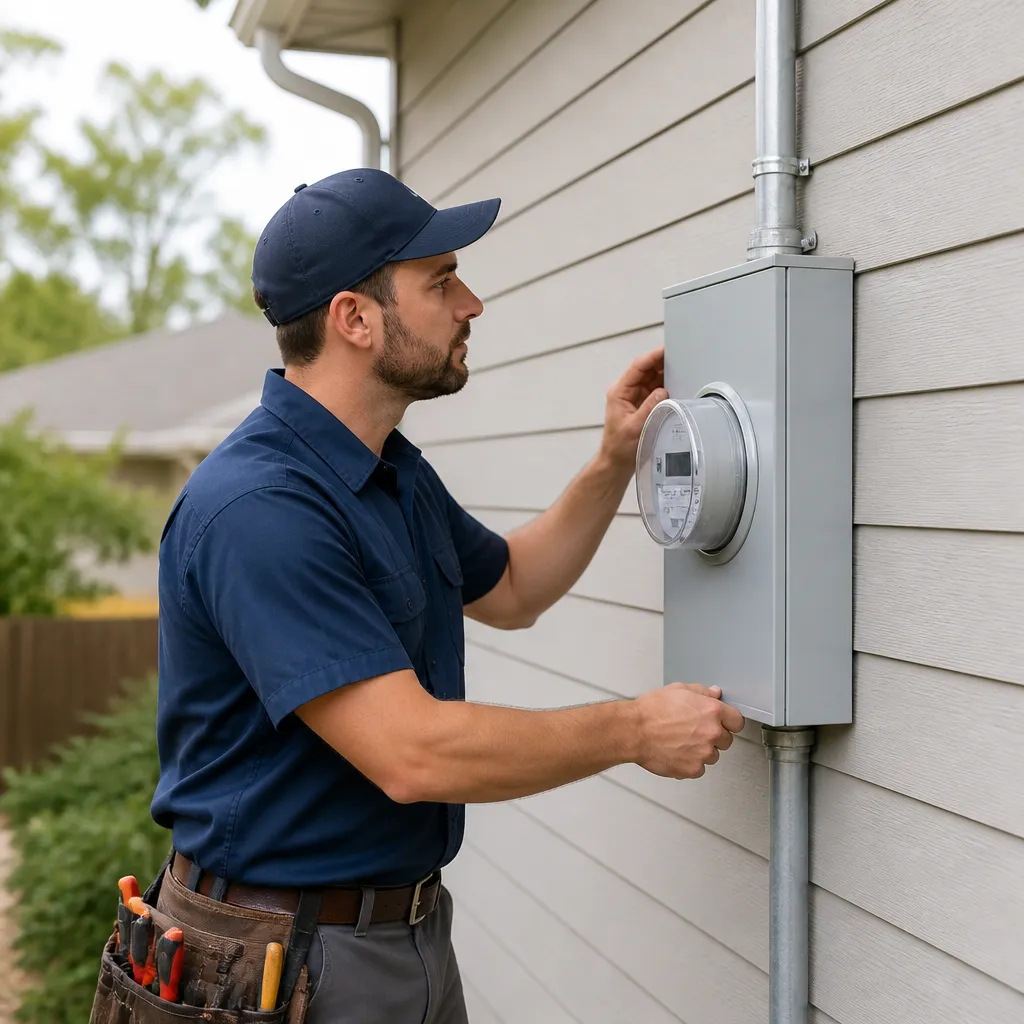
Circuits fed by the panel serve lighting, outlets, kitchen appliances, HVAC equipment, water heaters, laundry equipment, and, in a growing number of homes, EV charging equipment. Each of these loads places a different demand on the system. The panel must be able to distribute that demand safely, and the service feeding the panel must be able to supply it.
Why the Panel and the Service Are Different Equipment
The panel distributes power through branch circuits, while the service includes the equipment and conductors that bring power from the utility connection to the main equipment. Two homes with identical panels can have very different service capacities, depending on the meter equipment, service conductors, and main disconnect that feed them. This distinction is the foundation of the comparison between a panel replacement and an electrical service upgrade.
In practice, the first diagnostic question is whether the problem sits inside the panel enclosure or upstream of it. A panel with a loose termination, heat damage, or a failed breaker points toward equipment work at the panel. A service with insufficient capacity, a deteriorated meter base, or undersized conductors points toward the service itself. Many proposals fail to make this separation clearly, which makes it difficult for homeowners to judge whether the scope fits their situation.
Terminology Homeowners Encounter on Estimates
Estimates often use the words panel upgrade, panel change-out, service change, and service upgrade without definitions. Industry usage varies from one contractor to another, so the definitions in a written scope matter more than the labels. A reliable proposal names each component being removed, replaced, or added, and it identifies the rating of the new equipment.
What Panel Replacement Means
A panel replacement involves removing the existing electrical panel and installing a new one. The work addresses the condition or suitability of the panel itself. It is typically considered when the existing panel is damaged, deteriorated, unsuitable for the home's current configuration, or no longer serviceable with available parts.
The reason for replacement determines whether the project is appropriate. A panel showing scorch marks around a bus connection from a loose termination is a condition problem that requires replacement. A panel that is functional but has no room for new circuits is a capacity and layout problem, which may or may not require replacement depending on the service behind it.
Evaluating the Enclosure, Breakers, and Bus
A professional evaluation covers the enclosure, breakers, bus, conductor terminations, neutral and grounding bars, moisture exposure, corrosion, and heat damage. Each of these items can indicate whether the equipment can be safely maintained. Brand and age provide useful context, but neither alone justifies replacement. The condition of the specific equipment matters more than a general rule based on the installation date.
Moisture and corrosion deserve particular attention in basements, garages, and older utility rooms common across the Mid-Atlantic region. Humidity and condensation can degrade terminations and enclosures over time. When corrosion has reached the bus or the termination points, a replacement is generally more reliable than repeated repairs.
What Replacement Does Not Change
Installing a new panel does not automatically increase the home's electrical service capacity. The new panel carries the same incoming power as the old one, subject to the same service conductors and meter equipment. If the household needs additional capacity, the service and the expected loads must be reviewed separately. A homeowner who replaces a panel expecting to add an EV charger without a load review may still find the new circuit unavailable or the system overloaded.
What a Service Upgrade Covers
An electrical service upgrade improves the system that brings power into the home so that it can meet the home's electrical requirements. The scope focuses on the service entrance rather than the branch circuits. Depending on the project, it may also include replacing the existing panel, because the panel rating needs to match the new service.
The service entrance typically includes the meter base, the service conductors, the mast or weatherhead on overhead systems, the main disconnect, and the grounding arrangement. Any of these components can limit capacity or present a safety concern. A deteriorated meter base, a damaged mast, or service conductors that are no longer suitable for the calculated demand are common reasons to consider a service upgrade.
Components of the Service Entrance
The meter base and the service conductors are often outside the homeowner's direct control, because utility requirements and ownership boundaries apply. Before any work begins, the ownership boundary and the utility's requirements must be confirmed for the specific property. A service change can require coordination with the utility for disconnection and reconnection, and the scope of the contractor's work may differ depending on where that boundary falls.
The main disconnect is another area where a service upgrade differs from a panel replacement. When the disconnect arrangement changes, the work usually involves more shutdown time and more inspection steps than a panel-only swap.
Why a Service Upgrade Often Includes a New Panel
When the service rating increases, the panel must be rated to match the new service and the calculated demand. Installing a higher-rated service next to an older panel can create mismatched ratings, which compromises protection and complicates inspection. For this reason, many service upgrades are delivered as a single coordinated project that includes both the service entrance and the panel.
A new panel can be installed in a single visit, but a service that cannot carry the planned load will limit every circuit added afterward.
Capacity Depends on Loads, Not a Default Number
Many homeowners assume that a 200-amp service is the required target for any modern home. That assumption is not reliable. Not every older home needs 200 amps, and a larger label is not the only measure of a good installation. The proposed rating should match the calculated demand, the existing service equipment, and realistic future plans for the property.
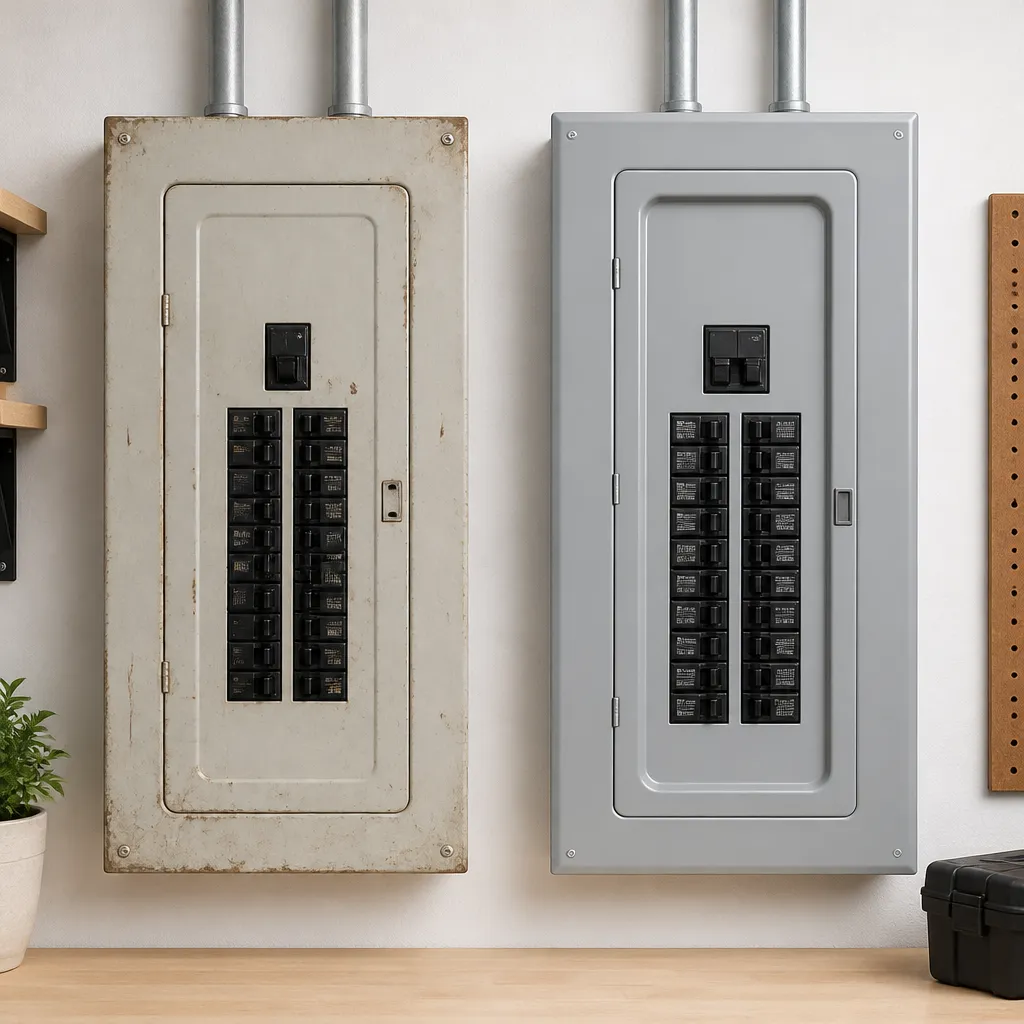
A load calculation considers heating and cooling equipment, electric cooking, water heating, well pumps, clothes dryers, EV charging, generators, and detached buildings served by the same system. Each item contributes to the total demand, and some loads run continuously for extended periods. The calculation should reflect how the household actually uses electricity, along with the additions it expects to make within the next several years.
Planning for EV Chargers and Heat Pumps
An EV charger on a dedicated 240-volt circuit can add a significant continuous load, particularly when the charger runs for several hours each night. Heat pumps and electric water heaters can add load in the same period, especially during cold weather. When these loads are added together, a service that was adequate for the original household may no longer have sufficient margin. Load management features, which limit charger output when other large loads operate, can sometimes allow the addition without a service change, but only when the calculated demand remains within the existing rating.
Pro tip: Request the load calculation along with the proposal. A quote that lists a panel rating without showing the calculated demand leaves the capacity decision unverified.
Homes With Panels Under 100 Amps
One electrical contractor resource states that a home with a panel under 100 amps will likely need an upgrade to support modern electric appliances safely. The guidance is consistent with what contractors encounter in older homes, where original equipment was designed for a far smaller set of loads than a typical household now uses. A small panel does not always mean the service must be replaced, but it does mean the load review should happen before any new circuit is energized.
The same principle applies to homes that have added loads over time without revisiting the service. Each addition may appear manageable on its own, but the cumulative demand can exceed what the original service was designed to support.
When Panel-Only Replacement Fits
A panel-only project is possible when the meter equipment, the service conductors, the main disconnect arrangement, the grounding, and the service capacity all remain suitable for the home. In that situation, the work focuses on replacing damaged or hard-to-service equipment, organizing circuits, and producing an accurate directory. The scope is narrower, the shutdown is usually shorter, and the number of inspections is typically smaller than a full service change.
A panel-only project is not the correct answer for every panel problem. Some homes need a smaller repair, and others need a service change to support the household's plans. The right scope depends on testing and inspection, not on the age of the panel alone.
Single Breaker and Branch Connection Repairs
A failed breaker or a faulty branch-circuit connection may require only a small repair. Testing is important because a contained fault can appear to indicate a larger failure. A technician who tests the breaker, the connection, and the bus can often determine whether the problem is isolated. Replacing the entire panel to address a single failed breaker is rarely justified when the rest of the equipment is sound.
Smart Panel Options Within the Existing Service
Some homeowners with a suitable service choose a smart electrical panel that provides circuit-level monitoring and load management. Our SPAN Smart Electrical Panel Installation service is one example of this approach. A smart panel can help a household add loads without a full service change, provided that the calculated demand remains within the existing service rating. It does not increase the capacity of the service itself, so the load review remains necessary before the installation is scoped.
Pro tip: Label every circuit after panel work is complete. An accurate directory that matches the installed breakers reduces troubleshooting time for future service calls.
When the Service Becomes Part of the Project
A panel project becomes a service project when the problem or the plan extends beyond the panel enclosure. A deteriorated meter base, a damaged mast, unsuitable service conductors, a required change to the exterior disconnect, or a planned increase in capacity can each connect the panel work to the service entrance. Coordinating these pieces at once can prevent mismatched ratings and duplicated shutdown work.
In practice, homeowners who choose panel-only work and later discover a service problem often pay twice, once for the panel and again for the service coordination. Evaluating the service at the start of the project reduces that risk and produces a single scope that the homeowner can compare with other proposals.
Utility Coordination and Permit Requirements
A service change may require scheduling with the utility, a permit, an inspection, and disconnect and reconnect steps. The sequence and timing vary by utility and by jurisdiction. Projects in Delaware, Maryland, Pennsylvania, Virginia, and Washington, D.C. each follow their own local requirements, so the proposal should identify which approvals are included and which remain the homeowner's responsibility. Scheduling delays are a common source of frustration when the utility steps are not planned at the outset.
Matching the Panel Rating to the New Service
When the service rating changes, the panel and the service equipment must be specified together. A higher-rated service paired with an older panel can produce protection that does not match the conductors, which complicates inspection and creates long-term risk. Specifying both components in one scope helps confirm that the ratings align with the calculated demand and the installed equipment.
Comparing the Approaches
Three approaches cover most residential projects that involve the panel, the service, or both. The correct choice depends on the condition of the equipment, the outcome of the load calculation, and the homeowner's planned additions. The table below summarizes the typical scope and the situations where each approach tends to fit.
Approach | Typical Scope | Best Fit |
|---|---|---|
Like-for-like panel replacement | New enclosure, breakers, bus, and circuit directory on the existing service | A damaged or hard-to-service panel where the existing service already matches the calculated demand |
Smart panel installation (SPAN Smart Electrical Panel) | Panel replacement with circuit-level monitoring and load management on the existing service | A home with suitable service that needs additional loads without a full service change |
Full electrical service upgrade | Meter base, service conductors, main disconnect, and a matching panel | A home whose calculated demand exceeds the existing service or whose service equipment is deteriorated |
The table does not rank the options, because the correct approach depends on measured conditions. A homeowner with a sound service and a damaged panel should not pay for a service upgrade. A homeowner planning several large electric loads should not rely on a panel-only replacement without a load review, even when the panel itself appears to be in good condition.
Shutdown, Permits, and Coordination
Before any work begins, the proposal should explain the equipment involved, the expected shutdown, and the sequence of steps. A panel-only replacement typically interrupts power to the home for the duration of the swap. A service upgrade can require a longer coordinated outage because the utility connection, the meter equipment, and the panel are changed in sequence.
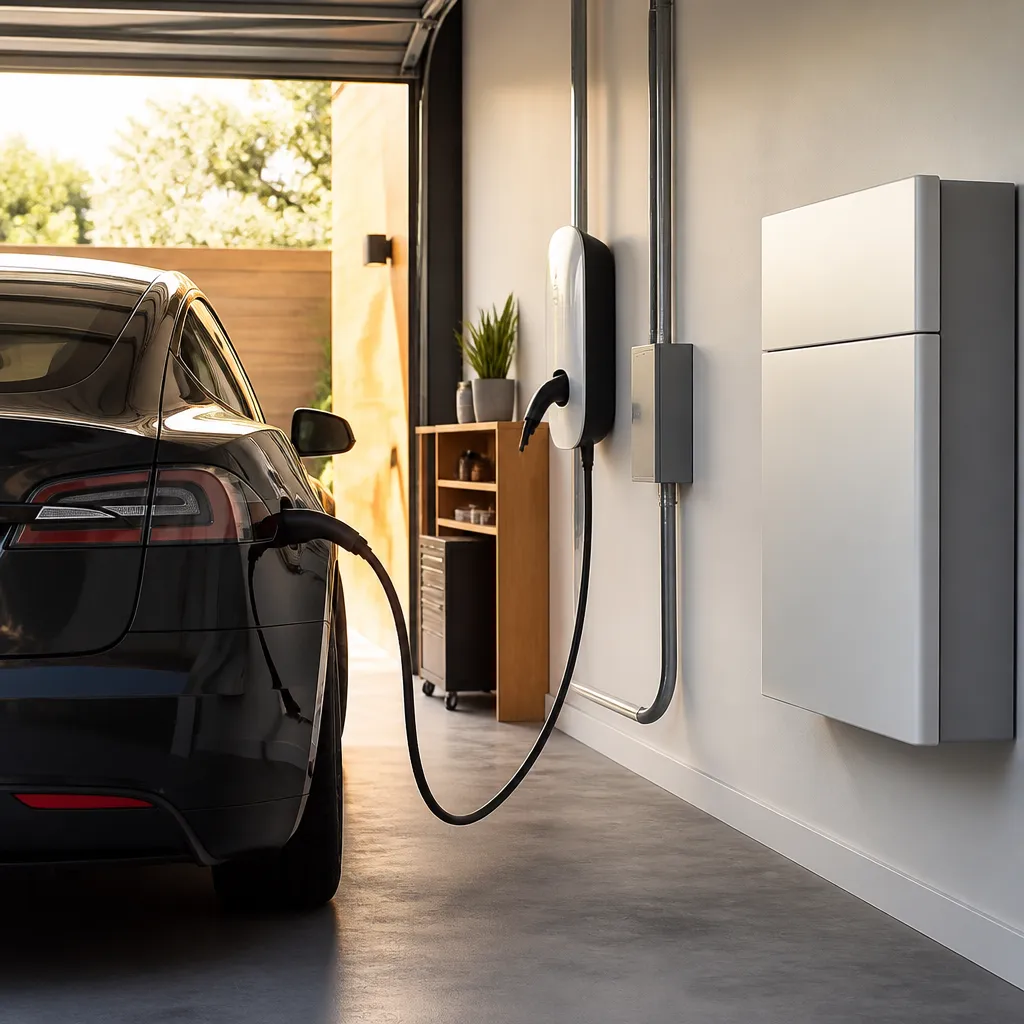
Homeowners benefit from planning for the outage in advance. Refrigerators, medical equipment, sump pumps, and home office equipment may need backup power or a plan for temporary interruption. A clear schedule from the contractor makes it easier to arrange for these needs and reduces the disruption of the work.
What the Homeowner Should Expect During a Shutdown
During a shutdown, the household will not have power, and the contractor should confirm the expected duration before scheduling. Water heating, cooking, and climate control may be affected. Some service changes also require the utility to disconnect and reconnect power at specific points, which can extend the outage. A written schedule that identifies these points helps the homeowner decide how to prepare.
Permit and Inspection Steps
Permits and inspections apply to both panel replacements and service upgrades, although the number and type of inspections differ. A panel-only project usually requires a single inspection of the new equipment. A service project may require inspection of the service entrance, the panel, the grounding arrangement, and any utility-side work. A proposal should list the permits and inspections that are included in the price, so the homeowner can compare scopes accurately.
Common Mistakes When Comparing Proposals
The first common mistake is treating the terms as interchangeable. A proposal labeled as a panel upgrade may cover only the panel, while a proposal labeled as a service upgrade may include both the service and the panel. Comparing two estimates requires reading the line items, not relying on the labels at the top of each document.
The second mistake is using open breaker spaces as evidence of capacity. Empty slots show physical room in the enclosure, but they do not indicate that the service can supply additional load. The third mistake is choosing a rating based on a number that sounds familiar rather than on the calculated demand of the home.
Comparing Line Items Across Two Quotes
When two proposals differ substantially, the most useful comparison is the list of components. Confirm whether each quote includes the meter base, service conductors, main disconnect, panel, breakers, grounding, permits, inspections, and utility coordination. A lower price may reflect a narrower scope rather than better value. One cost guide reports that electrical panel replacement commonly falls between $518 and $2,193, depending on the required amperage and panel type. Service work is scoped separately and can involve utility coordination that changes the estimate, so a panel price alone does not describe the full project.
Questions to Ask Before Signing
Before accepting a proposal, ask the contractor to explain the calculated demand, the basis for the proposed rating, and the items that fall under the utility's responsibility. Ask whether the scope includes a circuit directory, a warranty on the installed equipment, and the inspections required for the work. Clear answers to these questions indicate that the proposal reflects an actual evaluation of the home rather than a default recommendation.
Frequently Asked Questions
Is a panel replacement the same as an electrical service upgrade?
No. A panel replacement involves removing and installing the electrical panel, while an electrical service upgrade addresses the equipment and conductors that bring power into the home. The two projects can be combined, and a service upgrade often includes a new panel so that the ratings match.
Do I need a service upgrade to add an EV charger?
Not always. A load calculation determines whether the existing service has enough capacity for the charger along with the home's other loads. Some households can add a charger with load management, while others need a service upgrade before the charger is installed.
How can I tell whether the panel or the service is the problem?
A professional evaluation tests the breakers, connections, and bus inside the panel, and it also reviews the meter equipment, service conductors, and main disconnect. Physical damage or heat marks at the panel point toward a panel replacement, while insufficient capacity or deteriorated service components point toward a service upgrade.
Does a smart panel remove the need for an electrical service upgrade?
No. A smart panel adds circuit-level monitoring and load management, which can help a household use its existing capacity more effectively. It does not increase the capacity of the service, so a home whose calculated demand exceeds the service rating still requires a service upgrade.
How long does an electrical service upgrade take?
The duration depends on the scope, the utility's scheduling, and the inspection process in the local jurisdiction. A service project usually requires more coordination than a panel-only replacement, so the contractor should provide a written schedule that identifies the expected outage and the utility steps.
Which areas does Triple R Energy serve for panel and service work?
Triple R Energy provides residential electrical upgrades, service upgrades, panel troubleshooting, and SPAN Smart Electrical Panel installation in Delaware, Maryland, Pennsylvania, Virginia, and Washington, D.C., as well as across the wider Mid-Atlantic region.
We welcome your feedback, and if you have recently compared a panel replacement estimate with an electrical service upgrade proposal, please share which questions the proposals answered and which details remained unclear.
References
Overview of panel upgrade and panel replacement terminology
When homes with smaller electrical panels typically need an upgrade