Winter electricity bills in the Mid-Atlantic often rise faster than homeowners expect. Heating loads, shorter days, and early evening demand combine to push household consumption into the hours when utilities charge the most. For homes on a time-of-use (TOU) rate, the timing of each load matters as much as the total kilowatt-hours consumed. This article explains how a SPAN smart panel time-of-use strategy works, how it fits into a winter cost plan, and where the approach delivers the most value for homeowners in Delaware, Maryland, Pennsylvania, Virginia, and Washington, D.C.
Table of Contents
- Quick Takeaways
- How Time-of-Use Rates Work
- Winter Load Patterns in Mid-Atlantic Homes
- How a SPAN Smart Panel Supports TOU Savings
- Scheduling EV Charging and Battery Storage
- Comparing Three Approaches to Winter TOU Savings
- Installation Planning and Cost Factors
- Common Mistakes to Avoid This Winter
- Frequently Asked Questions
- References
Quick Takeaways
Key Insight | Explanation |
|---|---|
Off-peak hours are the main savings window | Many utilities price electricity lowest late at night and early in the morning, often around 9 p.m. to 6 a.m. Flexible loads should run inside that window where the tariff allows. |
Confirm the tariff before changing schedules | Peak hours, weekend rules, and seasonal pricing vary by utility and plan. Request the current winter schedule from the provider in writing. |
Winter peaks overlap with evening demand | Heating, cooking, and lighting often coincide with the early evening peak, so the timing of heat pump operation and appliance use has a direct effect on cost. |
A SPAN panel provides circuit-level visibility | Monitoring individual circuits shows which loads run during expensive hours, which allows scheduling decisions based on measured data rather than estimates. |
Battery storage adds a second control point | Stored energy can supply evening loads during peak hours, provided the battery is sized to the household's evening demand and configured correctly. |
Verify savings with hourly bill data | Compare usage by hour before and after changes across several full billing cycles, since weather can distort results from a single month. |
How Time-of-Use Rates Work
A time-of-use rate schedule adjusts the price of electricity according to when it is consumed. Utilities set higher prices during periods of high system demand and lower prices when demand is light. Under this structure, the same kilowatt-hour can cost materially different amounts depending on the hour in which it is used.
Peak, Off-Peak, and Shoulder Periods
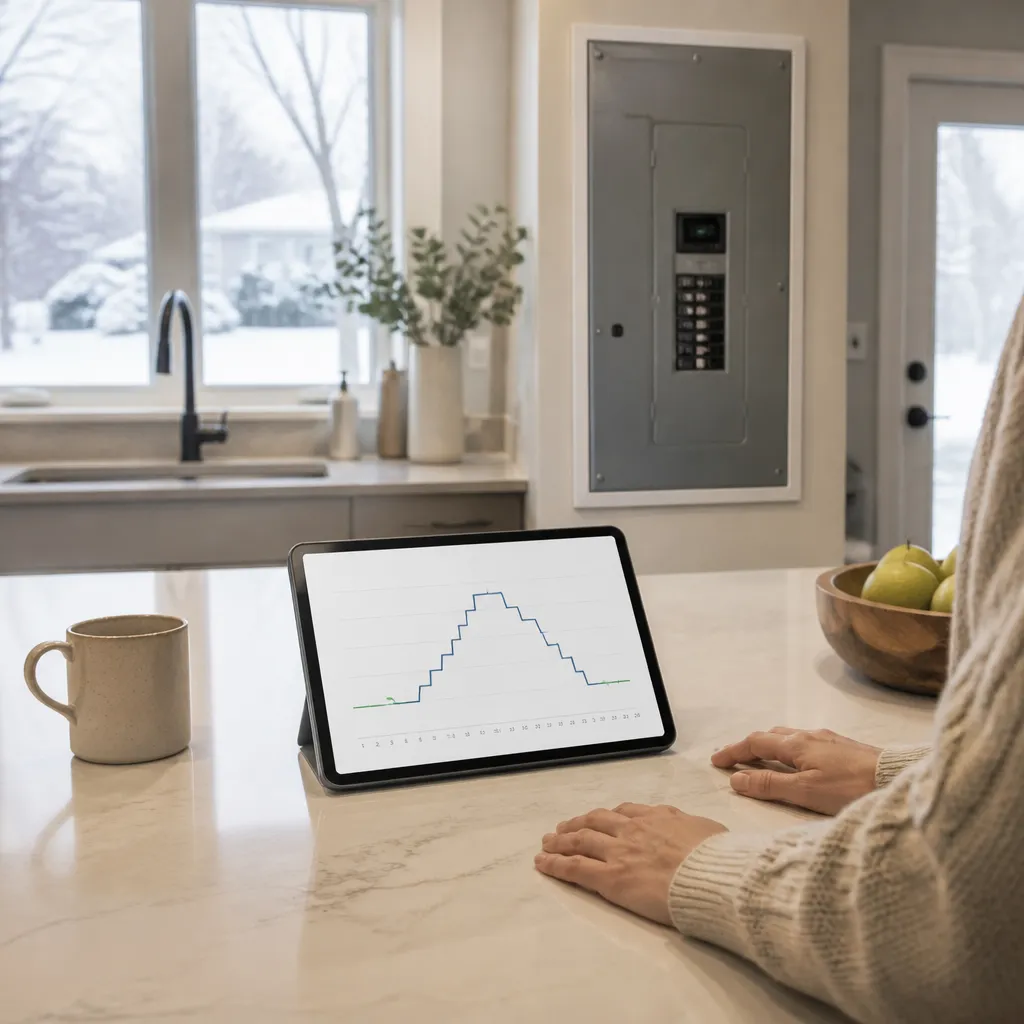
Many TOU plans divide the day into several pricing windows. The peak window carries the highest rate and typically falls in the late afternoon and early evening, when residential demand is strongest. Off-peak periods usually cover late night and early morning hours, commonly from about 9 p.m. to 6 a.m. for many utility providers.
The exact hours, weekend rules, and seasonal adjustments differ by utility and by rate plan. Homeowners should work from the current tariff rather than a general schedule, because a difference of one hour at the start or end of the peak window can change which appliances fall inside it.
Why Winter Bills Behave Differently
Winter changes both the level of demand and its timing. Shorter days move lighting and heating needs earlier into the afternoon and evening, which can overlap the peak window. A household that performs well on a summer TOU schedule may see a sharper increase in January because heating and cooking coincide with the most expensive hours.
Time-of-use pricing rewards households that can move their electricity use, not only households that use less electricity.
Pro tip: Ask the utility for the hourly rate schedule in writing, then record the peak window on a calendar so the household can reference it during winter months.
Winter Load Patterns in Mid-Atlantic Homes
Winter electricity use in the Mid-Atlantic is shaped by a climate that often shifts from cold snaps to milder spells within a single week. Heating demand can change sharply from one day to the next. For homeowners on a TOU plan, that day-to-day variation matters as much as the seasonal average.
Heating Systems and Electric Demand
Homes that rely on electric heat pumps, electric resistance heat, or electric water heaters often carry substantial winter loads. Heat pumps operate efficiently in moderate temperatures, but their electrical demand rises as outdoor temperatures fall, and auxiliary resistance heat can add a large draw during cold periods. Electric water heaters also run on a schedule that can often be shifted if the controls allow it.
Because heating needs follow comfort requirements, they are the least flexible part of the winter load. The practical opportunity lies in the loads surrounding heating, such as water heating and laundry, which can usually move without affecting how the home feels.
Morning and Evening Demand Peaks
Residential electricity use in winter typically rises in the early morning as households wake, then climbs again in the late afternoon and evening when lighting, cooking, and heating run together. The evening period frequently aligns with the peak window in TOU schedules. A household that uses most of its daily energy between 5 p.m. and 9 p.m. may be paying the highest rate for loads that could run during off-peak hours.
In practice, the first step is a simple audit of the largest loads. Electric dryers, dishwashers, water heaters, and EV chargers are generally easier to move than space heating. Identifying the flexible loads allows a realistic plan, rather than a schedule that residents override within a few days.
How a SPAN Smart Panel Supports TOU Savings
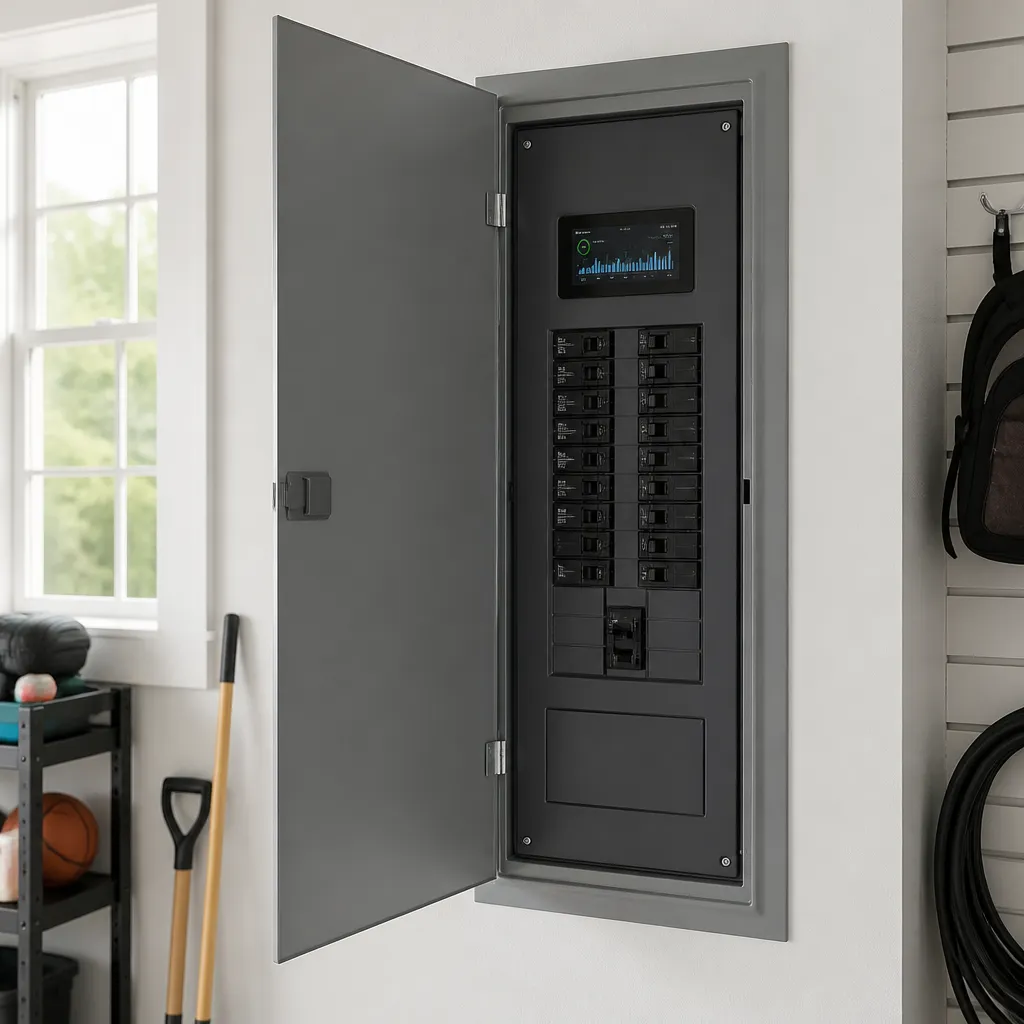
A SPAN smart panel is an electrical panel that adds monitoring and control to the home's main distribution equipment. Compared with a conventional panel, it provides visibility into individual circuits and allows homeowners to manage those circuits through a digital interface. For a TOU household, this visibility turns a general rate schedule into specific decisions about when each load operates. ENERGY STAR also maintains a program that recognizes smart home energy management systems designed to help homeowners reduce and manage energy use.
Circuit-Level Monitoring
Circuit-level monitoring shows how much electricity each branch circuit uses over time. Without this detail, most homeowners see only a total figure on the utility bill, which does not reveal whether the peak-hour cost comes from a heat pump, an oven, or an EV charger. A SPAN installation makes those patterns visible, so the household can match schedule changes to the loads that drive the bill.
Scheduling and Load Management
Depending on the panel configuration and the circuits selected, homeowners can set schedules or limits for certain loads so they operate outside peak periods. The practical goal is not to eliminate evening electricity use but to move flexible loads into lower-cost hours. A 2021 study by S. Tuomela and colleagues reported that a home energy management system reduced total electricity consumption in winter months by up to 30 percent in a real-life experiment. The study concerned such systems in general rather than a specific product, so results in any home will depend on its equipment and rate plan.
A SPAN panel does not change the tariff itself. Its value depends on accurate rate settings and on a clear understanding of which circuits matter most during winter. Triple R Energy reviews the existing service, the load profile, and the utility rate before recommending a configuration, so the panel is matched to the household's actual bill.
Scheduling EV Charging and Battery Storage
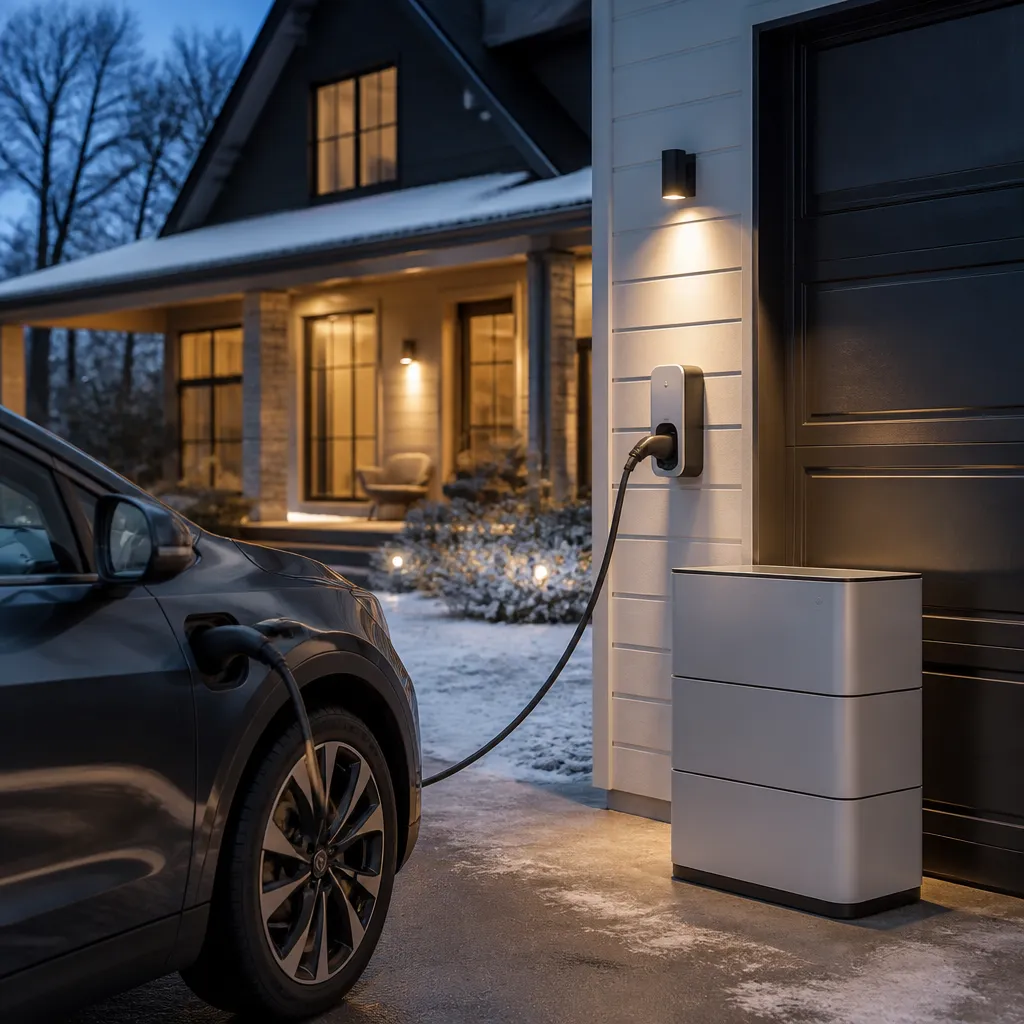
EV charging is often the largest flexible load in a residential home. A charger drawing a substantial current for several hours can add a significant amount of consumption to the evening bill if it begins during peak periods. For households that charge at home, scheduling is one of the most effective ways to reduce TOU costs in winter.
Battery storage adds a second option. A battery can charge during low-cost hours and supply household loads when rates are higher, which reduces reliance on grid electricity during peak periods. The benefit depends on battery capacity, the discharge limits set for the system, and whether the home's rate structure rewards this pattern.
Overnight EV Charging Windows
Many TOU plans price overnight energy lowest, which aligns well with EV charging. A charger programmed to begin after the peak window ends can complete a full charge before morning without affecting daytime use. The schedule should include a buffer, because a charge that finishes late can interfere with morning routines, and cold weather reduces battery efficiency, which can lengthen charging time.
Battery Storage During Evening Peaks
Battery storage is most useful when evening demand is high and the battery can cover that demand throughout the peak window. A system sized too small will run out before the peak ends, while an oversized system may not be justified by the resulting bill savings. A load analysis from the most recent billing cycles helps determine whether the battery size fits the household's pattern.
Homeowners should confirm that the panel configuration and battery equipment are coordinated before installation. Separate work on each component can create gaps in control settings, so a single review of both systems is more reliable.
Comparing Three Approaches to Winter TOU Savings
Homeowners generally choose among three approaches. Each has different equipment requirements, levels of control, and expected effort. The right choice depends on how much of the evening load can move and how much management the household is willing to maintain each week.
Approach | What It Involves | Best Fit |
|---|---|---|
Manual load shifting | Running dishwashers, dryers, and EV charging after peak hours by habit or reminder, with no new equipment | Households with predictable routines and few flexible loads |
SPAN smart panel with circuit scheduling | Circuit-level monitoring and scheduled or limited operation of selected loads through a digital interface | Homes with several flexible loads, including EV chargers, that need consistent control |
SPAN smart panel with battery storage | Circuit-level control combined with a battery that supplies evening loads during peak periods | Homes with high evening demand and a rate structure that rewards discharging during peaks |
Manual load shifting requires no capital investment, but it depends on consistent behavior. A SPAN panel reduces reliance on memory by automating selected schedules, while adding storage widens the range of loads that can be covered during peak hours. Each step adds cost and complexity, so the comparison should begin with a review of the most recent bills.
Installation Planning and Cost Factors
A SPAN panel installation begins with an assessment of the existing electrical service, including amperage, panel age, and available space. The assessment determines whether the current service can support the planned loads or whether a service upgrade must come first. Skipping this step is one of the most common causes of delayed projects.
Panel Capacity and Service Size
SPAN publishes pricing for its panels on its support site, and listed prices vary by model and amperage configuration. The panel price is only one part of the total project. Labor, permits, required electrical work, and any service upgrade or battery equipment also affect the final cost, so homeowners should request a written scope that itemizes each component.
Panel capacity matters because a larger main breaker supports more simultaneous loads. Homes with electric heat, an EV charger, and a battery system may need a configuration that accommodates these loads together. A load calculation prevents undersized equipment and avoids costly changes after installation.
Permits, Inspection, and Coordination
Electrical work usually requires permits and inspection under local requirements, and the process varies across Delaware, Maryland, Pennsylvania, Virginia, and Washington, D.C. A licensed contractor can coordinate the permit application, any required utility notification, and the final inspection. Homeowners should confirm which party is responsible for each step before work begins.
Pro tip: Ask for the panel configuration and the loads assigned to each circuit before approving the project, so the household can confirm that its most important winter loads are covered.
Common Mistakes to Avoid This Winter
Several errors recur in TOU projects. Most can be prevented with a short review of the rate schedule and the household's actual usage. The patterns below appear frequently in homes that do not achieve the savings they expected.
Scheduling Without Checking the Tariff
Some homeowners set schedules based on general assumptions about off-peak hours. If the utility's peak window differs from those assumptions, loads may run during expensive periods without the owner realizing it. The remedy is to confirm the exact hours for each season and weekday pattern before setting any automated schedule.
Overlooking Heating Loads on Cold Days
Load shifting works best for flexible appliances, while heating systems must follow comfort requirements. Restricting a heat pump during a cold evening can cause discomfort and, in some systems, increase reliance on resistance heat. Savings should be measured against comfort and equipment needs rather than treated as a fixed target.
Pro tip: Compare hourly usage across several billing cycles before and after a schedule change, because a single cold week can mask the effect of an otherwise successful adjustment.
Frequently Asked Questions
What is a SPAN smart panel?
A SPAN smart panel is an electrical panel that provides circuit-level monitoring and control through a digital interface. It helps homeowners identify which loads drive their electricity use and schedule selected circuits to operate at specific times.
Does a SPAN panel lower my bill automatically?
No. A SPAN panel supports savings by providing visibility and control, but the outcome depends on the rate plan, the household's load profile, and how the schedules are configured. Savings should be verified against billing data over several cycles.
When are off-peak electricity hours usually available?
Off-peak pricing is often lowest late at night and early in the morning, typically around 9 p.m. to 6 a.m. for many utility providers. The exact window differs by utility and plan, so homeowners should confirm their own schedule with the provider.
Can a battery replace the need for a SPAN panel?
A battery can supply household loads during peak periods, but it does not replace the monitoring and scheduling that a panel provides. Many homes benefit from both, and the best configuration depends on the home's electrical service and loads.
Which areas does Triple R Energy serve for SPAN installation?
Triple R Energy serves homeowners in Delaware, Maryland, Pennsylvania, Virginia, and Washington, D.C., across the Mid-Atlantic region. Residential customers receive an assessment of their existing service before any panel configuration is recommended.
We welcome feedback from homeowners who have compared winter bills before and after a time-of-use schedule or panel upgrade, so please share your experience with our team.
We would love your feedback and any insights you would share with others. What perspective would you add?
References
Guide to the cheapest hours of the day to use electricity under time-of-use rates
Four key facts about how time-of-use pricing works for electricity customers
SPAN support article on obtaining a SPAN panel and its listed pricing
Study on the impacts of home energy management systems on electricity consumption
ENERGY STAR program overview for smart home energy management systems