A residential electrical upgrade can future-proof a home by matching the service capacity, panel layout, and circuits to the loads that a household expects to add over the coming years. Homes across Delaware, Maryland, Pennsylvania, Virginia, Washington, D.C., and the wider Mid-Atlantic region were often wired for lighter demand than the equipment they now run. Heat pumps, solar inverters, battery systems, and EV chargers each draw on the same service. When those additions arrive without planning, the result is often a series of separate service calls, redesigned circuits, and delayed installations. Planning the electrical side first allows each addition to connect in a defined sequence.
Table of Contents
- Quick Takeaways
- Why Older Panels Limit Solar, Storage, and Charging
- Load Calculations and Available Capacity
- Solar Readiness and Inverter Capacity
- Battery Storage Placement and Backup Circuits
- EV Charger Circuits and Load Management
- Choosing Among Three Upgrade Paths
- Permitting, Inspection, and Cost Planning
- Frequently Asked Questions
- References
Quick Takeaways
Key Insight | Explanation |
|---|---|
The main panel sets the ceiling | The main breaker, busbar rating, and open breaker spaces determine how much new load the home can accept without service changes. |
A load calculation comes first | A licensed electrician should calculate existing demand before any solar array, battery, or charger is specified or ordered. |
Most homes need planning, not replacement | EnergySage reports that most modern panels can support an EV charger without major upgrades, but about 20% of homes need additional electrical work. |
Solar and storage share service capacity | Inverter output and battery charging draw on the same service as household appliances, so both must be included in the headroom calculation. |
Level 2 charging needs a dedicated circuit | A Level 2 charger operates on 240 volts for long periods, which requires a circuit sized for continuous load and a matching breaker. |
Battery location follows the panel design | Backup circuit selection, charging current, and placement depend on the panel layout, so the panel assessment should precede battery installation. |
Quotes must define the same scope | A third-party 2026 pricing guide places standard panel upgrades between $1,000 and $5,000, so differences between quotes often reflect scope rather than price alone. |
Why Older Panels Limit Solar, Storage, and Charging
The main electrical panel sets the ceiling for every addition that follows. Its rated amperage and the capacity of its busbar determine how much current the home can draw at one time, and every new solar inverter, battery, or charger draws on that same capacity. Energy Star notes that most newer homes are outfitted with a 200-amp breaker box, which provides a useful reference point when evaluating an older property.
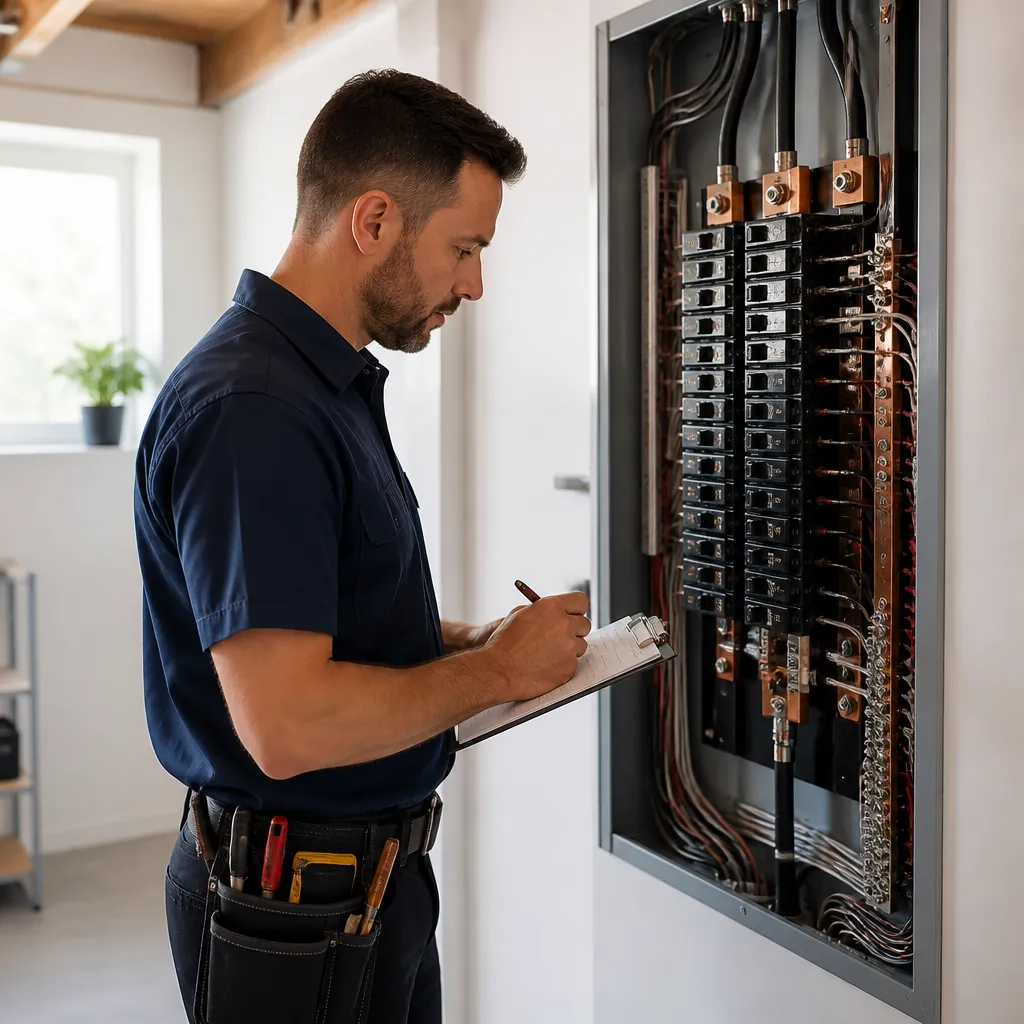
Older homes frequently have smaller services that were sized for lighting, a range, a clothes dryer, and a central air system. When those loads are the only ones present, the panel operates with comfortable margin. Adding a 240-volt EV charger or a battery system can push total demand past what the service was designed to supply, even when no single appliance appears excessive.
Age is a starting point rather than a verdict. A panel installed decades ago may still have adequate capacity, while a newer panel may be full of tandem breakers or lack open slots. Both conditions require a physical inspection and a written load assessment before equipment is ordered.
Reading the Main Panel Rating
The rating printed on the main breaker and the label on the panel door are the first two items to record. The main breaker sets the maximum service current, while the busbar rating is a separate limit that the installed main breaker should not exceed. Both figures should be recorded together because they define the practical ceiling for new circuits.
Pro tip: Photograph the panel label, the main breaker, and the open slots before the assessment visit. Those records help the electrician confirm capacity without repeated panel access and shorten the planning conversation.
Why Age Alone Does Not Settle the Question
Homeowners often assume that a panel older than a certain number of years must be replaced. That assumption can lead to unnecessary spending. Condition matters as much as age. Scorched breakers, loose lugs, corrosion, and certain older panel models with documented safety issues warrant replacement regardless of capacity. A well-maintained panel with spare space may need only targeted circuit work.
Load Calculations and Available Capacity
A load calculation converts the household's existing demand into a figure that can be compared with the service rating. It accounts for general lighting, appliances, climate equipment, and dedicated circuits already in use. Without this figure, decisions about solar, storage, and charging rest on estimates that are often too optimistic.
Available capacity is the difference between the calculated service limit and the calculated demand. A home with substantial headroom may accept a Level 2 charger and a modest battery without service changes. A home near its limit may need load management, a larger service, or a staged plan in which some loads are added later.
Existing Demand and Available Headroom
Existing demand should be based on the equipment actually installed in the home rather than on original construction documents, which often do not reflect later additions. Electric water heaters, electric ranges, heat pumps, and resistance heating each add significant load. Headroom should be recorded as a specific amperage figure so that the options can be compared side by side.
Common Miscalculations
One common error is treating a breaker size as the load. A 40-amp breaker does not mean 40 amps of demand, and a charger draws only the current it is set to deliver. A second error is ignoring continuous loads. EV chargers and battery charging often run for hours, and electrical practice generally applies additional margin to continuous loads when sizing conductors and breakers. A third error is designing only for current needs. A plan that fits today's loads but not the planned charger and battery may require the same work again within a few years.
Solar Readiness and Inverter Capacity
Solar output enters the home through the service panel, which means the solar system competes with household loads for the same capacity. The interconnection arrangement depends on the busbar rating, the location of the main breaker, and the inverter size. Planning these three items together prevents a situation in which a system is designed on paper but cannot be connected without a costly service change.
A residential electrical upgrade completed before the array is installed is usually less disruptive than one completed afterward. Advance work can include relocating a main breaker, creating dedicated breaker space, or replacing a panel with one that has room for future interconnection. Each option carries a different scope, which is why the decision should follow a written review of the existing equipment.
Interconnection Limits and Busbar Rating
The busbar rating and breaker placement determine how much generation can be connected under standard interconnection rules. When those limits are reached, the usual options include a load-side connection with a properly sized breaker, a panel replacement, or a service upgrade. The correct choice depends on utility requirements and the equipment already installed, so the electrician should confirm the approach before the inverter is specified.
Diagnosing Solar Output After Installation
Solar systems that underperform after an electrical change often have an electrical cause rather than a panel defect. Loose connections at the main lug, a failing breaker, or a neutral fault can reduce output or trigger shutdowns. Diagnostics should include a review of inverter logs, a visual inspection of connections, and a comparison of production readings against expected output for the season. This sequence separates electrical faults from weather-related variation.
Battery Storage Placement and Backup Circuits
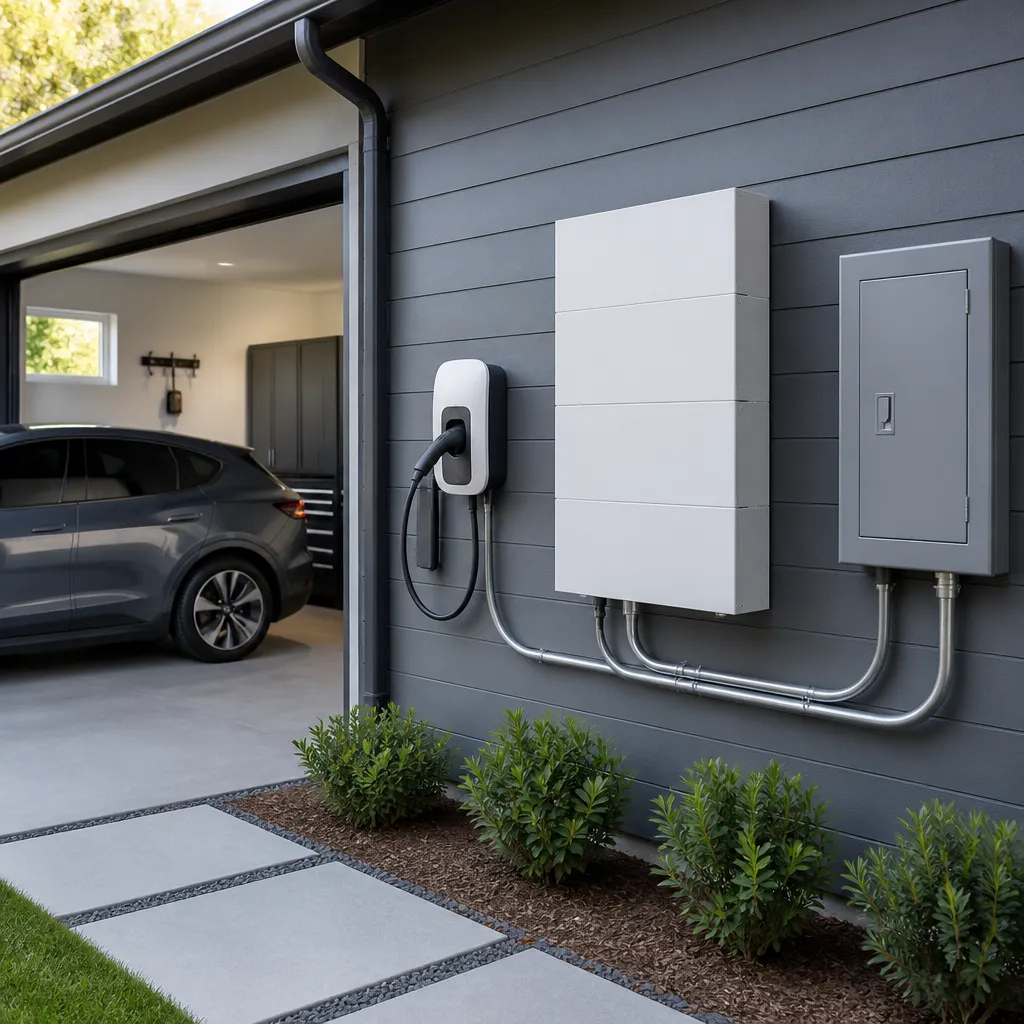
A battery system adds both a charging load and a discharge path to the home's electrical design. The battery charges from the solar array or the grid, then supplies power during outages or periods of high demand. These functions require panel space, a location with adequate clearances, and a decision about which circuits the battery will support.
Many homeowners begin with the battery and consider the panel later. In practice, the sequence should be reversed. The panel determines which circuits can be backed up, how much charging current is available, and whether the battery can coexist with a planned EV charger. Completing the panel assessment first prevents a battery from being placed where the panel cannot serve it.
Backup Circuit Selection
Backup circuits should be chosen based on the loads that matter during an outage. Refrigeration, lighting, heating controls, and network equipment are common choices. Large loads such as electric ranges or central air systems can consume battery capacity quickly, so including them requires an explicit runtime calculation. The selection also affects panel layout, because a backup subpanel or a smart panel with circuit-level control may be needed to separate critical loads.
Location, Clearance, and Ventilation
Battery equipment has manufacturer-specified clearances, temperature limits, and mounting requirements. Garages, basements, and utility rooms are common locations, but each presents constraints on temperature, moisture, and service access. The conductor run between the battery and the panel should be measured during the assessment, since long runs affect conductor sizing and voltage drop. A location that cannot meet the manufacturer's requirements should be rejected, regardless of convenience.
EV Charger Circuits and Load Management
Energy Star distinguishes between Level 1 chargers, which plug into a standard 120-volt outlet, and Level 2 chargers, which operate on 240 volts and are usually installed on a dedicated circuit. Level 1 charging requires minimal electrical work but adds a small amount of range per hour. Level 2 charging is the configuration most often considered in a residential electrical upgrade because it can restore a typical overnight charge within a practical window.
The circuit serving a Level 2 charger must be sized for continuous operation. A charger rated at 32 amps typically requires a 40-amp branch circuit with conductors and a breaker rated for that load, although the exact requirement depends on the charger listing and installation method. Circuit length, conductor material, and enclosure type all influence the final design.
Level 1 and Level 2 Requirements
A Level 1 installation may require only an existing outlet on a suitable circuit, which keeps the scope small. A Level 2 installation usually requires a new breaker, a dedicated run from the panel, and a receptacle or hardwired unit at the charging location. The difference in scope is the main reason Level 2 charging should be evaluated alongside the panel rather than as a separate project.
Load Management as a Bridge
Load management allows a charger to reduce its current when other household loads are high. It can allow a home with limited headroom to install a Level 2 charger without an immediate service upgrade. The approach has limits. It reduces charging speed during peak demand, and it depends on equipment that can communicate with both the charger and the panel. A load-managed installation should be documented clearly so that future owners understand how it operates.
Electrical capacity is a shared resource. Each new load reduces the margin available to the next one, so the order in which equipment is added matters as much as the equipment itself.
Pro tip: Confirm the charger's rated current and the planned breaker size in writing before purchase. A mismatch between the charger and the circuit is a frequent cause of nuisance trips and rework.
Choosing Among Three Upgrade Paths
Most residential projects fall into one of three scopes. The right choice depends on the service rating, the condition of the panel, and the number of loads planned for the coming years. The comparison below summarizes how each path addresses solar, storage, and EV charging.
Upgrade Path | Typical Scope | Best Suited For |
|---|---|---|
Panel replacement | Replace the main panel and breakers while keeping the existing service entrance | Homes with adequate service capacity but an outdated, damaged, or full panel |
Full service upgrade | Replace the service entrance conductors, meter base, and panel to increase total capacity | Homes whose existing service cannot support solar, battery, and EV loads together |
Smart panel with load management (SPAN Smart Electrical Panel) | Install a smart panel with circuit-level monitoring and load prioritization | Homes with adequate service that need to add several loads while managing peak demand |
Cost differences among these paths are substantial. One 2026 pricing guide places standard panel upgrades between $1,000 and $5,000 and full service upgrades between $5,000 and $30,000, with the final figure depending on site conditions. Those ranges reflect scope more than quality, so quotes are comparable only when the scope is defined the same way.
Matching the Path to the Home
A panel replacement is often the most efficient path when the service is sound and the main concern is the panel itself. A full service upgrade is appropriate when the service rating is the constraint, which is common when a home plans solar, a battery, and a Level 2 charger at the same time. A smart panel with load management can extend the usable capacity of an existing service, but it does not increase the service rating, so it suits homes with moderate additional demand.
Questions to Ask Before Choosing
Before selecting a path, the homeowner should request a load calculation, a list of planned loads with their ratings, and a statement of what the quote includes. A proposal that does not address the service rating deserves close review, because a panel-only scope may leave a later solar or battery installation unable to connect.
Permitting, Inspection, and Cost Planning
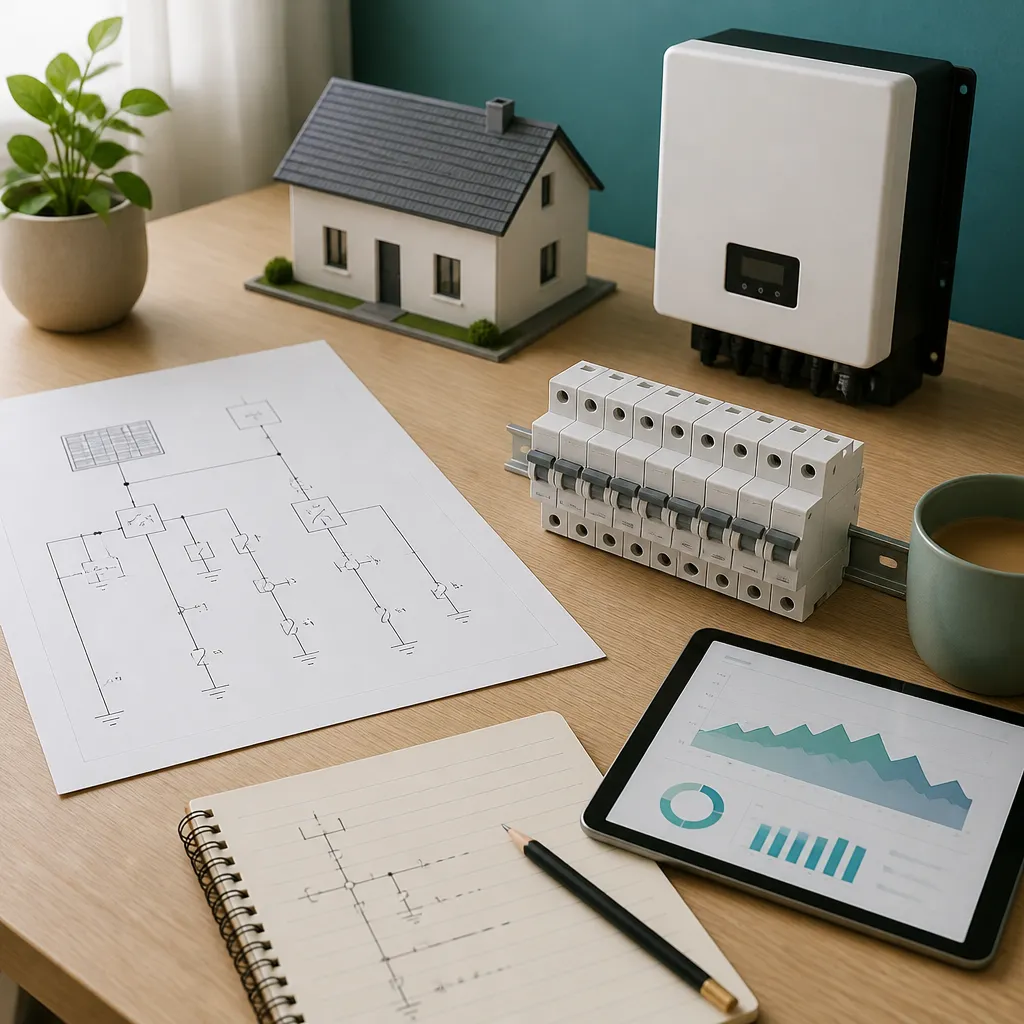
Permitting is a required part of most electrical upgrades, and inspection verifies that completed work matches the approved plan. Requirements differ among jurisdictions in Delaware, Maryland, Pennsylvania, Virginia, and Washington, D.C., so the permit scope should be confirmed with the local authority before work begins. A licensed electrician can prepare the documentation and coordinate inspections.
Permits and Inspections
Permits document the work, and inspections confirm that conductors, breakers, grounding, and labeling meet the applicable code. Work performed without a permit may need to be opened for inspection later, which can add cost and delay financing or resale. Homeowners should confirm that the contractor is fully licensed and insured and that permit fees appear in the estimate.
Budgeting for Scope and Contingency
A reliable budget begins with a defined scope and includes a contingency for concealed conditions. Older homes may have undersized grounding, aluminum branch wiring, or obsolete panels that become visible only after the cover is removed. A contingency is a practical measure rather than a pessimistic one. Homeowners who plan staged work can spread costs over time while keeping the overall panel plan intact.
Pro tip: Ask that the estimate list the service rating, the panel model, and the circuit count as separate line items. That format makes proposals easier to compare and shows which items affect future solar or storage additions.
Triple R Energy, a licensed electrical contractor serving these jurisdictions, performs the load assessments, panel evaluations, and service upgrades described in this article. Additional information is available at triplerenergy.com.
Frequently Asked Questions
Does every home need a panel upgrade before adding an EV charger?
No. EnergySage reports that most modern electrical panels can support an EV charger without major upgrades, but about 20% of homes need additional electrical work beyond a basic charger installation. A load calculation identifies which group a particular home falls into.
How can I tell whether my panel can support solar and a battery?
The main breaker rating, the busbar rating, the number of open breaker spaces, and the existing load determine capacity. A licensed electrician records these values and calculates available headroom before recommending solar and battery sizes.
Is a Level 1 charger enough for a residential electric vehicle?
A Level 1 charger suits homes where daily driving is short and the vehicle can recharge overnight from a standard outlet. Households with longer daily driving or more than one vehicle generally need Level 2 charging, which requires a dedicated circuit.
Can a smart panel avoid the need for a full service upgrade?
Sometimes. Load management can extend the usable capacity of an existing service for moderate additional loads, but it does not increase the service rating. Homes whose calculated demand exceeds the service rating still require a service upgrade.
Should the battery be installed before or after the panel upgrade?
The panel assessment should come first. Battery placement, backup circuit selection, and charging current all depend on the panel layout and available capacity, so installing the battery first can lead to rework.
We welcome feedback from homeowners who have planned a panel upgrade alongside solar, storage, or charging, so please share your experience in the comments below.
References
Guide to whether an EV charger requires an electrical panel upgrade
ENERGY STAR guidance on preparing a home for electric readiness
Electrical panel upgrade cost guide with 2026 pricing analysis