Homeowners who add solar panels and a battery often find that their existing electrical panel limits what those systems can do. A conventional panel offers no circuit-level visibility, and it rarely shows which loads draw from solar production, the grid, or stored energy at a given moment. A SPAN panel addresses that gap by combining a smart electrical panel with monitoring and control at the circuit level. This article explains how SPAN panel solar integration works, how battery storage connects through the same panel, and what homeowners in Delaware, Maryland, Pennsylvania, Virginia, and Washington, D.C. should plan for before installation.
Table of Contents
- Quick Takeaways
- How a SPAN Panel Differs from a Traditional Panel
- Connecting Solar Generation to a SPAN Panel
- Adding Battery Storage Through a SPAN Panel
- Backup Power and Load Management
- Comparing Integration Approaches
- Monitoring and Maintenance After Installation
- Installation Planning for Mid-Atlantic Homes
- Frequently Asked Questions
- References
Quick Takeaways
Key Insight | Explanation |
|---|---|
Circuit-level monitoring | A SPAN panel reports consumption and production for individual circuits, which makes solar output and household loads easier to compare. |
Solar connects through the panel | Solar generation is routed through the panel, so the system can track production and direct power to the loads that need it. |
Battery communication is required | SPAN requires either a wired Ethernet connection to a compatible battery system or a SPAN Remote Meter Kit before battery backup can be enabled. |
Confirm battery compatibility first | Check the battery model and its communication options before purchasing equipment, because the integration path determines wiring, labor, and cost. |
Select backup circuits in advance | Battery capacity and inverter output limit how many loads can run during an outage, so backup circuits should be chosen during design. |
Schedule utility and permit approvals early | Interconnection approval and local permits apply to solar and battery work and should be arranged before equipment arrives on site. |
How a SPAN Panel Differs from a Traditional Panel
A conventional residential panel distributes power from the utility service to individual branch circuits through breakers. It protects the wiring, but it does not report how much electricity each circuit uses. Smart electrical panels add connectivity, typically Wi-Fi or Ethernet, along with sensors that measure individual circuits. Industry guidance on the subject identifies connectivity and per-circuit measurement as the primary differences from traditional equipment.
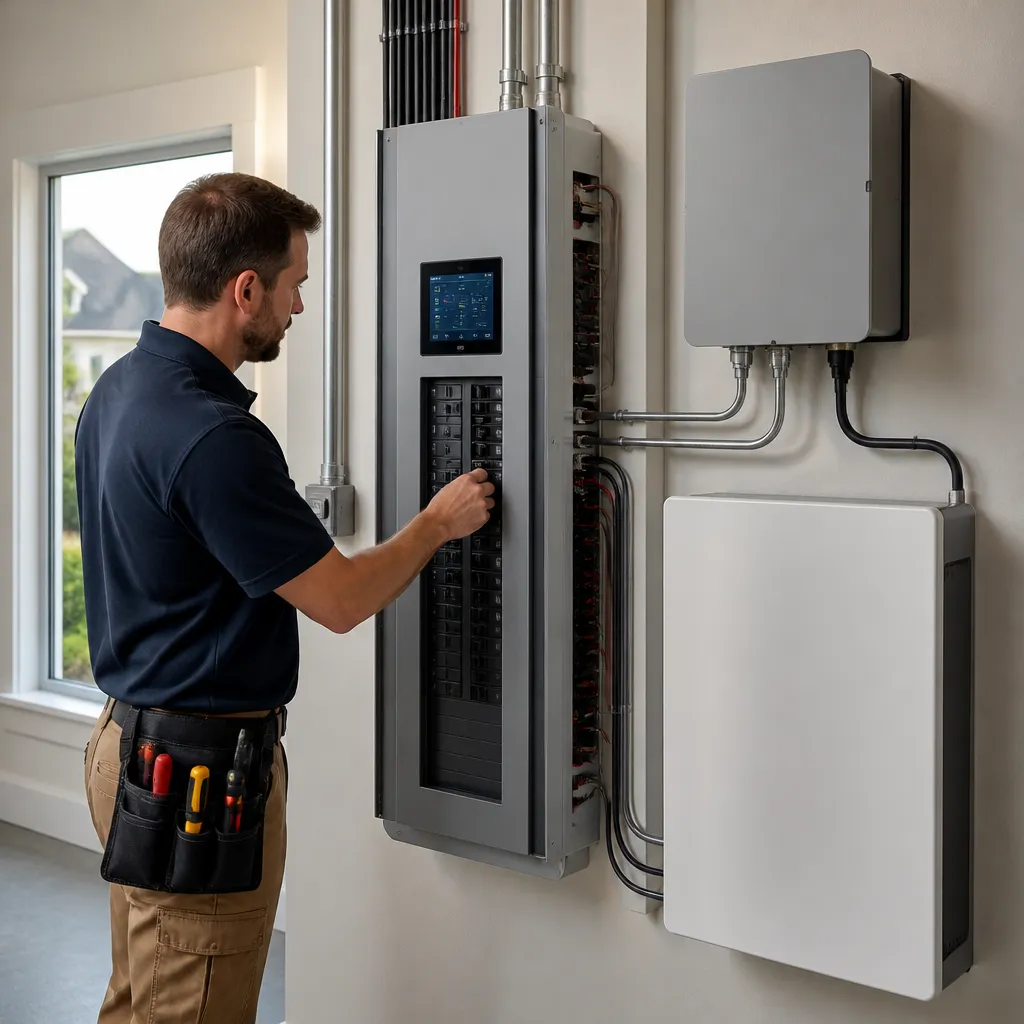
A SPAN panel is installed in place of a conventional main panel and serves as the monitoring and control layer for the home. For solar and battery owners, the value lies in the data it produces. A homeowner can see whether an electric vehicle charger, heat pump, or water heater is running from solar production, from the grid, or from stored energy, rather than inferring this from a monthly utility bill.
Circuit-Level Monitoring in Practice
Circuit-level data changes the diagnostic process. When a solar array produces less than expected, a technician can compare production records with the load profile of each circuit to separate an equipment fault from normal household demand. A common mistake is to assume that a panel upgrade alone will improve solar performance. The panel does not generate energy. Its benefit is visibility and control, which helps identify consumption patterns and wiring problems more quickly.
Monitoring alone rarely justifies the upgrade for a small household with modest electrical demand. The case becomes stronger when a home has solar, battery storage, and at least one large flexible load such as an EV charger. In those homes, the panel converts several separate systems into one set of readings that can be reviewed together.
Connectivity Requirements
SPAN panels depend on a network connection for remote monitoring and app-based control. Installers should confirm that the panel location has a stable connection before installation. Panels are often mounted in a garage, basement, or utility room, where Wi-Fi signal can be weak. In those cases, a wired Ethernet connection is usually the more reliable choice when it can be routed to the panel.
Connecting Solar Generation to a SPAN Panel
Solar photovoltaic systems produce direct current that an inverter converts to alternating current for household use. The inverter output connects to the electrical system through a dedicated breaker. The panel then distributes that power to household loads and, depending on the utility's interconnection rules, exports any surplus to the grid.
SPAN panel solar integration makes these energy flows visible in one interface. Production, consumption, and grid import or export can be reviewed together, which helps owners confirm that the array performs as designed. Without circuit data, a drop in output can be mistaken for a solar fault when the actual cause is a shaded module, a failed optimizer, or an inverter error that requires service.
Verifying Production Against Expected Output
A practical check involves comparing daily production in the monitoring app with the expected output for the same season. A consistent shortfall on clear days points to equipment or wiring issues. A single cloudy afternoon does not. Solar production in the Mid-Atlantic varies considerably between seasons, so comparisons should use seasonal baselines rather than summer totals.
Breaker sizing and labeling also deserve attention during commissioning. A mismatch between the breaker and the installed inverter output can cause nuisance trips or limit production. These issues are far easier to correct before the homeowner begins relying on the system than after months of operation.
Export and Load Management
Utility interconnection rules determine how much surplus solar a home may send to the grid and whether export limits apply. Some designs prioritize self-consumption, which is easier to manage when each major load is visible at the circuit level. Homeowners should confirm these terms with their utility and installer before the design is finalized, since export rules can change the value of a system more than its equipment specifications.
Adding Battery Storage Through a SPAN Panel
A battery stores surplus solar energy for later use, such as during evening peak hours or a grid outage. In a SPAN installation, the battery and its inverter must communicate with the panel so the system can coordinate charging, discharging, and backup operation. This communication requirement shapes the installation more than most homeowners expect.
According to SPAN's support documentation, battery backup requires either a wired Ethernet communications connection to the battery system or a SPAN Remote Meter Kit. The choice affects equipment cost, cable routing, and the commissioning schedule. It should be settled during the design phase rather than after equipment has been delivered.
Wired Ethernet Communication
When the battery manufacturer supports a direct wired connection, an Ethernet cable links the battery system to the panel. This path is usually the most direct option because the communication runs over a dedicated connection. Installers should verify cable length and routing early. A long run through finished walls or an unfinished attic can add labor and delay permitting.
Remote Meter Kit Installations
Where a wired connection is not available, the SPAN Remote Meter Kit provides the measurement needed for battery integration. A common mistake is to treat the kit as an optional accessory. Without the kit or a supported wired connection, the battery cannot be coordinated with the panel's backup and monitoring functions as designed.
Battery capacity should also match the loads selected for backup. A battery that supports a refrigerator and lighting will not support an electric dryer or an EV charger for the same duration. The load calculation therefore belongs in the integration plan rather than in a separate step after installation.
Pro tip: Request the battery manufacturer's communication documentation before ordering equipment. Confirming the supported connection method early prevents redesigns that add cost and delay commissioning.
Backup Power and Load Management
Backup operation is where the panel's design affects daily life most directly. During a grid outage, the battery and inverter can supply circuits designated as backup, provided the system has sufficient capacity. Circuits that were not selected remain without power. This is intentional, because a residential battery cannot support every load in a typical home for an extended period.
Load management reduces the risk of depleting the battery. In practice, we recommend prioritizing refrigeration, medical equipment, networking equipment, and a limited set of lighting and outlets. Large resistive loads such as electric resistance heat or clothes dryers draw heavily and can drain storage within a short period.
Selecting Essential Circuits
Circuit selection should begin with a list of loads the household needs during an outage, followed by measured or estimated consumption for each. Homeowners often include too many circuits during design and then find that the battery is depleted by the first evening. Reviewing the list after several months of monitoring data is a sound practice, because actual use often differs from the original estimate.
Managing Electric Vehicle Charging During Backup
An EV charger is one of the largest flexible loads in a residential system. Charging can be scheduled for periods when solar output is high, or it can be paused during backup operation. Homeowners who rely on an electric vehicle for commuting should confirm that the charger is not placed on a backup circuit by default, because charging draws can exhaust a battery quickly.
Comparing Integration Approaches
Homeowners considering a SPAN installation often compare integration paths before selecting equipment. The table below summarizes three common approaches and the situations where each fits best. The right choice depends on battery compatibility, the home's existing wiring, and whether the owner wants backup power or monitoring only.
Integration Approach | How It Works | Best Suited For |
|---|---|---|
Wired Ethernet connection to a compatible battery | The battery system communicates with the SPAN panel over a direct cable connection. | Installations where cable routing is practical and the battery manufacturer supports a wired link. |
SPAN Remote Meter Kit | Measurement hardware supplies the data needed for battery coordination and backup operation. | Batteries without a supported wired connection, and retrofit projects with constrained wiring paths. |
Standard panel with separate monitoring | Solar and battery data are tracked through separate equipment without circuit-level control. | Owners who want production tracking but do not need coordinated backup control. |
The comparison shows that battery compatibility should guide the decision. If the battery supports a wired connection, that path is usually the more direct route. If it does not, the remote meter kit is the practical choice. A standard panel with separate monitoring can be sufficient for a homeowner who wants solar data but does not need circuit-level control.
Monitoring and Maintenance After Installation
Integration does not end at commissioning. Systems that combine solar, battery storage, and a smart panel benefit from periodic review of production data, consumption patterns, and alerts. A monthly check of the monitoring app can reveal problems that would otherwise remain hidden until a utility bill arrives.
A monitoring system is only as useful as the attention given to its data. Regular review turns a record of energy flows into a practical maintenance tool.
Routine Checks Homeowners Can Perform
Owners can review daily solar production, battery state of charge, and the energy consumption of major circuits. Sustained changes are more informative than single readings. A battery that fails to charge fully over several days, or a circuit that consumes more power than expected, warrants a service review.
Pro tip: Record a baseline for solar production and battery charge cycles during the first month after commissioning. A documented baseline makes later changes easier to identify and explain to a service technician.
When to Contact a Licensed Electrician
Alerts about inverter faults, communication errors between the battery and the panel, or repeated breaker trips should be handled by a licensed professional. Attempting to reset communication hardware without training can complicate warranty claims and create safety risks. Triple R Energy provides diagnostics and repairs for solar systems, battery storage, and electrical panels across the Mid-Atlantic region.
Installation Planning for Mid-Atlantic Homes
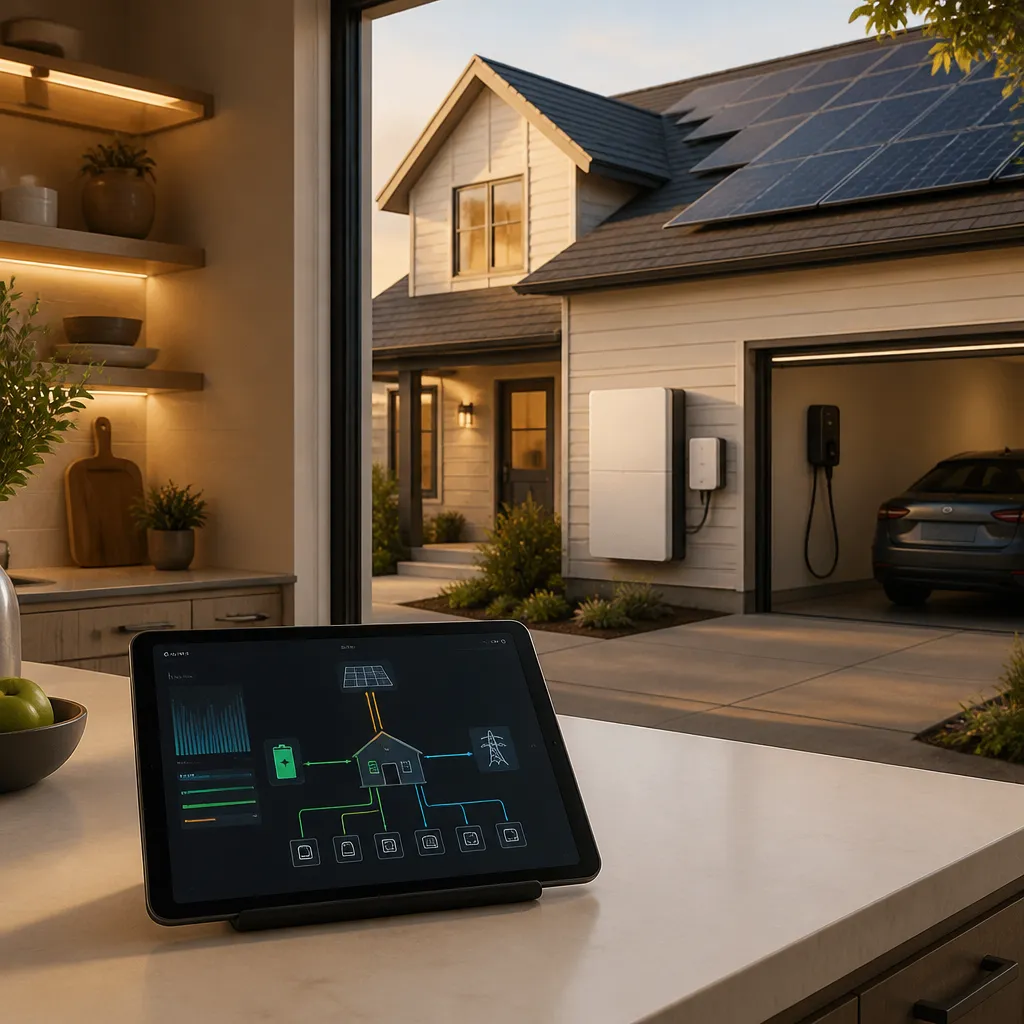
Homes in Delaware, Maryland, Pennsylvania, Virginia, and Washington, D.C. vary considerably in age, panel location, and service capacity. Older homes may have limited space in the existing panel enclosure, and older service entrances may need upgrades before solar and battery loads are added. A site assessment should document these conditions before equipment is ordered.
Physical space is often the main constraint. A SPAN panel and a battery enclosure both require clearances, accessible locations, and suitable ventilation. Planning these locations early avoids redesigns during inspection and keeps the installation schedule predictable.
Service Capacity and Panel Location
Service capacity determines how much solar, battery, and EV load a home can support without a service upgrade. The load calculation should include the EV charger, any heat pump, and other planned electric appliances. Homeowners who expect to buy an electric vehicle in the near future should include that load now rather than repeating the calculation later.
Permits and Utility Interconnection
Solar and battery work typically requires permits and utility approval before the system is energized. Requirements vary by jurisdiction and utility, so the installer should confirm the process for each property. Scheduling approvals early reduces the likelihood that finished equipment sits idle while paperwork is pending.
Pro tip: Ask the installer to provide a written list of required permits and utility forms before the project begins. A clear checklist prevents delays that often arise from missing documentation.
Frequently Asked Questions
Does a SPAN panel work with any solar system?
A SPAN panel can be installed with many solar systems, but compatibility depends on the inverter, the battery model, and the available communication options. The specific equipment should be confirmed during design.
Can a SPAN panel integrate battery storage without a wired connection?
Yes. SPAN's documentation describes the Remote Meter Kit as an alternative to a wired Ethernet connection for battery backup. The appropriate option depends on the battery model and the wiring path available in the home.
What happens to my home during a power outage?
Circuits selected as backup remain powered from the battery and, where the system is configured for it, from solar. Other circuits lose power. Whether solar continues to operate during an outage depends on the inverter and battery design, so homeowners should confirm that capability before purchase.
Will a SPAN panel lower my electric bill?
The panel does not reduce consumption on its own. Its monitoring data can reveal usage patterns that lead to savings, and savings also depend on the utility rate structure, system size, and how flexible loads are scheduled.
Is a smart panel necessary for solar and battery storage?
No. Solar and battery systems can operate with conventional panels and separate monitoring equipment. A smart panel adds circuit-level visibility and coordinated backup control, which becomes more valuable as a system grows more complex.
We welcome feedback from homeowners who have integrated a SPAN panel with solar or battery storage, and we would value learning which monitoring features proved most useful in daily operation.
We would love your feedback and any insights you would share with others. What perspective would you add?
References
SPAN support guide on adding battery backup, including communication requirements
Comparison of smart and traditional electrical panels for solar integration
Guide explaining what smart electrical panels are and how they differ from standard panels
Review of smart panel options and their use with solar and battery systems