Questions about GFCI and AFCI protection in solar homes have grown as more households add rooftop arrays, home batteries, and EV chargers to electrical systems that were built for utility power alone. Ground-fault and arc-fault devices address two different failure modes, and each one protects against a hazard the other may not detect. Homeowners in Delaware, Maryland, Pennsylvania, Virginia, Washington, D.C., and across the Mid-Atlantic region often assume that one device covers the entire system. In practice, the correct protection depends on which circuit is involved, whether that circuit carries alternating or direct current, and what the equipment manufacturer requires.
Table of Contents
- Quick Takeaways
- How Ground Faults and Arc Faults Differ
- Why Solar Arrays Raise Both Risks
- DC Protection Devices in Solar Arrays
- Battery Storage Adds Its Own Fault Paths
- GFCI Requirements on AC Circuits
- Comparing Protection Devices for Solar and Battery Homes
- Inspection Steps for Existing Systems
- Common Mistakes in Retrofits and Upgrades
- Frequently Asked Questions
- References
Quick Takeaways
Key Insight | Explanation |
|---|---|
GFCI and AFCI serve different purposes | GFCI devices detect leakage current to ground, while AFCI devices detect the electrical signature of an arc. Neither device replaces the other. |
Standard AC GFCI devices are not a drop-in fix for DC arrays | Solar strings and battery circuits carry direct current. Standard AC devices can nuisance trip or conflict with inverter bonding designs. |
Inverters often provide the DC ground-fault function | Confirm which device provides ground-fault detection on your specific inverter or charge controller before adding any accessory device. |
Arc faults most often start at connection points | Loose terminals, damaged connectors, and corroded junction box wiring are the most common starting points. Inspect them during every service visit. |
Battery circuits require overcurrent protection matched to the conductor | Verify breaker or fuse ratings against cable size and the battery manufacturer's specification at every battery and inverter connection. |
Record breaker positions during any test | Note whether each breaker is closed, tripped, or open before and after testing so that a future technician can see what changed. |
A panel upgrade is a practical point to review protection | During a service or panel upgrade, confirm which branch circuits have AFCI coverage and whether solar and battery breakers are labeled correctly. |
How Ground Faults and Arc Faults Differ
What a ground fault looks like in practice
A ground fault occurs when current leaves its intended conductor and finds an unintended path to ground. Damaged insulation, moisture inside a junction box, or a conductor that contacts a metal enclosure can create that path. Solarmedix describes solar ground faults in these terms, noting that current escapes through damaged insulation or moisture.
Ground-fault protection responds to the leakage itself. A device that senses an imbalance between outgoing and returning current can interrupt the circuit before the leakage path causes heating or ignites nearby material. The protection is designed around the fault path, not around the arc.
What an arc fault looks like in practice
An arc fault occurs when electricity jumps across a gap, such as at a loose terminal, a pinched conductor, or a corroded connection. The arc can sustain a high-temperature discharge capable of igniting insulation, wiring, or framing. Arcs can also be intermittent, so they may go unnoticed until a visible failure appears.
Arc-fault protection monitors the current waveform for the irregular patterns that an arc produces. A ground-fault device may not detect this pattern, because the current may never leave its conductor. That distinction is the main reason both protections appear in modern solar and battery designs.
Why Solar Arrays Raise Both Risks
High-voltage DC strings
A typical rooftop array wires panels in series strings to reach the voltage that an inverter or charge controller requires. Those strings carry direct current at voltages high enough to sustain an arc once a gap forms. Alternating current crosses zero many times per second, which helps extinguish an arc. Direct current does not, so an arc in a DC circuit can persist unless the system interrupts it.
Series wiring also means that one weak connection can affect an entire string. In practice, the most serious arc faults are found at connection points rather than along open conductor runs. Installers who torque connectors to specification reduce that risk considerably.
Ground-fault and arc-fault protection answer different questions, so a device selected for one hazard cannot be assumed to address the other.
Rooftop exposure and aging connectors
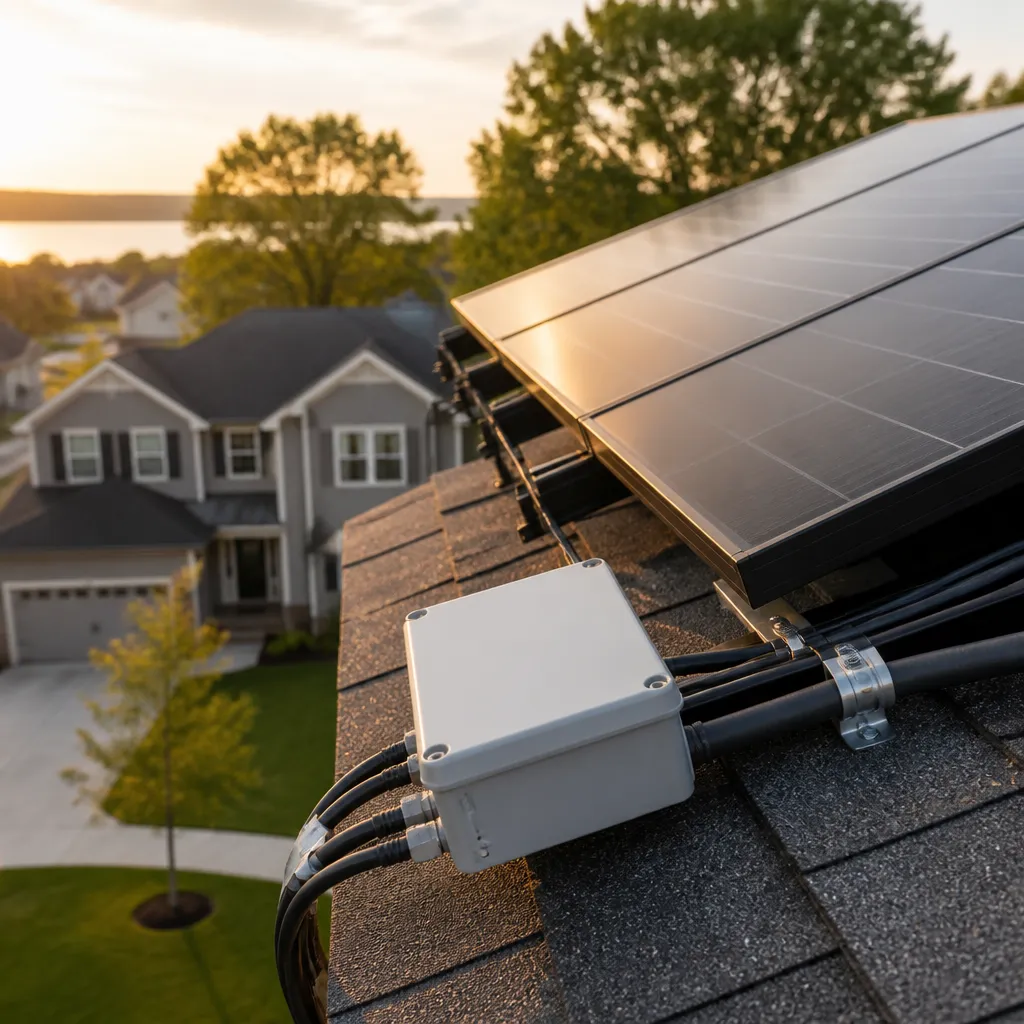
Rooftop wiring faces temperature swings, ultraviolet exposure, wind, and moisture. Over time, insulation can crack and connectors can loosen, particularly where terminals were not torqued to specification or where cables were stressed at mounting points. Older systems deserve closer attention, since the same conditions that degrade insulation can also create new ground-fault paths.
DC Protection Devices in Solar Arrays
How inverters handle ground faults
Many grid-tied inverters include built-in DC ground-fault detection. The inverter monitors the DC conductors for leakage and stops feeding power when it detects a fault. The exact function varies by manufacturer and model, so installers should confirm it in the equipment documentation rather than assume it.
Ground-fault detection in an inverter does not replace inspection of the rest of the circuit. A detected fault still requires a technician to locate and repair the source. The system should not be restarted until the cause is known and corrected.
Where DC arc-fault devices fit
DC arc-fault protection is available as a component inside some inverters, as a standalone device, and as a string-level product installed in a combiner or junction box. Fonrich, a manufacturer of PV protection equipment, describes DC AFCI as a safeguard for solar energy systems, although its claims reflect the manufacturer's own perspective. Each option must be compatible with the inverter, the module type, and the wiring method. A device added without that check can cause nuisance trips or leave part of the circuit unprotected.
Pro tip: Request the inverter datasheet and installation manual before any protection device is added. The manufacturer's listed compatibility is the fastest way to determine whether a device is required, optional, or unsupported.
Battery Storage Adds Its Own Fault Paths
Battery cables and available fault current
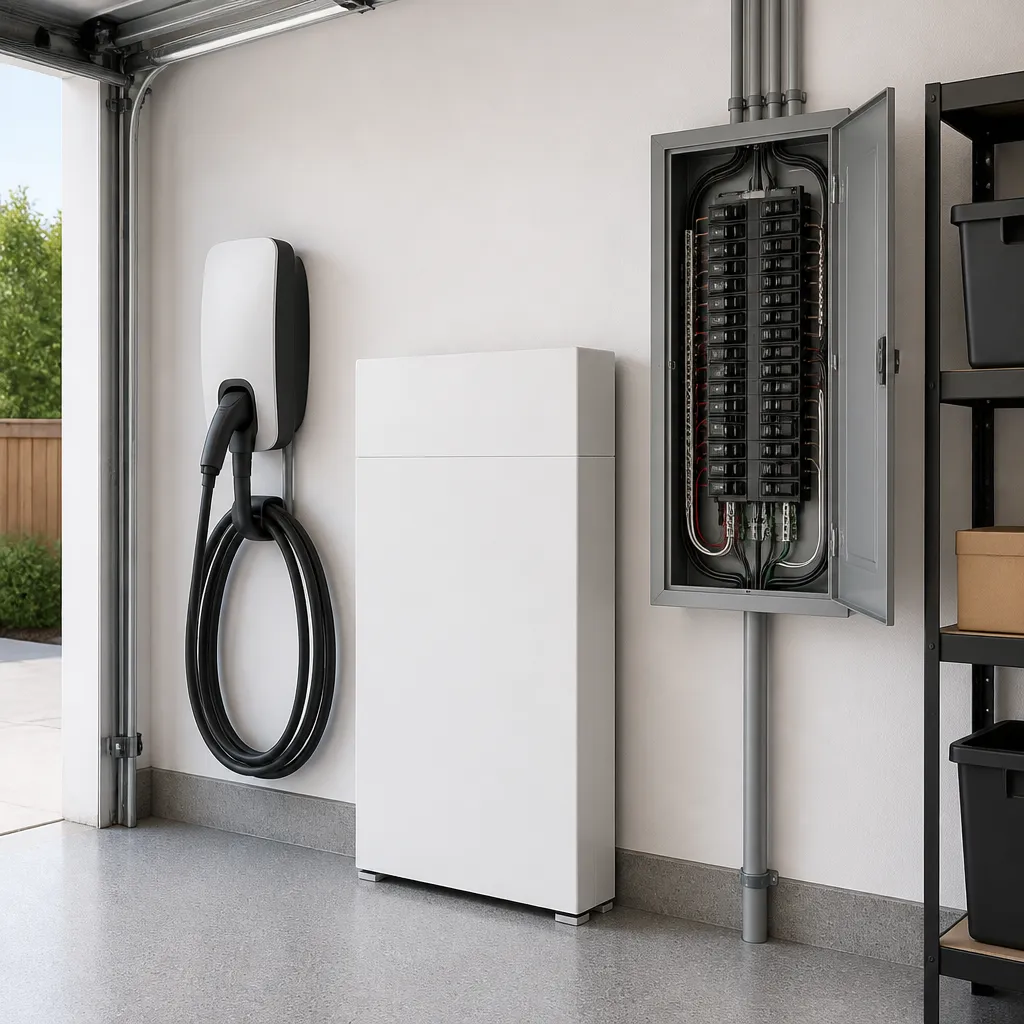
Battery banks can deliver very high short-circuit current over short periods, which makes conductor sizing and overcurrent protection critical. A fault at a battery terminal can release energy quickly, so protection must sit close to the source and be rated for the maximum available current. Installation and service should follow the battery manufacturer's specification for fuse or breaker type and location.
Bonding and inverter design
Battery-based systems often use inverters that combine AC and DC functions, which changes how grounding and bonding are arranged. A protection device that works on a grid-tied array may behave differently on a battery circuit with a different neutral arrangement. Confirm the bonding design in the inverter documentation before adding any ground-fault device to a battery circuit.
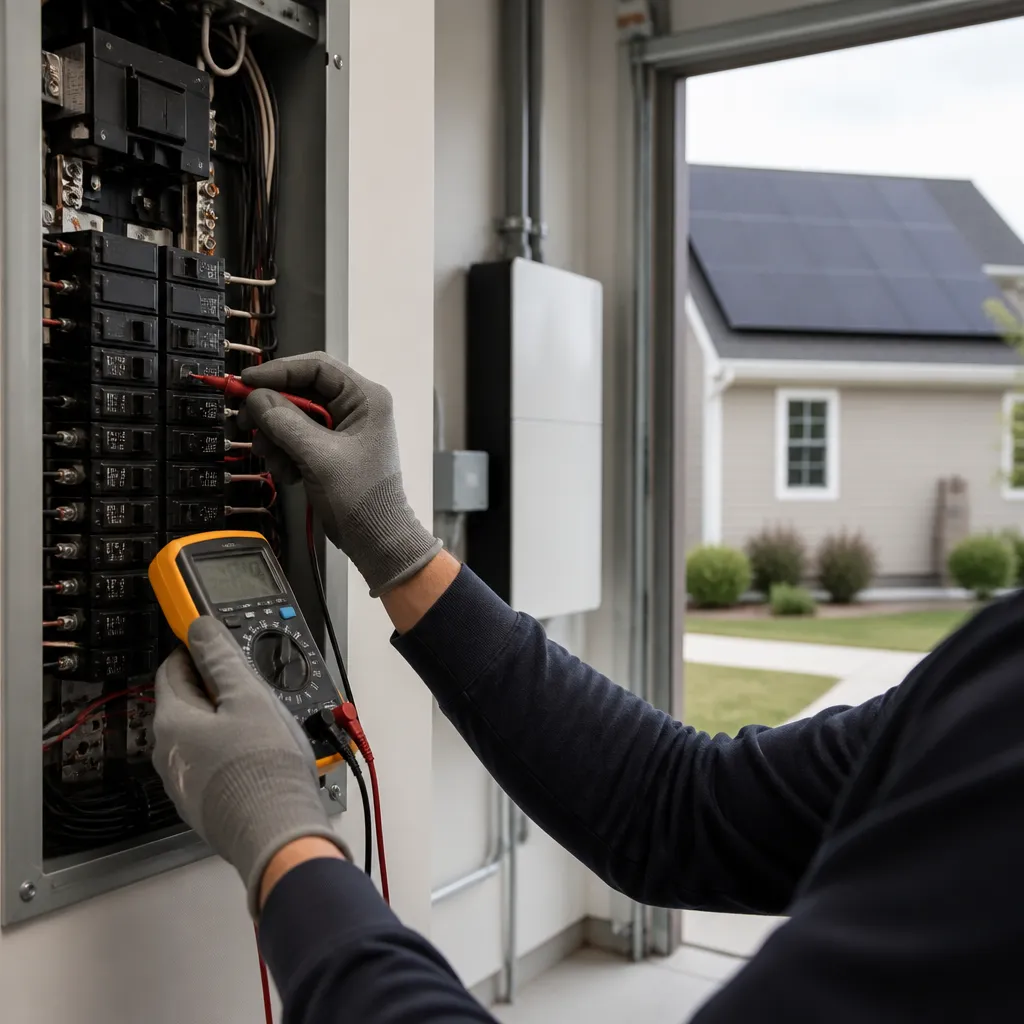
Bonding errors are difficult to see by inspection alone. Measurements taken during commissioning and during service visits provide a reliable record of the system's original condition.
GFCI Requirements on AC Circuits
Where GFCI protection applies in a solar home
GFCI protection on AC circuits remains essential in a solar home. Receptacles in kitchens, bathrooms, garages, basements, and outdoor areas typically require GFCI protection under the National Electrical Code, and similar logic applies to many circuits that serve EV charging equipment. Local jurisdictions may adopt different code editions, so the edition in force at the time of installation governs the requirement.
Adding solar does not remove these obligations. The inverter output feeds the same AC wiring that supplies household loads, so the existing GFCI and AFCI devices must still function after the system is connected.
Why standard AC devices can nuisance trip on solar circuits
One installer discussion in a DIY solar forum notes that AC GFCI devices are designed for alternating current and can trip unexpectedly on circuits fed by an inverter, where neutral bonding differs from utility wiring. The same discussion notes that DC-rated GFCI breakers exist but are typically special-order items with higher cost. The practical takeaway is that a device designed for one circuit type should not be placed on another without the manufacturer's approval.
Pro tip: Label every GFCI and AFCI device by the circuit it protects, and note whether the circuit is AC or DC. Clear labels shorten troubleshooting when a device trips after a solar or battery change.
Comparing Protection Devices for Solar and Battery Homes
Comparison of common device types
The table below compares three protection categories that homeowners encounter during solar and battery projects. Each category addresses a different fault type and belongs in a different part of the system.
Protection Device | Fault It Detects | Typical Placement in a Solar or Battery Home |
|---|---|---|
AC GFCI receptacle or breaker | Leakage current to ground on 120 volt and 240 volt AC circuits | Kitchens, bathrooms, garages, outdoor outlets, and other locations where code requires it |
DC ground-fault protection (inverter-integrated or standalone) | Leakage from PV or battery DC conductors to ground | Built into many inverters and charge controllers, or added as a separate device when the equipment requires it |
DC arc-fault protection (AFCI or string-level device) | Arc signatures on DC source circuits | Rooftop PV source circuits and designated DC runs where equipment or code requires it, with manufacturer compatibility confirmed |
Selecting the right device for each circuit
Selection should begin with the circuit type and the equipment documentation. AC branch circuits generally call for GFCI or AFCI devices where code requires them. DC arrays and battery circuits depend on inverter and charge controller features, along with any listed accessory devices.
A written circuit map helps prevent duplicate or missing protection. A single-line diagram that labels each source, combiner, battery disconnect, and inverter input makes it easier to confirm which device covers which conductor.
Inspection Steps for Existing Systems
Visual checks at connection points
Inspections should begin at the connection points where arcs most often start. Technicians check connectors for heat discoloration, cracks, and incomplete seating, and they inspect junction boxes for moisture, corrosion, and pest damage. Terminal torque should be verified against the manufacturer's specification rather than estimated by feel.
Documenting breaker position and test results
Testing ground-fault detection on a breaker-based device requires recording the breaker position before and after each test. The field guide for testing existing photovoltaic systems, published by NREL, directs technicians to observe and record whether the breaker is in the closed, tripped, or open position. Documentation of this kind shows whether a fault was previously detected and how the system responded.
Test records should include the date, the device tested, the result, and the technician's name. Records of this kind make later troubleshooting faster and more reliable.
Common Mistakes in Retrofits and Upgrades
Adding a device without a system review
A common mistake is adding a protection device to a single circuit without reviewing the full system. A new device can change how faults are isolated, and it may trip under conditions the original design handled without issue. A complete review keeps protection consistent across the array, battery, inverter, and electrical panel.
Retrofits that add batteries to an existing array are especially prone to this problem. The original protection layout may not account for the new source of fault current.
Ignoring labels and as-built documentation
Labels at disconnects, combiner boxes, and battery enclosures help technicians act safely during a fault. When labels are missing or outdated after a retrofit, troubleshooting takes longer and the risk of incorrect repairs increases. Requesting as-built drawings from the installer is a practical step for any system that has been modified.
Triple R Energy provides solar system diagnostics, battery storage installation, and electrical panel upgrades for residential customers across Delaware, Maryland, Pennsylvania, Virginia, Washington, D.C., and the wider Mid-Atlantic region. Documentation review can be included as part of a diagnostic visit.
Pro tip: Keep a dated copy of the single-line diagram where the household can find it, and update it after any panel upgrade, battery addition, or EV charger installation.
Frequently Asked Questions
Can I add a standard GFCI breaker to my solar array?
Standard AC GFCI devices are generally not appropriate for DC array circuits. Any protection device for a solar array should be selected from the inverter manufacturer's approved list and confirmed by a licensed electrician.
Do solar homes need arc-fault protection?
Requirements depend on the jurisdiction, the circuit location, and the equipment design. Many residential branch circuits require AFCI protection where code applies, and many PV designs include DC arc-fault protection at the equipment level. The local authority having jurisdiction should confirm the requirements for each project.
Does battery storage need its own ground-fault protection?
Battery circuits are DC and need ground-fault detection that matches the battery and inverter design. Overcurrent protection must also be sized to the conductor and the battery's available fault current.
What commonly causes arc faults in solar systems?
Loose connectors, corroded terminals, damaged insulation, pest damage, and poorly crimped connections are the most common causes. Most of these conditions can be found through a visual inspection and a torque check of accessible terminals.
How often should a solar and battery system be inspected?
An annual inspection by a licensed professional is a reasonable baseline for most residential systems. Inspections are also advisable after severe weather, after an equipment alarm, or after any change to the wiring.
Will an electrical panel upgrade add arc-fault protection?
A panel upgrade can add or reorganize protection, but the scope depends on the breaker types selected and the circuits served. The protection plan should be set during design, with each solar, battery, and EV charging circuit documented.
We welcome feedback from homeowners in Delaware, Maryland, Pennsylvania, Virginia, and Washington, D.C., so please share your experience with any protection or inspection question related to your solar or battery system.