A battery storage project in Virginia involves far more than mounting a unit on a garage wall. Load assessment, panel capacity, local permits, and utility requirements all determine whether a home battery installation performs as expected during an outage and whether it delivers value over its service life. Many homeowners begin with backup power as the main goal, then discover that the choice of battery size, panel design, and solar pairing affects the outcome. This guide outlines the decisions involved in battery backup for Virginia homeowners and the questions to resolve before installation begins. Triple R Energy, a licensed electrical contractor serving Virginia and the wider Mid-Atlantic region, prepared it from residential project experience.
Table of Contents
- Quick Takeaways
- How Battery Backup Works in a Virginia Home
- Sizing a Battery for Your Home Loads
- Permits and Utility Requirements in Virginia
- Costs and Financing Considerations
- Battery Storage Options Compared
- Installation Process From Survey to Commissioning
- Maintenance, Monitoring, and Long-Term Service
- Frequently Asked Questions
- References
Quick Takeaways
Key Insight | Explanation |
|---|---|
Define backup scope first | Whether the battery supports selected circuits or the whole home determines the required capacity, power rating, and total project cost. |
Verify panel readiness early | Available breaker space and main service capacity must be confirmed before purchase. Some older panels require a service upgrade before a battery can be added. |
Pair storage with existing solar where applicable | Energy storage installed with a solar system can help use the power the system generates, which is most relevant for homes with existing or planned solar arrays. |
Plan for permits and inspection | Battery installations generally require electrical permits and inspection through the local authority. Scheduling these steps early prevents delays in commissioning. |
Confirm utility requirements before installation | Systems that interact with the grid may require utility review. Documentation should be completed before equipment is energized. |
Schedule recurring inspections | Periodic checks of connections, software versions, and monitoring data help maintain performance across Virginia's hot summers and cold winters. |
How Battery Backup Works in a Virginia Home
A home battery stores electrical energy in chemical form and releases it through an inverter when the household needs power. During a utility outage, most residential designs disconnect from the grid automatically so that power can be supplied to the home without endangering utility crews. The battery then supplies the circuits connected to it until its stored energy is depleted or the grid returns.
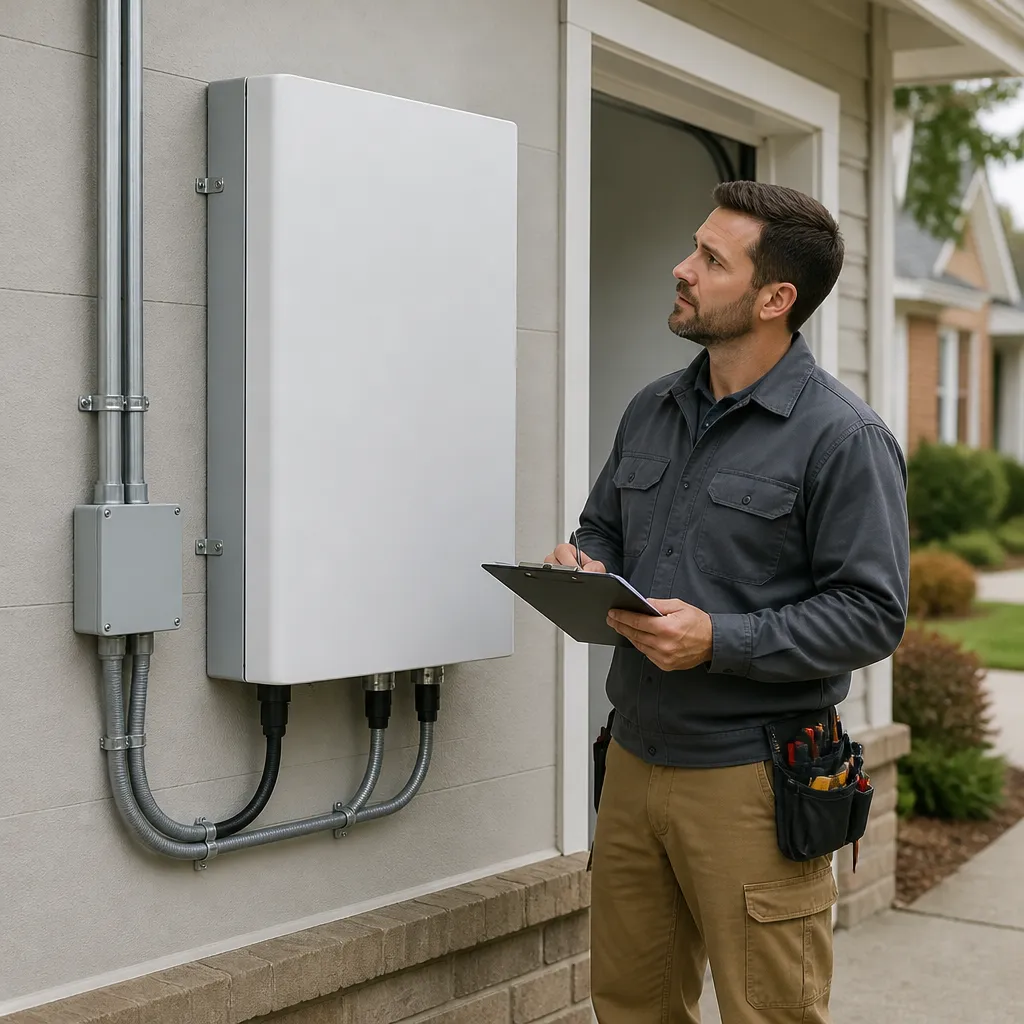
The U.S. Department of Energy notes that installing energy storage with a solar system can help utilize the power the system generates. For homeowners, this means that excess daytime production can be held for evening use rather than exported at a lower value. This benefit applies to homes that already have solar or plan to add it.
Solar United Neighbors has examined solar plus storage in Virginia, using the Hampton Roads region as a test case. Its analysis modeled financial feasibility and considered how storage could help protect vulnerable communities from the effects of climate change. That research reflects a broader regional interest in resilience, which is one reason battery backup has become a common topic for Virginia households.
Backup Power and Critical Loads
Most homes do not require every circuit to remain energized during an outage. Refrigeration, well pumps, heating system controls, medical equipment, and network equipment are common priorities. Identifying these loads before design allows the installer to select a configuration that supports them without oversizing the battery.
The most reliable battery design is the one sized to the household's documented loads, not the largest unit that fits the available wall space.
Circuits are typically grouped on a dedicated critical loads subpanel or managed through a panel that supports circuit-level control. The grouping process should involve the homeowner, because only the occupants know which devices are essential during a multi-day outage. Clear decisions at this stage prevent undersized systems and unexpected shutdowns.
Solar Self-Consumption and Grid Interaction
A battery paired with solar changes how the household uses generated power. Instead of sending daytime production to the grid and drawing power back at night, the system can direct stored energy to the home during peak demand periods. The actual effect depends on rate structures, system size, and household consumption patterns, so the design should begin with usage data rather than assumptions.
Sizing a Battery for Your Home Loads
Battery sizing involves two separate measurements that homeowners often confuse. Usable capacity, expressed in kilowatt-hours, describes how much energy the battery can deliver over a period. Power rating, expressed in kilowatts, describes how many appliances can run at the same time. A system may have adequate capacity for an overnight outage but insufficient power for simultaneous loads.
Reading Your Electricity Usage Data
Utility billing history and interval data provide the starting point for sizing. Electrical contractors typically compare average daily consumption with the energy needed for the selected critical circuits. This comparison shows whether a planned outage period can be covered at a reasonable capacity and reveals seasonal differences that affect the design.
Virginia households often use more energy during summer cooling and winter heating. A battery sized only for average monthly use may underperform during periods of peak demand. Reviewing data from the hottest and coldest months gives a more reliable basis for the design.
Motor Starting Loads and Power Rating
Well pumps, air conditioning compressors, and some heat pumps draw a higher surge of current when they start than when they run. A battery power rating that covers the running load may still fail to start these motors. The installer should review starting requirements for each motor and confirm that the inverter can support them.
Pro tip: Record the nameplate ratings of every critical appliance before requesting quotes. Accurate ratings allow installers to size the system from documented data rather than estimates.
Permits and Utility Requirements in Virginia
Battery installations are electrical work that generally requires permits, plan review, and inspection by the local authority having jurisdiction. Requirements can differ between localities, so homeowners should confirm the process with the building or permitting office that serves their address. A licensed electrical contractor typically prepares the electrical documentation and coordinates inspection timing.
Local Permits and Electrical Inspection
The permit package usually includes a single-line diagram, equipment specifications, and the location of the battery, inverter, and disconnects. Inspectors review clearances, labeling, conductor sizing, and overcurrent protection. Incomplete documentation is one of the most common causes of delayed commissioning in residential battery projects.
Pro tip: Ask the contractor to confirm which code edition the local jurisdiction enforces. Designs prepared to the wrong edition may require revision after plan review.
Utility Interconnection Review
Systems that can export power to the grid typically require an interconnection application with the serving utility. The utility reviews the equipment specifications and the planned operating mode before approving parallel operation. Systems that only supply backup and do not export may follow a different and sometimes simpler review path, depending on the utility's rules.
Approval timelines vary, and equipment should not be energized before the utility authorizes operation. Homeowners should ask who submits the application and who tracks its status. Assigning that responsibility in writing avoids gaps between the installation date and final approval.
Costs and Financing Considerations
The total cost of a battery installation depends on the equipment selected, the complexity of the electrical work, and any panel or service upgrades required. Equipment is only one component. Labor, permits, conduit, disconnects, monitoring hardware, and commissioning also contribute to the final figure, and these items should appear on a clear, itemized quote.
Solar United Neighbors publishes a battery storage guide that explains how backup works, what batteries cost, and whether storage is appropriate for a given household. Reviewing that type of independent resource before requesting quotes helps homeowners compare proposals on consistent terms.
Equipment, Labor, and Electrical Work
Quotes that list only a battery price rarely reflect the full scope of work. A battery that requires a new subpanel, a service upgrade, or relocation of existing equipment will carry additional costs. Homeowners should ask each contractor to identify the scope of electrical work separately from equipment.
Labor costs depend on access, wall construction, conduit runs, and the distance between the battery location and the main panel. Installations that place equipment close to the existing panel generally involve shorter runs and lower labor requirements.
Financing and Incentive Research
Financing options and incentive programs change over time and differ by program design. Homeowners should verify current eligibility and program rules directly with the administering organization before relying on any savings estimate. A contractor should provide documentation that supports every incentive assumed in a proposal.
Some homeowners compare cash purchase with financing terms. The comparison should account for interest, the expected service life of the equipment, and the cost of future replacement. A payment plan that ends before the battery reaches the end of its useful life can leave an unresolved expense.
Battery Storage Options Compared
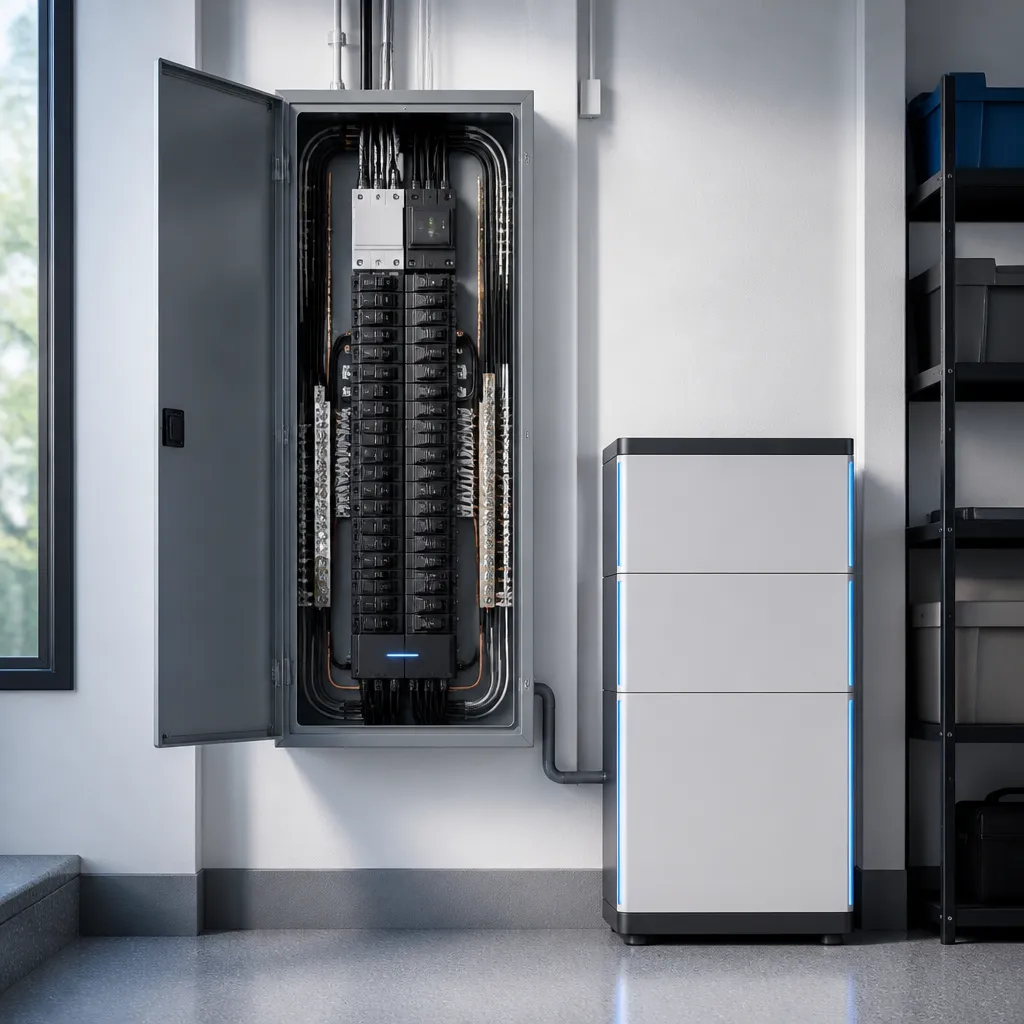
Virginia homeowners typically consider three installation approaches. Each serves a different backup objective and carries different costs, panel requirements, and expansion potential. The table below summarizes how these approaches compare for residential projects.
Comparing Installation Approaches for Residential Projects
Option | Best Suited For | Key Considerations |
|---|---|---|
Whole-home battery integrated with the main panel | Households that want most circuits to remain powered during an outage | Typically the highest equipment and service cost. Main service capacity and panel condition must be verified before installation. |
Partial backup through a critical loads subpanel | Homes that prioritize refrigeration, heating controls, well pumps, and medical devices | Lower cost than whole-home designs. Circuits must be identified and wired to the subpanel during installation. |
Smart electrical panel with battery-ready circuits (SPAN Smart Electrical Panel) | Homes planning future solar, EV charging, and battery expansion on one platform | Requires panel replacement. Circuit-level monitoring and control support load management over time. |
No single option suits every property. The correct choice depends on the critical loads, the age and capacity of the existing panel, and whether the household plans to add solar or EV charging later. Planning for future additions at the start often avoids a second panel project.
Installation Process From Survey to Commissioning
A well-run battery installation follows a clear sequence. The stages include a site survey, documentation, equipment installation, electrical connection, inspection, utility authorization where required, and commissioning. Each stage depends on the one before it, so delays in documentation usually postpone the entire project.
Site Survey and Load Documentation
The site survey records the main panel model, available breaker space, service rating, meter location, and the wall area for the battery and inverter. The surveyor also measures the distances between components because conduit length affects both cost and voltage drop. Photographs and written notes from this visit feed directly into the permit package.
Load documentation confirms which circuits will connect to the battery and whether any circuits require relocation. Homeowners should review this list and confirm that no essential device has been omitted.
Mounting, Wiring, and Commissioning
Mounting requires a level, supported surface and clearances that match the manufacturer's specifications. Wiring must follow the conductor sizes and overcurrent protection shown on the approved plans. Labeling is checked both during installation and at inspection, because unclear labels can complicate service during an emergency.
Commissioning confirms that the system transfers to backup correctly, that monitoring communicates with the account, and that the homeowner understands the operating modes. A short walkthrough at this stage helps the household know what the system will do during an outage.
Maintenance, Monitoring, and Long-Term Service
A battery installation requires periodic attention to remain dependable. Monitoring data, software updates, and physical inspections each play a role. Systems that receive regular service are easier to diagnose when a fault occurs and are less likely to fail during an outage when backup is needed most.
Monitoring Software and Firmware Updates
Most residential batteries connect to a monitoring application that reports state of charge, production, and fault codes. Homeowners should confirm that the monitoring connection is active and that alerts reach an address they check. Firmware updates can change operating behavior, so the installer should document the version installed at commissioning.
Monitoring history also provides evidence when performance changes. A battery that delivers less energy over time may indicate a connection issue, a temperature problem, or a configuration change that needs review.
Seasonal Inspection Checklist
A seasonal inspection should check ventilation, clearances, connection tightness, enclosure condition, and signs of moisture or pests. Virginia summers can be hot and humid, and winters can bring freezing conditions, so temperature and enclosure conditions warrant attention at each change of season. The installer should verify that the equipment stays within the operating temperature range listed by the manufacturer.
Records from each inspection help establish a service history. When a warranty claim or repair becomes necessary, documented maintenance supports a faster and clearer resolution.
Frequently Asked Questions
How long does a home battery installation usually take?
The on-site work for a typical residential battery often takes one to two days, but the full timeline is longer because permits, plan review, inspection, and utility authorization may occur before or after the installation. Homeowners should ask for a schedule that shows each stage separately.
Can a battery power my whole house during a Virginia outage?
A whole-home result is possible in some properties, but it depends on the battery capacity, power rating, main service capacity, and the household's typical consumption. A load study is the only reliable way to confirm whether whole-home backup is practical for a specific address.
Do I need solar panels to install a home battery?
No. A battery can provide backup power without solar. Solar pairing adds the ability to store generated energy for later use, which is most valuable for homes that already produce electricity or plan to add a solar array.
Will my existing electrical panel support a battery?
Many panels can support a battery with additional breaker space and a compatible interconnection, but older or undersized panels may require a service upgrade. A site survey that records the panel model, rating, and available space answers this question before equipment is ordered.
How often should a residential battery system be inspected?
Most homeowners benefit from a professional inspection at least once a year, with additional checks after severe weather or any alert from the monitoring system. Routine review of monitoring data between visits helps identify changes early.
Have you installed a battery backup system in your Virginia home, and what did you learn from the sizing, permit, or commissioning process? We welcome your feedback and experience.