Electrical panel troubleshooting is the process of identifying why a home's electrical panel is producing symptoms such as repeated breaker trips, dimming lights, or warm outlets, and then determining whether the cause lies in the panel, the branch circuits, or the connected equipment. Many homeowners call for help only after a symptom has persisted for weeks, which can allow a minor fault to develop into a safety hazard. A professional visit follows a defined sequence: intake, visual inspection, measurement and testing, written documentation, and a review of repair options. Understanding that sequence helps homeowners prepare for the appointment and interpret the findings. This article describes what happens during a professional visit in homes across Delaware, Maryland, Pennsylvania, Virginia, and Washington, D.C.
Table of Contents
- Quick Takeaways
- Why Homeowners Request a Panel Troubleshooting Visit
- Arrival and Intake Interview
- Visual Inspection of the Panel and Its Surroundings
- Safety Testing and Electrical Measurements
- Solar, Battery, and EV Circuits During the Visit
- Choosing the Right Level of Service
- Written Findings and Repair Options
- Preparing for the Visit
- Frequently Asked Questions
- References
Quick Takeaways
Key Insight | Explanation |
|---|---|
Symptoms are evidence, not the diagnosis | A tripped breaker or flickering light identifies a location to investigate. The technician confirms the actual cause through inspection and measurement. |
Access and clearance are checked first | Home inspectors commonly look for at least 36 inches of clear space in front of a panel, with stored items removed before any work begins. |
Panel age and brand affect the risk profile | Panels 30 years old or older are typically flagged for further evaluation, and certain older brands carry documented reliability concerns. |
Heat is one of the most useful warning signs | Discoloration, scorch marks, or a warm cover point to a loose or overloaded connection that requires prompt correction. |
Solar, battery, and EV loads change the analysis | Generation and charging circuits add load and interconnection considerations that the technician must verify against the panel's rating and capacity. |
Findings should be written and ranked by risk | A written report that separates urgent hazards from future upgrades allows homeowners to make a informed decision on timing and cost. |
Why Homeowners Request a Panel Troubleshooting Visit
Most service requests begin with a symptom that a household can observe directly. Repeated breaker trips, lights that dim when a large appliance starts, and outlets that feel warm to the touch are the most common examples. Each symptom points to a different part of the electrical system, so an accurate description of the problem has value even before a technician arrives.
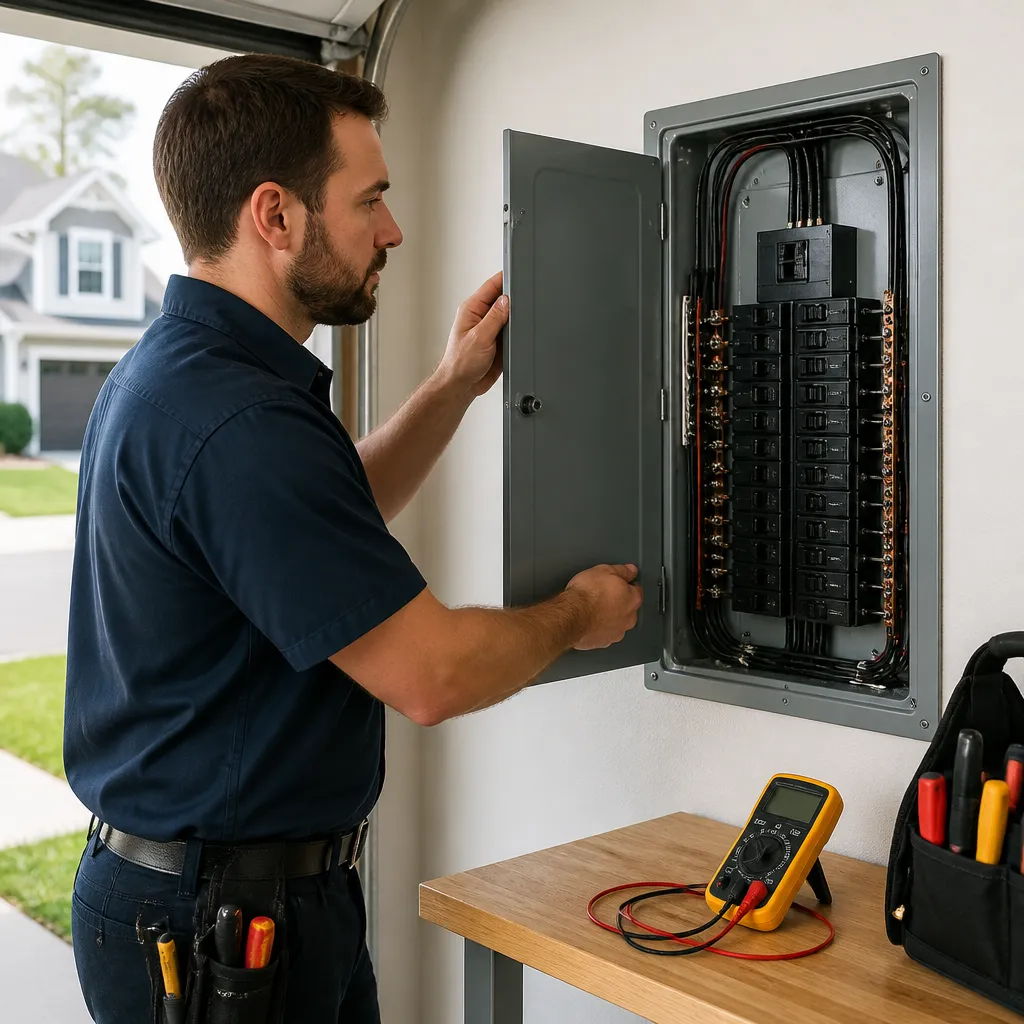
A residential panel problem is not always caused by the panel itself. A breaker may trip because a circuit is overloaded, an appliance has an internal fault, or a loose connection in a receptacle has increased resistance. The panel serves as the distribution point where these faults become visible, which is why it is the logical starting point for diagnosis.
Repeated breaker trips
A breaker that trips once after a high-demand event, such as running a dryer and a microwave together, may reflect normal overload protection. A breaker that trips repeatedly without an obvious cause requires a different response. The technician determines whether the breaker is tripping on overload, on a short circuit, or on a ground fault, because each condition leads to a different repair path.
Flickering lights and dimming during appliance use
Lights that flicker when a refrigerator compressor or air conditioner starts often indicate a voltage drop caused by a high-resistance connection or an undersized conductor. The pattern matters. Flickering limited to one room suggests a branch circuit issue, while flickering throughout the house points closer to the service connection or the main bus.
Warm covers, odors, and audible buzzing
A warm panel cover, a burnt smell near the enclosure, or a humming or crackling sound should be treated as a priority. These signs commonly indicate heat generated at a terminal or a breaker that is failing under load. Homeowners who notice any of these conditions should reduce use of the affected circuits and schedule the visit promptly rather than waiting for the next scheduled service window.
Arrival and Intake Interview
A professional visit begins before the panel is opened. The technician confirms the service address, reviews the reported symptoms, and asks targeted questions about when the problem started and how it behaves. This intake conversation shapes the testing plan and reduces the time spent on unproductive checks.
The technician also asks about recent changes to the property. Electrical problems often appear after a new load is added, such as an EV charger, a heat pump, a hot tub, or a battery storage system. A panel that operated reliably for years may reach its practical limit once a new continuous load is connected.
Reviewing the symptom history
The technician records the date of the first occurrence, the circuits involved, and any conditions present at the time, such as weather, appliance use, or recent storms. Patterns in this history often narrow the investigation. For example, a problem that occurs only during afternoon heat may relate to air conditioning load, while a problem that appears overnight may involve a timer, a charger, or a refrigerator defrost cycle.
Recording recent electrical changes
Recent work on the property is documented in detail. The technician checks whether any new breakers, circuits, or devices were added by a contractor, whether a permit was issued, and whether the panel has been opened by someone other than a licensed professional. Unlicensed modifications are a frequent source of double-tapped conductors and mismatched components, so these details carry significant diagnostic weight.
Pro tip: Before the visit, write down the date of each symptom, the circuit or room affected, and what was running at the time. A short log of this kind can shorten the diagnostic process considerably.
Visual Inspection of the Panel and Its Surroundings
The visual inspection is the first physical step and often reveals conditions that explain the reported symptoms. The technician evaluates the area around the panel, the enclosure itself, and the labeling on the breakers before any cover is removed. Each observation is recorded so that it can be compared with later test results.
Access and clearance
Working space around the panel affects both safety and the ability to complete the work. Home inspection guidance commonly calls for at least 36 inches of clearance in front of the box, and roughly 30 to 36 inches to either side. Stored boxes, laundry equipment, shelving, or holiday decorations placed against the panel are recorded as obstructions and must be cleared before the technician can work safely.
Panel age, make, and model
The age and manufacturer of the panel influence the rest of the visit. Panels approximately 30 years old or older are commonly referred for further evaluation by a licensed electrician, and some older brands have documented reliability concerns. Federal Pacific Stab-Lok panels are a frequently cited example. The technician records the make and model, because replacement parts, breaker compatibility, and the age of the bus design all depend on this information.
Enclosure condition and signs of heat or moisture
The technician looks for water intrusion, rust, corrosion, discoloration, and scorch marks on the enclosure, the cover, and the surrounding wall. Scorch marks around a breaker or a knockout are strong indicators of past overheating. Moisture or corrosion near the enclosure can also point to a leak or condensation problem that affects the conductors over time.
The labeling is checked for completeness and legibility. Missing, incomplete, or faded labels complicate safe isolation of circuits and make it harder to identify which circuits are affected when a breaker trips. Clear labels reduce the time needed for each later step, and their absence is commonly noted in the written findings.
Safety Testing and Electrical Measurements
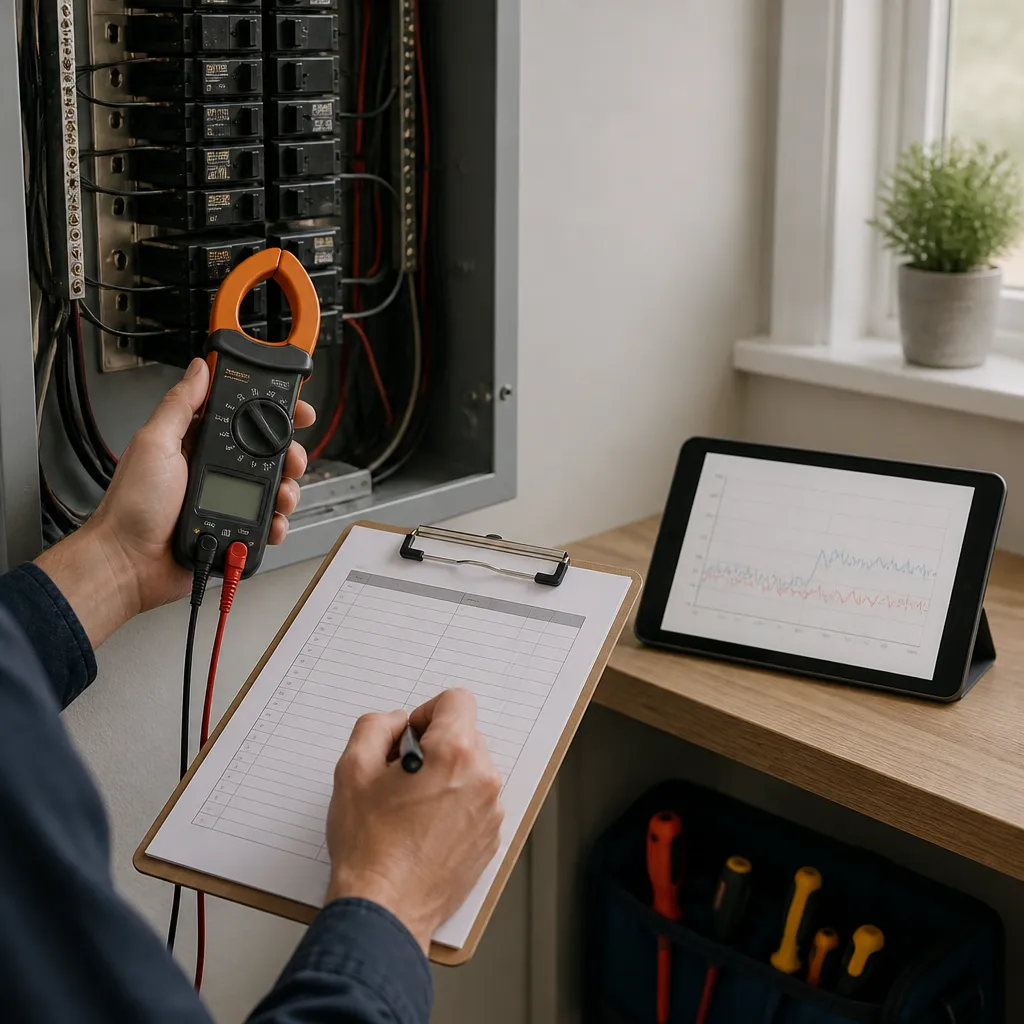
Once the visual review is complete, the technician removes the cover and examines the internal components. This stage requires the appropriate safety precautions and qualified personnel. Each conductor, terminal, and breaker is evaluated against the symptoms identified earlier, and any condition that presents an immediate hazard is documented and addressed before the visit ends.
Conductor and terminal checks
The technician confirms that hot, neutral, and ground conductors are terminated correctly and that each terminal is secured. Double tapping, where two or more conductors share a single breaker terminal not rated for that arrangement, is a common defect that must be corrected. Loose terminals, discolored insulation, and signs of arcing are recorded and linked to the symptoms that prompted the visit.
Breaker sizing and manufacturer compatibility
Each breaker is checked for compatibility with the panel and for correct sizing relative to the conductor it protects. Mismatched breaker and panel manufacturers can produce poor connections and performance problems. An oversized breaker presents a different risk, because the wire may overheat before the breaker responds. Both conditions are treated as priority findings when they are present.
Voltage, load, and protective device testing
Electrical measurements are taken with the equipment operating so that the technician can compare voltage under load with the reading at rest. Arc fault circuit interrupters and ground fault circuit interrupters are tested when they are installed, since these devices can trip for reasons that resemble panel faults. ENERGY STAR inspection checklists include electrical measurements taken at the disconnect while equipment is in operation, which reflects the same principle of testing under real conditions.
Solar, Battery, and EV Circuits During the Visit
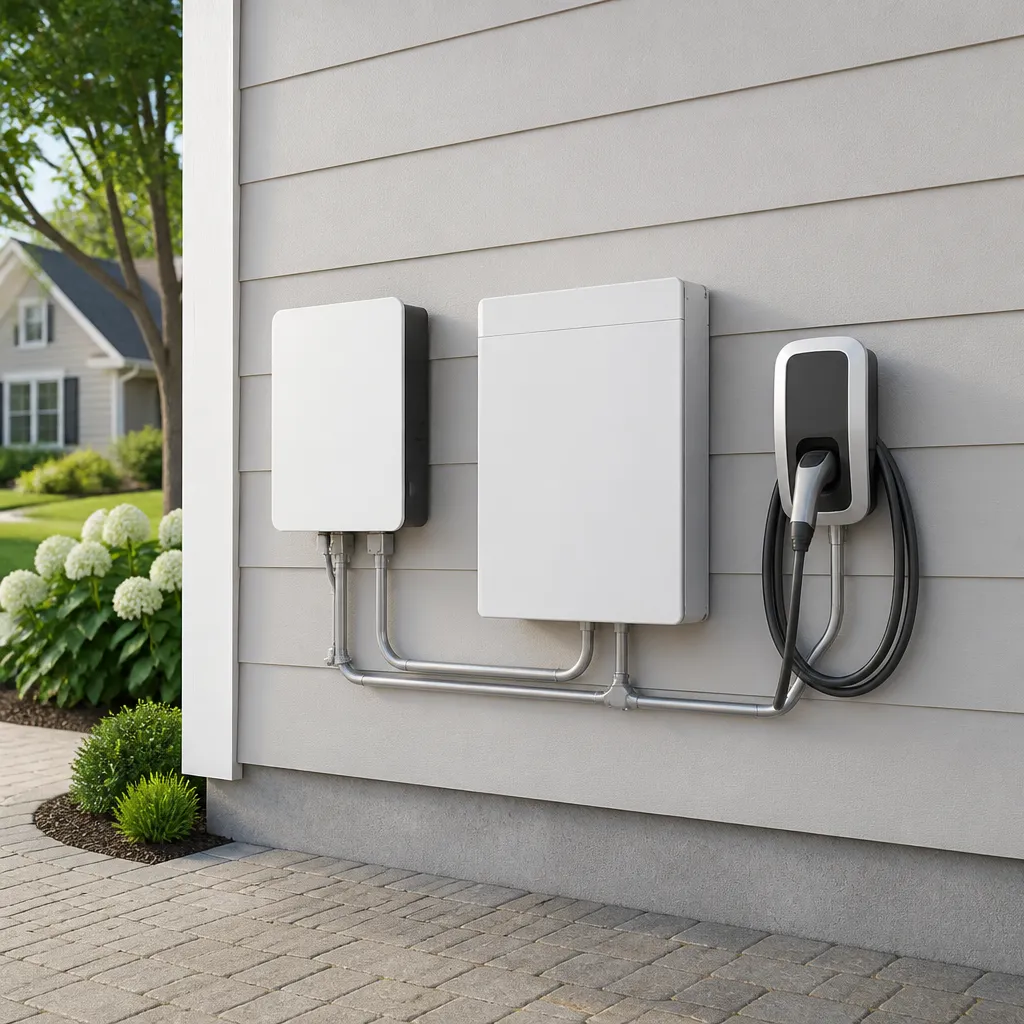
Many homes served across the Mid-Atlantic now include solar generation, battery storage, or a dedicated EV charging circuit. Each addition changes the way power flows through the panel, so the technician evaluates these circuits as part of the troubleshooting process rather than treating them as separate systems. A panel that performed well before the addition may require a different assessment afterward.
Solar inverter connections and backfeed
Solar interconnections are verified against the panel's bus rating and the breaker designed for the inverter output. The technician checks that the connection is secure, that the labeling identifies the source, and that there are no signs of heat at the interconnection point. Solar system diagnostics frequently reveal that a problem attributed to the panel originates in an inverter or a monitoring fault, so these checks are included in every visit where solar is present.
Battery storage circuits and backup loads
Battery storage systems require a dedicated breaker, clear labeling, and a defined relationship with any backup circuits. The technician confirms that the battery breaker is correctly sized, that the backup loads are identified, and that the system is not sharing terminals in a way that would compromise either function. Battery services often include a review of these connections, because a problem with a backup circuit may not appear until a power interruption occurs.
EV charger load assessment
An EV charger is a continuous load, and the circuit supplying it must be sized with additional margin under the electrical code. The technician evaluates whether the panel has sufficient capacity for the charger and any existing loads, and whether the existing breaker and conductor are adequate. Where capacity is limited, a service upgrade or a smart panel solution, such as a SPAN Smart Electrical Panel installation, may be recommended as an alternative to adding additional circuits.
Choosing the Right Level of Service
Not every panel concern requires the same depth of service. Homeowners may encounter different levels of visit, from a brief review to a full diagnostic appointment followed by equipment replacement. Matching the level of service to the symptoms and the age of the panel helps avoid paying for unnecessary work or delaying necessary repairs.
The comparison below summarizes three common approaches. Each approach has a defined scope, and the appropriate choice depends on the severity of the symptoms, the age of the equipment, and whether the home has added solar, battery storage, or EV charging.
Service Level | What It Includes | Best Suited For |
|---|---|---|
Visual and symptom review | Intake interview, exterior inspection of the panel, label review, and a summary of observed conditions | Minor concerns with a clear cause, such as an obstructed panel or missing labels |
Full diagnostic troubleshooting visit | Cover removal, conductor and breaker inspection, voltage and load measurements, protective device testing, and a written report | Repeated trips, flickering, heat signs, or symptoms that remain unexplained after a basic review |
Panel repair, replacement, or service upgrade | Corrective repairs, replacement of defective components, or installation of a new panel or smart panel with capacity planning | Panels with heat damage, unsupported components, insufficient capacity, or repeated failures after repair |
Some providers offer only the visual review at a lower initial cost. That option can be appropriate when the cause is already known, but it does not establish whether internal components are sound. For panels with symptoms that persist, the full diagnostic visit typically provides more reliable information than a visual review alone.
Written Findings and Repair Options
A professional visit concludes with a written record of what was observed, measured, and corrected. The report describes each finding, the condition that supports it, and the recommended action. A clear report allows homeowners to compare options, share information with other contractors, and verify that the work was completed as described.
A troubleshooting visit produces value only when the findings are specific enough to act on. A report that identifies the exact circuit, the condition, and the required correction gives the homeowner a basis for decisions that a general summary cannot provide.
Ranking findings by risk
Findings are typically sorted into three categories: immediate hazards, repairs that should be scheduled soon, and upgrades that improve capacity or convenience. Heat damage, double-tapped conductors, and incompatible breakers belong in the first category. Labeling improvements and surge protection are commonly placed in a later category. This ranking allows the homeowner to address the most serious conditions first.
Repair or replacement decisions
A repair restores a defective component, while a replacement addresses the entire assembly. Repair is usually sufficient when the enclosure, bus, and service connection are sound, and the defect is limited to a breaker or a terminal. Replacement is more often recommended when the panel is an older model with a known reliability concern, shows heat damage across multiple connections, or lacks the capacity needed for solar, battery, or EV loads.
Scheduling follow-up work
Follow-up work is scheduled according to the risk category assigned in the report. Hazardous conditions should be corrected before the panel is returned to normal use, and the technician may recommend temporary measures, such as reducing load on an affected circuit. Non-urgent items can be planned around the homeowner's budget and timeline, provided that the report documents the condition and the reason for the recommendation.
Preparing for the Visit
Preparation reduces the time required for the visit and supports a more accurate diagnosis. The steps are simple, and most require only a few minutes of effort before the technician arrives. Homeowners should focus on access, documentation, and a clear description of the symptoms.
Clearing access before arrival
The area in front of the panel should be cleared of boxes, furniture, bicycles, and stored items. The technician needs unobstructed access to the panel door and a safe working surface. Homeowners should not attempt to open the panel or remove the cover themselves, since internal components remain energized even when a main breaker is off.
Gathering documents and equipment details
Useful documents include the original permit records, any inspection reports from a home purchase, and documentation for solar, battery, or EV equipment. Homeowners should also note the brand and model of the panel if the label is visible from outside the enclosure. These details help the technician confirm compatibility and plan parts before work begins.
Deciding on follow-up after the visit
Homeowners should ask the technician to explain the priority of each finding before the visit ends. A clear answer to the question of which conditions are urgent allows the household to make informed decisions about temporary precautions and scheduling. Written findings should be retained, since they provide a record of the panel's condition for future service or resale discussions.
Pro tip: Ask for the written findings to include photographs or exact circuit references. Specific documentation makes it easier to confirm that corrections were completed and to compare the panel's condition at future visits.
Frequently Asked Questions
How long does a professional electrical panel troubleshooting visit take?
The duration depends on the number of circuits involved, the nature of the symptoms, and the testing required. A visual and symptom review can be completed relatively quickly, while a full diagnostic visit with measurements and testing takes longer. The technician can provide an estimate when the appointment is scheduled.
Does a tripped breaker always indicate a problem with the panel?
No. A breaker may trip because of an overloaded circuit, a faulty appliance, or a ground fault in a device. A panel problem is more likely when breakers trip without a clear cause, when they feel hot, or when several unrelated circuits show symptoms at the same time.
Should a homeowner turn off the main breaker and inspect the panel?
Homeowners should not open the panel or remove the cover. Turning off the main breaker does not necessarily make all internal components safe, particularly where service conductors remain energized. A licensed electrician should perform the inspection and any internal work.
Does a panel visit include solar and battery storage systems?
Yes, when those systems are connected to the home's electrical system. The technician checks the interconnection, breaker sizing, labeling, and any backup circuits, since these components can affect the performance and safety of the panel.
When should a residential panel be replaced instead of repaired?
Replacement is generally considered when the panel shows heat damage across multiple connections, uses a brand with a documented reliability concern, or lacks the capacity for planned loads such as an EV charger or battery system. A repair is usually adequate when the defect is limited to a single breaker or terminal.
Will the visit result in a written report?
A professional troubleshooting visit should conclude with a written record of the findings, the measurements taken, and the recommended actions. The report is organized by priority so that homeowners can distinguish urgent hazards from future upgrades.
We welcome your feedback, so please share whether a panel visit in your home identified a cause that you did not expect.