Homeowners in condominiums and townhomes face a planning problem that owners of detached houses rarely encounter. Battery storage and rooftop solar can deliver real value, but the decision depends on roof rights, association approvals, shared electrical infrastructure, and local code requirements. For residents of Delaware, Maryland, Pennsylvania, Virginia, and Washington, D.C., these factors determine whether a battery storage condo townhome project moves forward smoothly or stalls after the first site visit. This article outlines the issues that matter most in attached housing and explains how to evaluate each one before signing an agreement.
Table of Contents
- Quick Takeaways
- Why Attached Homes Need a Different Planning Approach
- Solar Roof Rights and Association Approval
- Electrical Service and Panel Capacity
- Battery Placement and Fire Code Requirements
- Battery Storage Economics in Mid-Atlantic Homes
- Battery Configuration Comparison for Attached Homes
- Backup Power and EV Charging Coordination
- Frequently Asked Questions
- References
Quick Takeaways
Key Insight | Explanation |
|---|---|
Confirm roof and exterior control first | The declaration, bylaws, and covenants determine whether the board must approve panels, batteries, or mounting hardware before work begins. |
Panel capacity sets the project scope | A load calculation shows whether the existing service can support a battery inverter and an EV charger, or whether a service upgrade or smart panel is needed. |
Placement follows local code | Garage, utility room, and exterior locations each carry separate clearance, ventilation, and permit requirements in each jurisdiction. |
A battery without solar can still justify itself | Time-of-use rate differences can support storage when rooftop panels are not feasible, although savings are usually smaller than when the battery stores solar production. |
Design EV charging and backup together | Shared capacity and charging limits should be defined in the same load plan so that essential circuits remain powered during an outage. |
Request itemized quotes | Separate equipment, electrical work, association fees, and permit costs so that proposals can be compared on the same basis. |
Why Attached Homes Need a Different Planning Approach
In a detached house, the owner usually controls the roof, the electrical service, the garage wall, and the utility meter. In a condominium or townhome, several of those elements may belong to a shared community, a condominium association, or a homeowners association. Each element can affect design, approval timing, and total cost.
The practical result is that the order of decisions changes. In practice, owners should gather governing documents before requesting a site assessment, because a design that cannot be approved produces no savings. Early document review also reduces the number of redesigns that installers must prepare.
Owning a home and controlling its exterior are not always the same question. Confirm both before committing to any equipment.
Common Property and Limited Common Elements
Condominium declarations typically define which parts of the building are common elements and which are limited common elements assigned to specific units. Roofs, exterior walls, and shared electrical risers often fall into the common category. Owners should confirm this classification in writing rather than assume it from the layout of their unit.
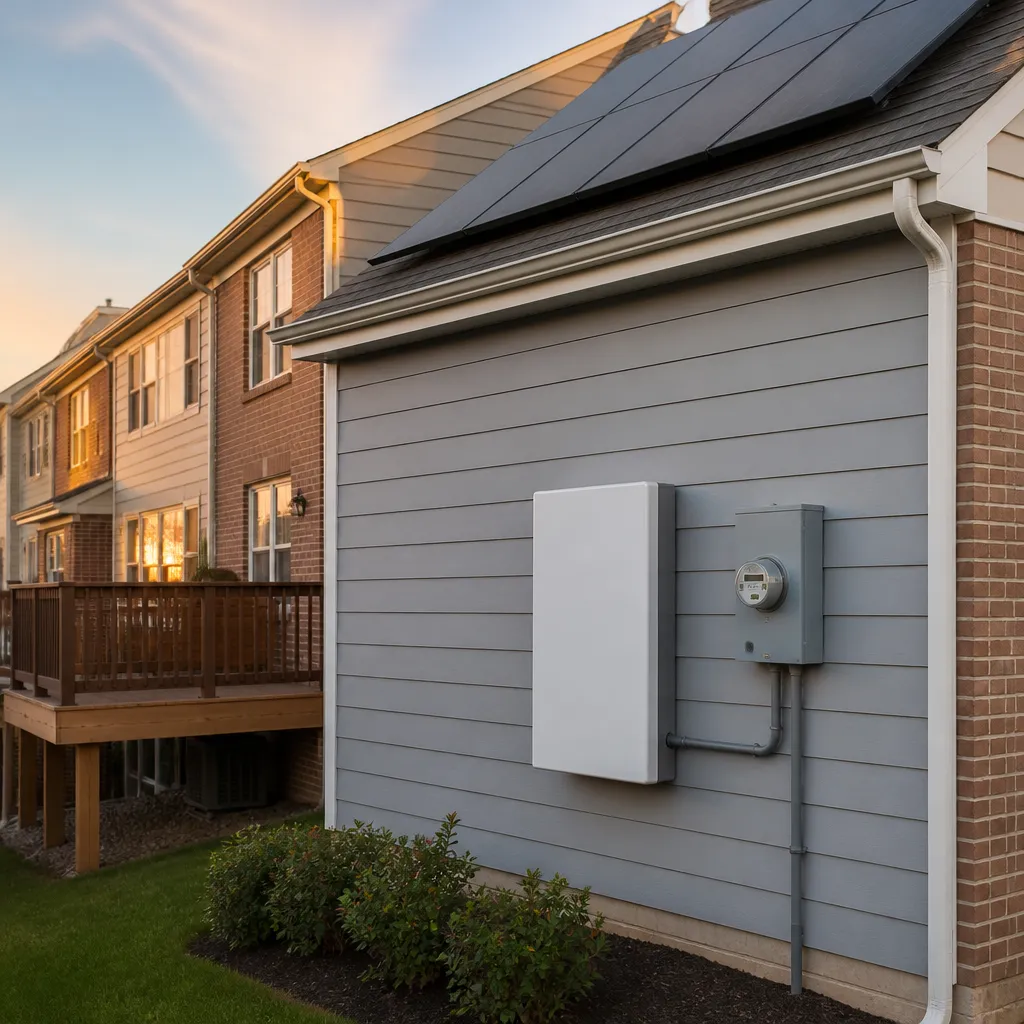
A limited common element may permit exclusive use of a balcony or patio, but it rarely grants the right to alter structural components. Any proposal that involves roof penetrations or wall openings should be reviewed against the building's documents before a contract is signed.
Townhome Lot and Exterior Covenants
Townhome owners commonly hold title to their lot and the structure above it. The covenants, however, may still regulate roof color, visible equipment, and changes to the exterior. A townhome can be fully owned and still require architectural review before any panel or battery equipment is placed on the exterior.
Solar Roof Rights and Association Approval
Rooftop solar is often feasible in attached housing, but the approval path is rarely short. Association boards generally review exterior alterations against governing documents. Many require written plans, equipment specifications, and proof of insurance before work begins.
Confirming Who Controls the Roof
Determine whether the roof is common property, a limited common element, or part of an individual lot. Request the declaration or covenants, the bylaws, and any rules the board has adopted. Ask for records of prior approvals for exterior work on the building, since past decisions show how the board has interpreted its rules.
Pro tip: Ask the board for its written approval timeline, including the dates of its regular meetings and any deadline for appeal. Owners who plan around the meeting schedule avoid delays that would otherwise add weeks to the project.
Preparing a Complete Application Package
A complete application usually includes a roof layout, equipment datasheets, the installer's license information, and a description of the attachment method. Board members often ask how mounting hardware will be sealed and whether the existing roof warranty will remain valid. Installers who regularly work with attached housing can prepare these documents in a consistent format that reduces repeat review cycles.
Roof Condition and Warranty Coordination
Before installation, confirm the age and condition of the roofing material. Replacing a roof after panels are installed requires removing and reinstalling the array, which adds labor and can complicate warranty claims. Where the association controls roof replacement, schedule reroofing and solar work so that the two projects do not overlap.
Electrical Service and Panel Capacity
Battery storage and solar both depend on the electrical service that enters the unit or townhome. A service that is adequate for lighting and appliances may not have spare capacity for a battery inverter, an EV charger, and a heat pump operating at the same time. A load calculation, rather than the age of the building, determines whether an upgrade is necessary.
Load Calculations and Main Breaker Limits
A licensed electrician reviews the main service rating, available breaker space, and typical household demand. Many attached homes have modest service ratings because they were built with smaller footprints and fewer large appliances. Where the calculation shows insufficient headroom, the project may require a service upgrade before a battery can be added.
SPAN Smart Electrical Panel Options
A SPAN Smart Electrical Panel provides circuit-level visibility and control, which can help manage loads when a battery is installed. For a condominium or townhome with limited service capacity, this approach can allow the household to prioritize essential circuits during an outage instead of upgrading the entire service at once. Whether a smart panel is appropriate depends on the load study and the condition of the existing wiring.
Shared Risers and Meter Access in Multi-Unit Buildings
In multi-unit buildings, electrical risers and meter locations are frequently shared or placed in common spaces. Installation, meter changes, and future service work therefore require coordination with the association and the utility. Owners should confirm whether utility interconnection requires any change to a shared meter room before scheduling work.
Battery Placement and Fire Code Requirements
Battery placement in attached housing is governed by local building and fire codes, which vary across Delaware, Maryland, Pennsylvania, Virginia, and Washington, D.C. Code officials consider the battery chemistry, the installation location, required clearances, ventilation, and access for emergency responders. Each of these factors can eliminate a location that appears convenient during a walkthrough.
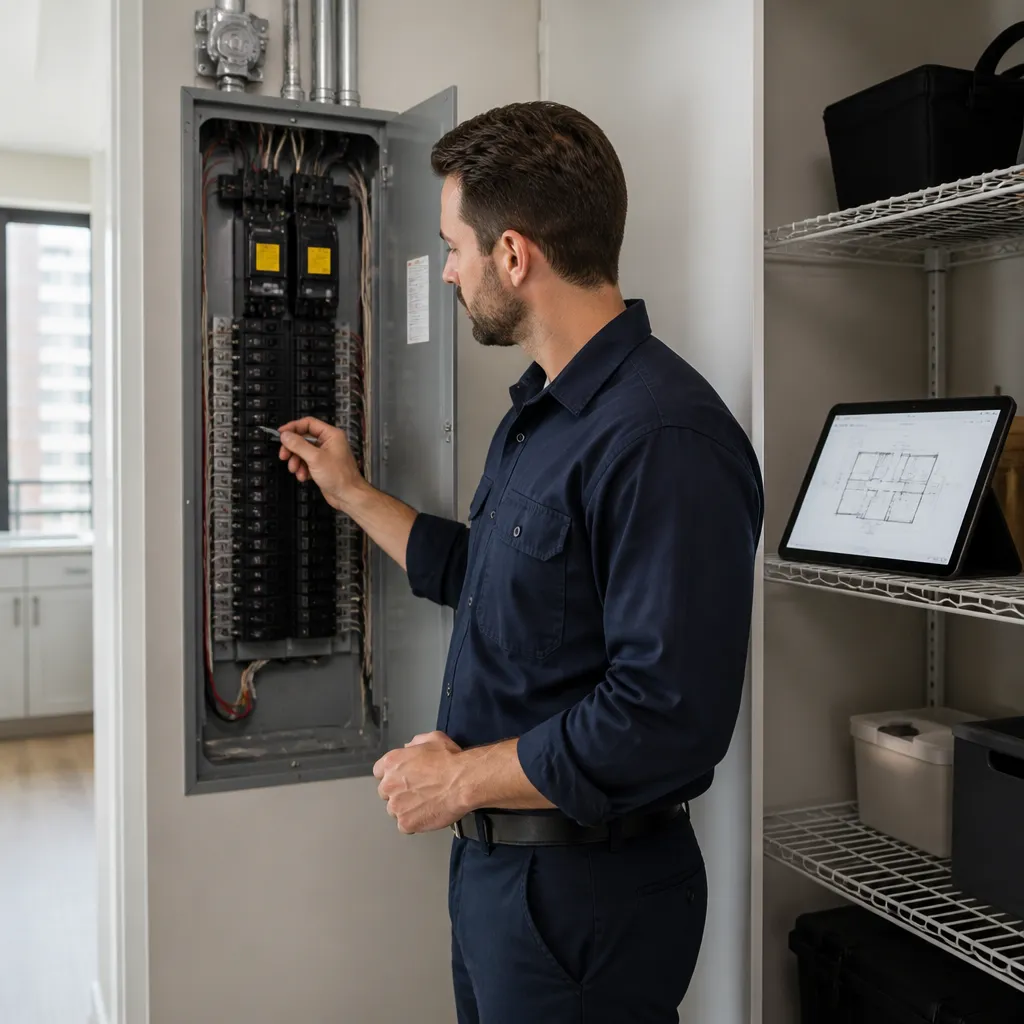
Garage and Utility Room Installations
Garages are a common location in townhomes because they offer wall space near the electrical panel. Codes may restrict battery placement near living space, egress paths, or fuel-burning appliances. Owners should confirm whether the garage is conditioned space and whether protective barriers are required where vehicles operate nearby.
Exterior Mounting, Setbacks, and Party Walls
Exterior mounting is common for lot-based townhomes, but it requires attention to setbacks, weather exposure, and association rules on visible equipment. Shared party walls need particular care. The battery location should not compromise the neighboring unit's wall assembly or the fire separation between units.
Insurance, Permits, and Documentation
Confirm with the insurer how a battery system will be treated under the homeowner or unit owner policy. Keep permit records, equipment listing documents, and commissioning reports together in one file. A condominium owner may also need to notify the association if the battery connects to shared systems.
Pro tip: Request the permit and inspection record before making final payment. Missing inspection documentation can complicate insurance claims and future resale.
Battery Storage Economics in Mid-Atlantic Homes
The financial case for a battery depends on how much energy the household uses after sunset, the utility rate structure, and whether solar panels are part of the project. A battery can be justified without solar when rates vary by time of day. Its savings are generally smaller, however, than when it stores excess solar production.
One homeowner guide published in September 2024 explains that reduced net metering credits in some markets lower the value of solar energy sent back to the grid. That change shifts more of the financial return toward self-consumption and storage. Utility tariffs in the Mid-Atlantic differ, so owners should confirm current export and rate terms before modeling savings.
Time-of-Use Rates and Self-Consumption
A battery earns value by discharging during high-cost periods. In a condominium or townhome where most occupants are away during the day, the battery can charge from solar production and supply evening loads. The estimate should compare the household's hourly consumption with the tariff rather than rely on a flat annual average.
Installed Cost Ranges
Third-party cost estimates have placed installed battery prices in the mid-teens of thousands of dollars, with wide variation based on capacity, equipment, electrical work, and labor. Attached-home projects can add cost for panel upgrades, association review fees, and longer conduit routes. Request quotes that separate equipment, electrical work, and permit fees.
Incentives and Program Rules
Federal and state incentives can shorten the payback period, but eligibility, timing, and documentation requirements change frequently. Confirm current rules with the relevant agency before signing a contract. If the purchase will be financed, confirm whether the lender or association must approve the installation.
Battery Configuration Comparison for Attached Homes
Three configurations are common in attached housing. Each reflects a different balance between backup coverage, electrical work, and approval complexity. The table summarizes where each approach fits best.
Configuration | Best Fit | Key Considerations |
|---|---|---|
Whole-home battery with service upgrade | Owners who want broad backup coverage and expect added loads such as EV charging | Requires a full load study, a possible service upgrade, and a larger approval scope |
Critical loads battery with smart panel | Units with limited service capacity that need essential circuits to remain powered during outages | Requires an accurate list of essential loads, circuit planning, and a compatible panel |
Standalone battery without solar | Owners who want backup power and time-of-use savings but cannot install panels | Savings depend on the rate spread, and placement and approval rules still apply |
In practice, the critical loads approach is the most common starting point in condominiums because it limits electrical work while preserving backup power for refrigeration, lighting, and communication equipment. Owners who expect to add an EV charger later should plan the panel now, since changing the panel after a service upgrade adds cost. The panel choice should be made alongside the battery specification, not after it.
Standalone batteries require a separate evaluation. They avoid roof approvals, but many communities still require review because the equipment is visible or mounted on exterior walls or in shared spaces. Owners should not assume that a battery without panels bypasses association rules.
A configuration that fits the building and its electrical service is usually more valuable than a larger battery that cannot be approved or connected.
Backup Power and EV Charging Coordination
Backup power and EV charging draw on the same electrical capacity, so they should be designed together. A battery that supplies essential circuits during an outage can also support charging limits, but only if the load plan specifies when charging is permitted. Without that plan, a single charging session can consume the reserve intended for refrigeration and medical equipment.

Defining Essential Loads
List the circuits that must operate during an outage, such as refrigeration, medical devices, internet equipment, and selected lighting. Measure typical consumption where possible. A realistic list usually produces a smaller battery requirement than owners expect, which reduces cost and the scope of association review.
Shared Parking and Charger Access Rights
EV charging in condominiums and townhomes frequently involves assigned parking, shared lots, and association rules for electrical work in common areas. Owners should determine whether the charger can be installed in their assigned space, who controls the conduit route, and whether the association requires separate metering or billing.
Managing Charging During Outages
Charging should be scheduled or limited during outages to protect the battery reserve for essential loads. Confirm whether the panel and battery management system can reduce or pause charging automatically. Test the sequence during commissioning, not for the first time during a storm.
Pro tip: Ask the installer for a written load plan that lists each backup circuit, the expected runtime under typical conditions, and the charging limit applied during an outage.
Frequently Asked Questions
Can I install battery storage in a condominium without solar panels?
In many cases, yes. A standalone battery can provide backup power and support time-of-use savings. Association approval, electrical capacity, and code placement rules still apply.
Who approves battery installation in a townhome?
Approval depends on the governing documents. Townhome covenants and architectural review often cover visible exterior equipment, while the lot and structure ownership determines who controls the building itself.
How long does association approval usually take?
Timelines depend on the board's meeting schedule and the completeness of the application. Owners should request the written approval process and submit a full package to limit repeat review cycles.
Will my electrical panel need an upgrade?
Not always. A load calculation determines available capacity. In some homes, a critical loads design with a smart panel avoids a full service upgrade.
Does a battery keep my home powered during an outage?
A properly designed system supplies power to the circuits it was built to serve, and only until its stored energy is depleted. Whole-home coverage depends on the battery size and the service upgrade.
What should I ask an installer before signing a contract?
Ask for the permit history, an itemized quote, a written load study, guidance on association documentation, insurance considerations, and the warranty terms for equipment and workmanship.
We welcome feedback from condominium and townhome owners in the Mid-Atlantic, so please share your experience with association approvals or battery planning in the comments below.
We would love your feedback and any insights you would share with others. What perspective would you add?