Solar islanding is one of the most misunderstood features of a home energy system. Many homeowners assume that solar panels will keep the lights on during a grid outage as long as the sun is shining, and that assumption is often incorrect. Whether a home keeps power during a blackout depends on how the solar inverter, the battery, and the electrical panel are designed to work together. This article explains what islanding means, why solar inverters shut down during outages, and what a battery storage system must include to power a home independently. It also outlines the safety checks that matter when a solar and battery system is installed or repaired in the Mid-Atlantic region.
Table of Contents
- Quick Takeaways
- What Is Islanding?
- Why Solar Inverters Shut Down During Outages
- How Battery Backup Creates an Energy Island
- Anti-Islanding Protection in Battery Storage Systems
- Comparing Backup Options for Outage Power
- Solar System Safety Repair and Diagnostics
- Planning a Battery Storage Installation in the Mid-Atlantic
- Frequently Asked Questions
- References
Quick Takeaways
Key Insight | Explanation |
|---|---|
Solar panels alone do not power a home during an outage | Standard grid-tied inverters shut down when grid voltage is lost, so panels without a battery produce no usable household power during a blackout. |
Islanding is a temporary operating mode | A home enters an islanded state only when the grid is unavailable and the system is configured to support it. Under normal conditions, the home stays connected to the grid. |
Anti-islanding protects utility line workers | Inverters must detect a loss of grid power and disconnect so that solar generation does not energize lines that crews believe are de-energized. |
Battery capacity alone does not create backup power | The battery must be paired with equipment designed for islanded operation, including a transfer method and correctly configured circuits. |
Backed-up circuits should be defined in writing | Only designated circuits typically run during an outage. A written load list prevents incorrect assumptions about which appliances will operate. |
Panel condition affects both safety and performance | Older or undersized panels may need service upgrades before backup circuits can be added safely and reliably. |
Inspections should follow unexpected behavior | Inverter faults, failed transfer tests, or missing reconnection after an outage call for diagnostics rather than repeated resets. |
What Is Islanding?
Islanding describes a condition in which part of an electrical system continues to operate independently of the utility grid. In a home, that means the solar array, the battery, and the household panel supply electricity to designated circuits while the surrounding grid is down. The term draws on the image of an island that functions on its own resources, although the comparison has limits.
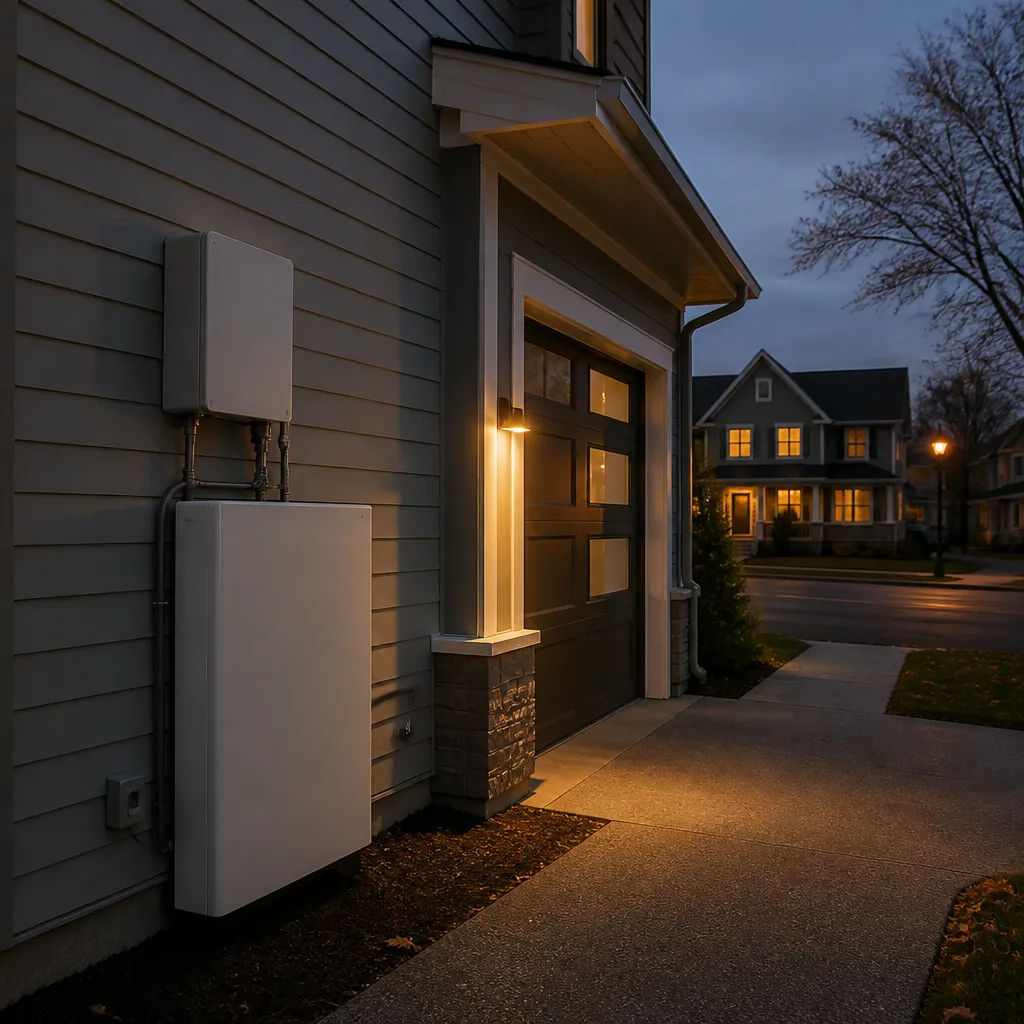
Grid-tied operation under normal conditions
Under normal conditions, most homes with solar and storage remain connected to the grid. This connection allows the household to draw power from the utility at night or during periods of low solar output. It also allows surplus solar generation to be exported where net metering or a comparable program applies. In this mode, the home is not islanded, and the battery and inverter coordinate with utility power at all times.
A common misconception is that adding solar and storage takes a home off the grid. In most installations, that is not the case. The grid connection remains the primary supply for the home, and the battery typically supplements it during peak periods or charges from solar generation during the day.
Intentional islanding during an outage
Islanding becomes relevant when the grid fails. A home with a suitable battery and inverter can disconnect from the utility and form its own supply for the circuits selected for backup. The system must sense the outage, isolate the home from the grid, and maintain stable voltage and frequency for the loads connected to it. The duration of this operation depends on battery capacity, the size of the connected loads, and the amount of solar generation available during the outage.
Islanding is therefore a planned capability, not a default feature. Homeowners who expect uninterrupted power during a blackout should confirm early in the design process that their equipment supports this mode and that the correct circuits are assigned to it.
Why Solar Inverters Shut Down During Outages
Many homeowners expect a solar array to keep producing usable power during a blackout as long as sunlight is available. Standard grid-tied solar inverters are designed to do the opposite. Anti-islanding protection requires the inverter to detect a loss of grid voltage and disconnect within a short period. The inverter does not continue energizing the home or the surrounding lines when the grid is absent.
Protecting utility line workers
Utility crews restoring service assume that lines without grid power are safe to handle. If distributed solar generation continued to push electricity onto those lines, a crew could encounter energized conductors while working on a circuit they believe is dead. Published guidance on solar and resilience identifies this risk as the primary reason that inverters are built to anti-island. Inverters used in grid-connected systems are required to include this capability.
The safety logic is straightforward. A line that is de-energized at the substation should remain de-energized at every point of connection. Any residential system that continued to supply power would undermine that assumption, which is why the shutdown function is a required design feature rather than an optional setting.
Why solar panels alone cannot power a home in an outage
Solar panels produce direct current, which the inverter converts into alternating current for household use. A standard inverter follows the voltage and frequency of the grid as a reference. When the grid disappears, the inverter has no stable reference to follow, and it shuts down. Without a battery or another energy source that can establish a stable supply, the panels produce no usable electricity for the home during a blackout.
This is the point at which many homeowners are surprised. A system that performed well for years on sunny days may leave a home without power during the first outage. The gap is not a fault in the panels. It reflects how grid-tied equipment is designed to behave.
The scale of distributed solar on the grid
The U.S. Department of Energy reports that more than 2 million solar generators are connected to the U.S. distribution system. Because so many systems are installed on homes and businesses, utilities must account for distributed generation when they plan outage response. Anti-islanding protection is one of the mechanisms that allows utilities to manage this generation safely across the grid.
Pro tip: Ask the installer to explain, in writing, what the system does when the grid goes down. A clear answer should describe whether the solar array shuts down, whether the battery forms a backup supply, and which circuits are included.
How Battery Backup Creates an Energy Island
The U.S. Department of Energy describes a scenario in which a flood forces a local utility substation to shut down. Residential solar panels with battery storage detect the loss of grid power within seconds and switch to an islanded mode to keep the power on. This is the operating case that battery owners should plan for, because it determines whether the system will deliver power when the household needs it.
Transfer equipment and critical loads
Backup operation depends on isolating the home from the grid at the point of connection. This is usually accomplished through a transfer switch or an integrated panel arrangement that separates backed-up circuits from the rest of the house. Not every circuit is wired to the backup side. A frequent mistake is assuming that the entire home will run during an outage when only a defined group of circuits is protected.
Before installation, the critical loads should be listed and measured. Refrigeration, medical devices, heating controls, well pumps, and network equipment are common priorities. The combined running and surge demand of these loads must be compared with the battery's rated output, and the expected outage duration must be compared with usable capacity. A system that appears adequate on a specification sheet may fall short once the actual loads are added together.
A battery that is not designed for islanded operation remains a grid-dependent device, regardless of its stated capacity.
Service upgrades that support backup
Many older electrical panels lack the physical space, breaker capacity, or wiring layout needed for a backup-capable battery. In these homes, a service upgrade often comes before the battery installation. Where the design requires it, SPAN Smart Electrical Panel installation can help organize circuits so that the battery serves the intended loads in a controlled and documented way.
The panel is the control point for both normal operation and islanded operation. Its condition is therefore a safety question as well as a capacity question. Corroded connections, undersized conductors, and unlabeled circuits can each create problems during a transfer event, which makes panel evaluation an essential part of any backup planning process.
Pro tip: Request a written list of backed-up circuits before installation begins. The list should be matched to the battery's rated output and to the expected duration of outages, and it should be kept with the electrical panel for future reference.
Anti-Islanding Protection in Battery Storage Systems
Anti-islanding is the protective function that prevents a grid-connected system from energizing the utility grid during an outage. Battery storage adds a second layer of design consideration. A system that supports backup must transition deliberately into islanded operation under controlled conditions, while a system without that design must disconnect and remain disconnected. These two behaviors must be clearly distinguished during planning and commissioning.
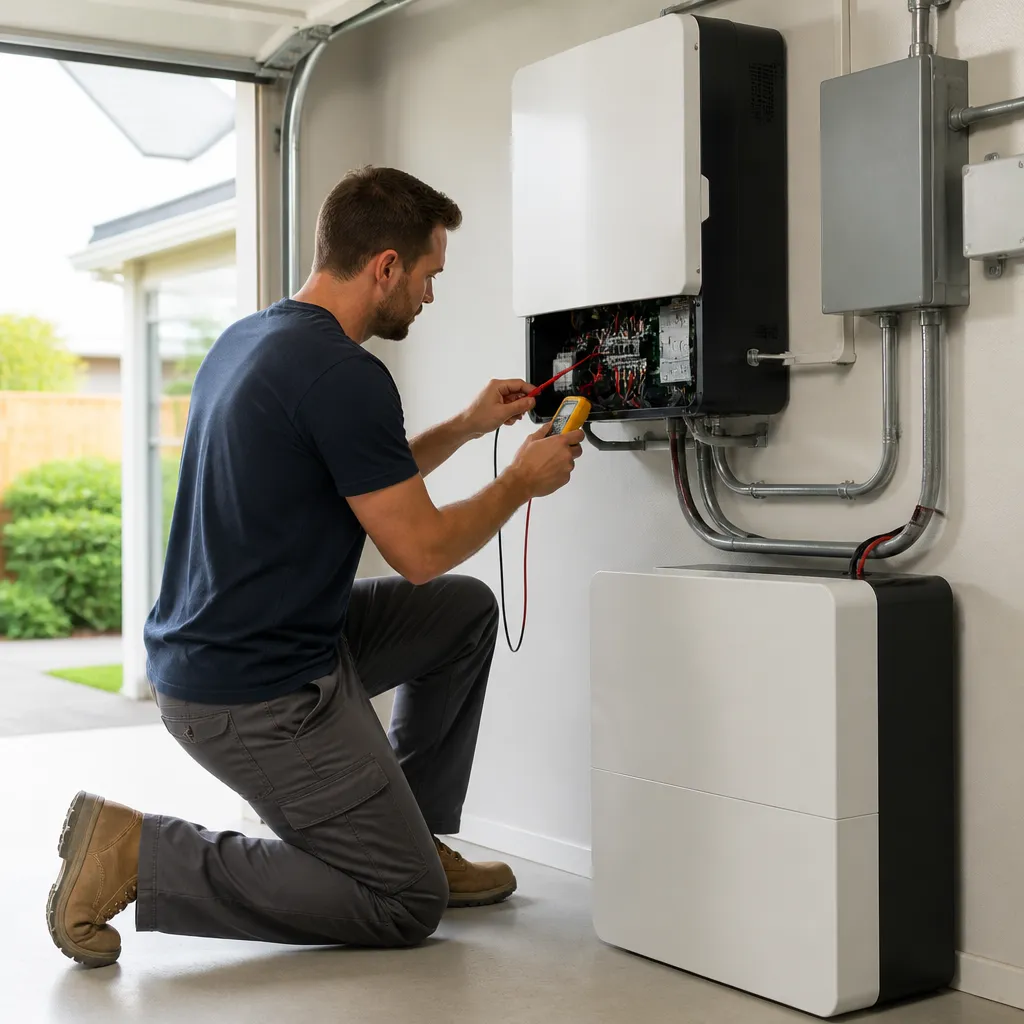
A controlled transition during an outage
A properly designed system sequences the transition in steps. It detects the outage, isolates the home from the utility, establishes stable voltage and frequency, and then supplies the backed-up circuits. When the grid returns, the system verifies conditions before reconnecting. Reconnection that happens without verification can expose utility workers and household equipment to risk, so the reconnection logic should be confirmed during commissioning.
Testing is the most reliable way to confirm this sequence. A commissioning test should simulate an outage, record the transfer time, and confirm that each designated circuit operates as expected. The results should be documented so that the homeowner and the service provider have a common reference for future troubleshooting.
Warning signs of a misconfigured system
Several symptoms suggest that a backup system is not configured correctly. These include a battery that reports backup readiness but does not power the designated circuits during a transfer test, a solar array that shuts down during an outage with no battery available to hold the load, and a system that does not reconnect to the grid after restoration. Each condition calls for inspection rather than a simple reset.
Diagnostics should confirm inverter settings, transfer equipment operation, circuit labeling at the panel, and communication between the battery and the inverter. A misconfiguration discovered during a scheduled inspection is far less disruptive than one discovered during an actual outage.
Comparing Backup Options for Outage Power
Homeowners in the Mid-Atlantic generally consider three configurations when they want power during outages. Each produces different results for islanding, maintenance requirements, and long-term operating considerations. The table below summarizes how each option behaves in practice.
Configuration | Outage Behavior | Best Fit |
|---|---|---|
Grid-tied solar without a battery | Shuts down during an outage to protect utility line workers, so no household power is produced | Homes focused on reducing grid electricity costs when utility power is reliable |
Solar with an islanding-capable battery | Forms an energy island for designated circuits, with duration limited by battery capacity and solar output | Homes that need backup for refrigeration, medical equipment, heating controls, and communications |
Generator with a transfer switch | Runs on fuel and is independent of solar and battery capacity, with runtime limited by fuel supply | Homes that need power for extended outages beyond the capacity of a battery system |
The comparison shows that no single configuration suits every household. The right choice depends on the loads that must remain powered, the expected outage pattern, and the condition of the existing electrical service. A generator can supply longer runtime, but it does not reduce daily grid dependence. A battery system supports daily use and backup, but its runtime is bounded by stored energy.
Grid-tied solar without a battery
A grid-tied solar system without a battery is effective for reducing electricity purchases during normal conditions. It does not provide backup during an outage. Homeowners who choose this configuration should understand that the system will shut down when the grid fails, even on a clear day, and should plan for that situation separately.
Solar with an islanding-capable battery
A solar system paired with an islanding-capable battery offers backup for a defined set of circuits. Its performance depends on battery capacity, the power rating of the inverter, and the amount of solar generation available during the outage. Households that design the backup circuits carefully can keep essential loads operating for the duration of a typical outage, with clear expectations about limits.
Generator with a transfer switch
A generator connected through a transfer switch can provide power for extended periods when fuel is available. It operates independently of solar generation, which makes it useful during long outages or extended periods of low sunlight. It also requires fuel storage, regular maintenance, and ventilation planning, all of which should be considered before selection.
Solar System Safety Repair and Diagnostics
Solar systems that were installed correctly can still develop faults that affect islanding behavior and electrical safety. Loose connections, failing inverters, degraded battery modules, and incorrect transfer settings are among the issues that appear in service work. Early identification limits both the cost of repair and the risk of unplanned outages.
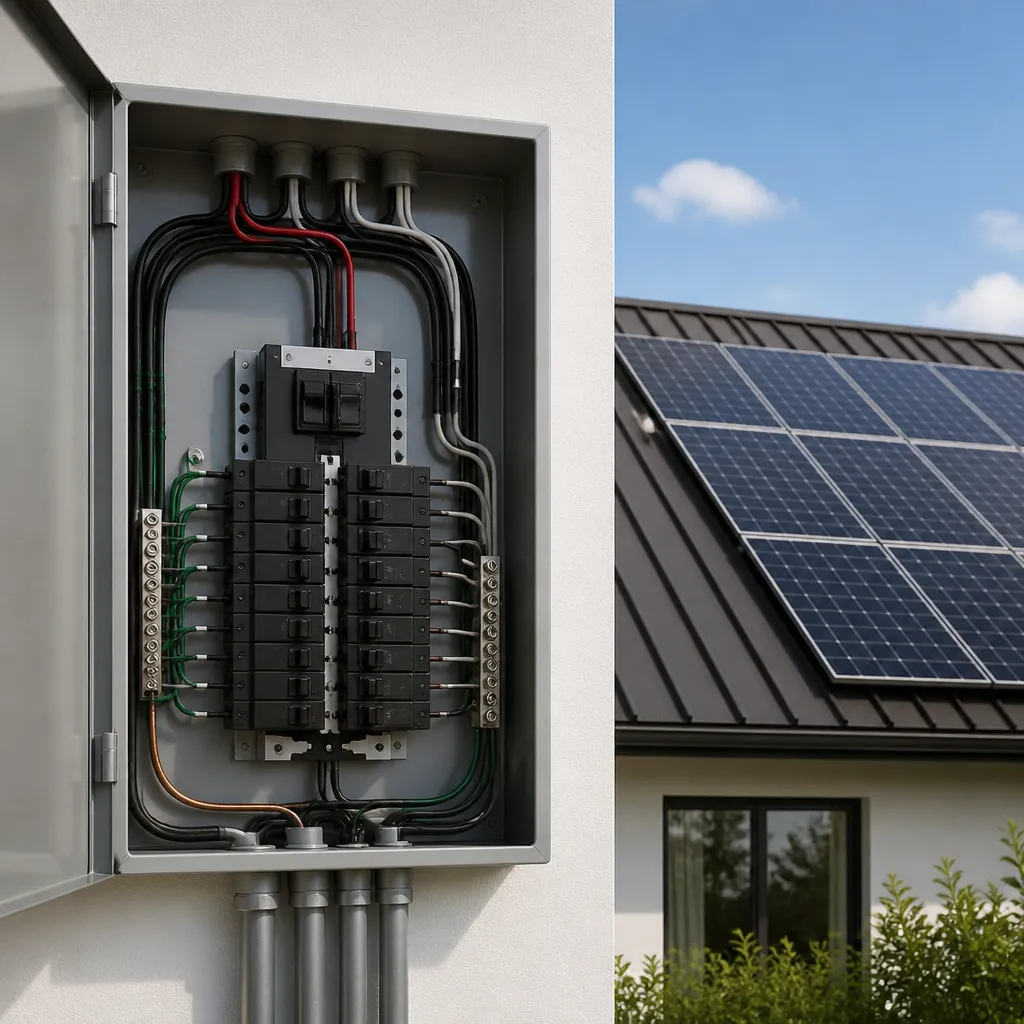
Signs that a system needs inspection
Several conditions should prompt an inspection by a licensed electrical contractor. These include recurring inverter fault codes, a battery that does not indicate backup readiness, flickering lights during transfer tests, a warm or discolored panel, and a solar array that produces noticeably less power than expected for the season. Each condition can affect both performance and safety, so none should be treated as routine.
Homeowners sometimes attribute a faulty backup transfer to a weak battery. In many cases, the underlying cause is a control setting, a loose conductor, or a communication problem between components. A diagnostic visit can separate these possibilities before any component is replaced.
What a diagnostic visit covers
A diagnostic visit typically reviews inverter status and error logs, confirms anti-islanding and transfer operation, inspects DC and AC connections, and checks the labeling at the electrical panel. Where appropriate, the technician performs a controlled transfer test. The findings are documented so that the homeowner knows which components require repair, which are operating within design limits, and which should be monitored.
Pro tip: Ask for a copy of the commissioning report and keep it with the system documentation. This report provides a baseline for future diagnostics and helps a technician identify changes in behavior over time.
Planning a Battery Storage Installation in the Mid-Atlantic
Homes in Delaware, Maryland, Pennsylvania, Virginia, Washington, D.C., and the wider Mid-Atlantic region vary considerably in age, panel capacity, and existing solar equipment. Planning should begin with a load review and an assessment of the electrical service rather than with the selection of a specific product. This sequence prevents costly changes later in the project.
Load review and panel capacity
Planning starts with twelve months of utility usage data and a list of essential circuits. The continuous output of the battery is compared with the combined demand of the backed-up loads, and the existing panel is checked for available breaker space and wiring capacity. In many older homes, a service upgrade is required before additional backup circuits can be added safely.
The review should also account for loads with high starting current, such as well pumps and some HVAC equipment. These loads can exceed the steady-state rating of a battery, so they require specific attention in the design.
Permits, inspection, and utility coordination
Battery installations generally require electrical permits and inspection, and local requirements can differ between jurisdictions. Some projects also require coordination with the utility for interconnection. A licensed contractor should confirm the local process before work begins, so that the schedule, documentation, and inspection steps are clear to the homeowner.
Triple R Energy provides battery storage installation and service for residential customers across the Mid-Atlantic. Projects often combine battery work with solar system diagnostics and electrical panel evaluation, which allows the backup design, the panel, and the solar equipment to be assessed together rather than in isolation.
Frequently Asked Questions
Will my solar panels power my home during a blackout?
Standard grid-tied solar panels do not power a home during a blackout unless the system includes a battery and equipment designed for islanded operation. The inverter shuts down when grid power is lost, which prevents the panels from supplying electricity to the home and to the surrounding lines.
What is anti-islanding protection?
Anti-islanding protection is the function that requires a grid-connected inverter to detect a loss of utility power and disconnect. It protects utility line workers by preventing solar generation from energizing lines that are expected to be de-energized during repair work.
Can a battery provide backup power without islanding capability?
A battery without islanding capability cannot form its own supply during a grid outage. It may still store energy for daily use or for time-of-use savings, but it will not power the home independently when the grid is down.
How can I confirm that my battery supports islanded operation?
Ask the installer for the equipment specification, the wiring diagram, and a written description of the transfer sequence. A commissioning test that simulates an outage should confirm that the designated circuits operate correctly and that the system reconnects properly when the grid returns.
Is islanding safe for utility workers?
Islanding is safe for utility workers only when the system is designed and configured correctly. Grid-connected inverters must disconnect during outages, and any intentional islanding must occur only within equipment and protective settings that prevent energization of utility lines.
Do I always need a service upgrade before adding a backup battery?
A service upgrade is not required for every backup battery installation. It is often necessary when the existing panel lacks breaker space, wiring capacity, or a suitable layout for backed-up circuits. A load review and panel evaluation should determine whether an upgrade is needed.
If you have observed how a solar or battery system behaved during a recent outage, we welcome your feedback and questions about your experience.
We would love your feedback and any insights you would share with others. What perspective would you add?