The SPAN panel installation process involves more steps than a standard breaker replacement, and most of the physical work takes place on the day of the appointment. Homeowners in Delaware, Maryland, Pennsylvania, Virginia, Washington, D.C., and the wider Mid-Atlantic region often ask what the crew will do, how long the home will be without power, and what they need to prepare. This article describes the typical sequence of events, from the pre-visit checklist through the site walkthrough, panel swap, and app setup, so that the appointment proceeds with fewer surprises.
Table of Contents
- Quick Takeaways
- Preparing Your Home for the Appointment
- The Arrival and Site Walkthrough
- Power Shutdown and Panel Swap
- Commissioning and App Setup
- Comparing Installation Approaches
- Common Mistakes on Installation Day
- Planning for EV and Battery Readiness
- Frequently Asked Questions
- References
Quick Takeaways
Key Insight | Explanation |
|---|---|
Confirm the main panel details before the visit | Photos of the existing panel label, main breaker rating, and surrounding clearance allow the installer to plan the scope and avoid a second trip. |
Map circuits to the loads they serve | A written list of major appliances and rooms helps determine circuit allocation and whether an EV charger or battery storage will be added later. |
Plan for a power interruption | The home is without power during the panel swap, so refrigeration, medical equipment, and work schedules should be arranged in advance. |
Keep the area around the panel clear | Unobstructed space and adequate lighting are necessary for the crew to work safely and to complete the swap in a single visit. |
Expect testing before the crew leaves | Circuits are energized and checked against the labeled schedule, and the monitoring app is configured before the appointment closes. |
Store permit and inspection records with home documents | Inspection results and equipment documentation support future service visits, insurance inquiries, and property sales. |
Raise future EV and battery plans during the visit | Reserving breaker space and conduit routing during the panel work avoids a separate shutdown and a second round of wiring. |
Preparing Your Home for the Appointment
Preparation has a direct effect on how smoothly the appointment runs. Most delays on installation day trace back to missing information rather than to the physical work itself. A homeowner who gathers records and clears access before the visit reduces the likelihood of a rescheduled appointment.
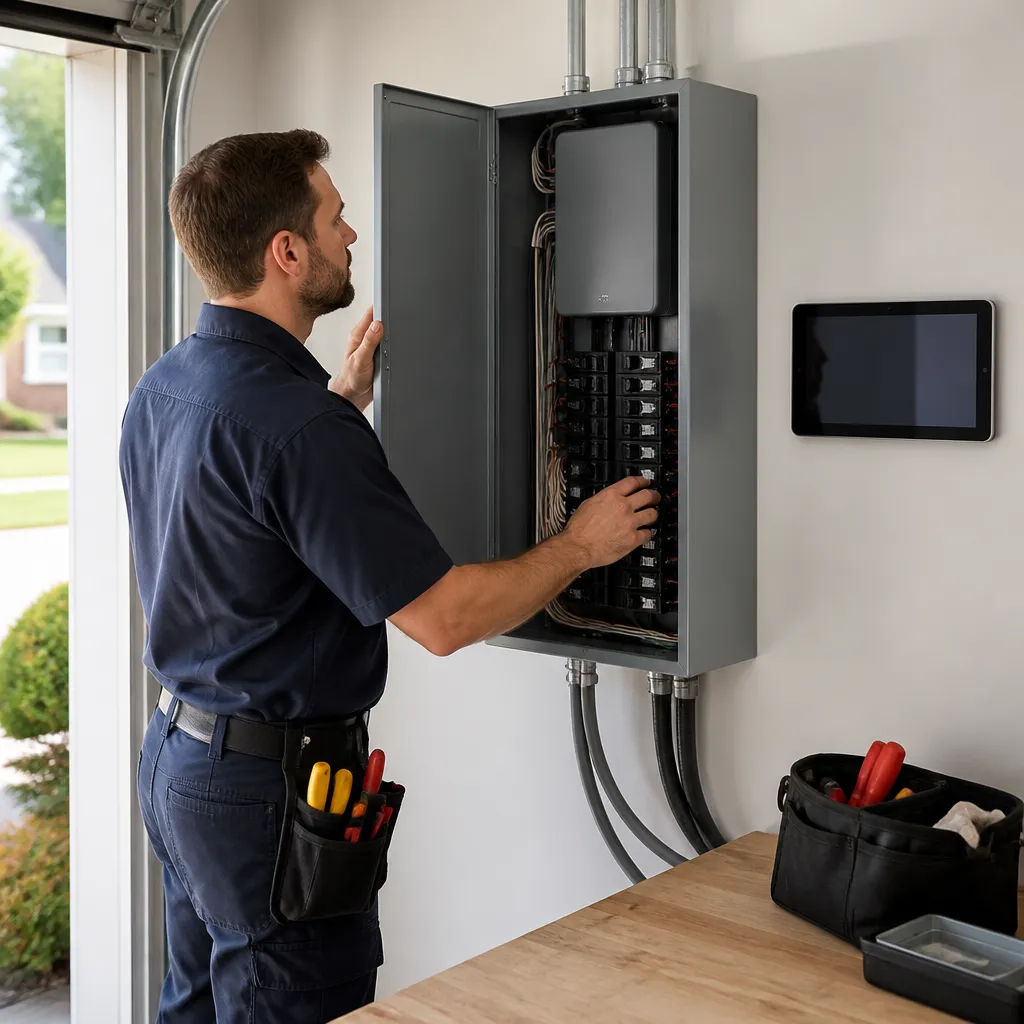
Homeowners do not need to be electricians to prepare. The most useful step is to locate the existing main panel and record its label, its main breaker rating, and the area around it. Clear photographs allow the installer to evaluate clearances and the service configuration before arriving.
Gathering Your Electrical Records
Records worth collecting include the most recent utility bill, any prior electrical permits, and documentation for solar, battery, or generator equipment already installed on the property. If the home has had a previous panel upgrade, the installer will want to know how that work was completed. Manufacturer manuals for existing equipment are also helpful during the planning stage.
Mapping Circuits and Loads
The most practical preparation is a short list of major loads, such as an electric range, heat pump, clothes dryer, water heater, and any planned EV charger. A common mistake is assuming that the existing breaker labels are accurate. In older homes, labels are often incomplete, so the homeowner should note which breakers actually control each room or appliance.
Permits and Utility Coordination
Permit requirements and utility approval steps vary by jurisdiction and by property. Some panel replacements require a permit and a final inspection, and some systems that generate power require utility authorization before they are energized. A licensed installer should confirm these requirements before the appointment so that installation day is not delayed by paperwork.
The Arrival and Site Walkthrough
The appointment usually begins with a walkthrough rather than immediate removal of equipment. The installer confirms the address, reviews the scope agreed in advance, and inspects the existing equipment in person. This step establishes whether the plan matches the actual conditions in the home.
During the walkthrough, the installer examines the main service equipment, the meter area or service disconnect, the condition of the conductors entering the panel, and the space available for the new unit. A mismatch found at this stage is far easier to resolve before the power is turned off.
Reviewing the Scope Line by Line
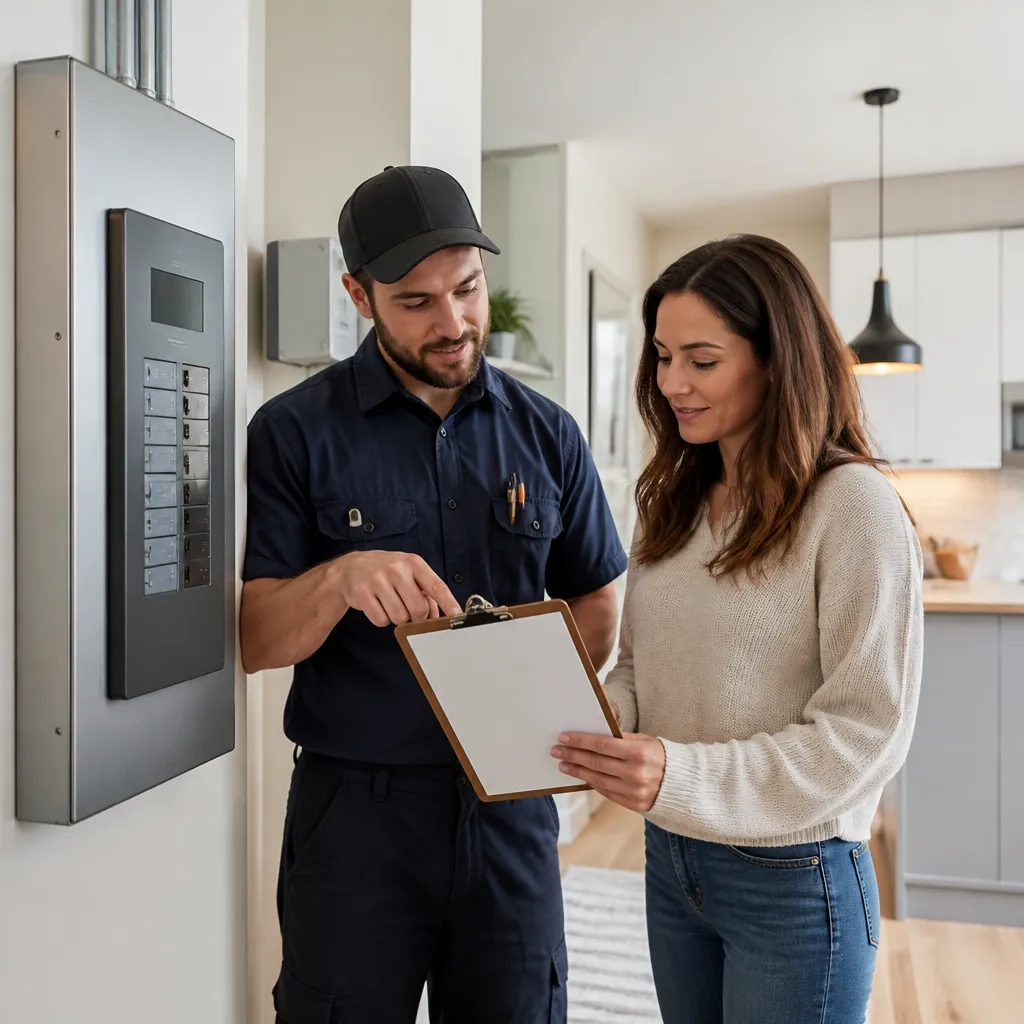
The scope should state which circuits will move to the new panel, whether a service upgrade is included, and what the homeowner will receive at the end of the day. Homeowners should ask for the scope to be read aloud and confirmed. Any change identified during the walkthrough should be documented in writing before work begins.
Inspecting the Existing Service Equipment
The installer checks the rating of the existing service, the condition of grounding and bonding connections, and any signs of heat damage, corrosion, or earlier unpermitted work. These conditions can change the plan. In some cases, the installer will recommend correcting a condition before the new panel is installed, which can extend the appointment or require a second visit.
Power Shutdown and Panel Swap
The physical replacement is the core of the appointment. Power to the home must be interrupted so that the new panel can be connected safely, and the homeowner should plan for a period without electricity. The length of that period depends on the scope and on any utility coordination, which is why the schedule is confirmed in advance.
Before any conductor is disturbed, the crew verifies that the circuits are de-energized with proper test equipment. This verification is standard safety practice and is not a formality. Work proceeds only after the absence of voltage has been confirmed.
Utility Disconnection and Safety Checks
Utility disconnection is coordinated through the main disconnect and, where required, the utility itself. The crew confirms that service is off, applies any lockout or tagging required by practice, and verifies the absence of voltage again at the point of work. Homeowners should expect to remain clear of the work area during this stage.
Removing the Existing Panel
The existing panel is removed, and each circuit conductor is identified and labeled. Labeling at this stage makes reconnection accurate and gives the homeowner a reference for future service. In older installations, conductors can be brittle or undersized for the new equipment, and the installer may replace them where the new panel requires it.
Mounting and Wiring the New SPAN Panel
The new SPAN panel is mounted to the wall, the main conductors and branch circuits are terminated, and grounding and bonding connections are completed according to the product documentation. Manufacturer instructions govern torque values, terminal requirements, and breaker placement, and the installer should follow the documentation for the specific model being installed. Installers commonly confirm these details against the manufacturer's technical documents before closing the enclosure.
Commissioning and App Setup
After the physical connections are complete, the panel is energized and tested. Commissioning confirms that the main service, each branch circuit, and the monitoring functions operate as intended. This stage is where many homeowners first see the smart features working in their own home.
A structured test sequence is more reliable than a single power-on check. Circuits are energized in groups, and each is confirmed against the labeled schedule. Any circuit that does not respond as expected is identified and corrected before the crew leaves the property.
Energizing and Testing Circuits
Testing typically confirms that each breaker carries its intended load, that the correct room or appliance responds, and that no unexpected shared circuits exist. This step can reveal mislabeled circuits in older homes, and the installer can correct the labels on the spot. A clear test record gives the homeowner confidence that the schedule reflects the actual wiring.
Configuring Circuit Labels and Monitoring
The app setup connects the panel to the home network, assigns names to circuits, and sets notification preferences. Smart panels generally provide circuit-level monitoring and app-based remote control, which differ from a traditional panel where the only control is manual breaker operation. The homeowner should review each circuit name and confirm that it matches how the household uses the space. Accurate names make the energy data more useful over time.
Comparing Installation Approaches
Not every home follows the same path on installation day. The scope depends on the existing service, the number of circuits planned for the new panel, and whether solar, battery storage, or an EV charger will connect to the system. The table below compares three approaches that Triple R Energy encounters in residential work.
Approach | What the Appointment Involves | Best Suited For |
|---|---|---|
Full SPAN panel replacement | Shutdown, removal of the existing panel, mounting and wiring of the new panel, commissioning, and app setup | Homes with an aging panel that need circuit-level monitoring and control |
Service upgrade combined with a smart panel | Correction or upgrade of service equipment, followed by panel installation and full circuit testing | Homes where the existing service capacity limits the loads the household plans to run |
EV-ready panel installation | Panel replacement with breaker space and conduit reserved for a future charger circuit | Homes planning an EV charger within the next few years but not yet ready for installation |
Each approach carries a different schedule and documentation requirement. Homeowners should confirm the approach during the pre-visit call so that the crew arrives with the correct materials and the correct expectations.
Common Mistakes on Installation Day
Several recurring issues extend appointments or leave homeowners with unresolved questions. The issues below appear regularly in residential work, and each is preventable with preparation.
A panel replacement is only as accurate as the information gathered before the power is turned off.
Scheduling Without Confirming Access
A frequent mistake is booking the appointment without confirming that the panel area is clear and that an adult with decision authority will be available. Blocked panels, stored items, or locked utility areas can delay the start of work. Homeowners should confirm these details during the scheduling call.
Overlooking Circuits That Are Not Yet Mapped
Homeowners sometimes assume that every circuit will be treated the same way in the new panel. In practice, the installer needs to know which circuits are essential, which are seasonal, and which may serve future equipment. Delaying these decisions until the day of the appointment can force rushed choices that are difficult to change later.
Pro tip: Write the household load list on paper and keep a copy near the existing panel. The installer can then confirm each entry during commissioning, which shortens the testing stage.
Planning for EV and Battery Readiness
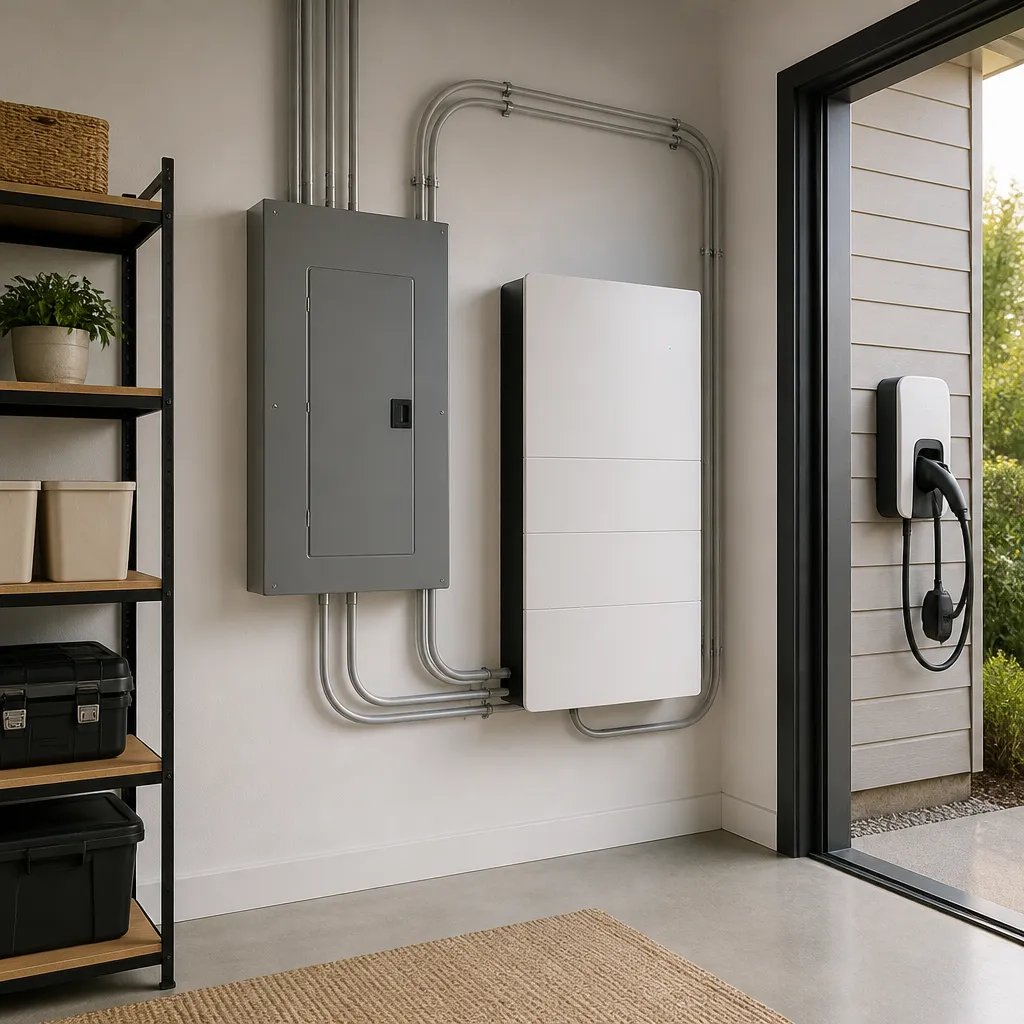
Many homeowners schedule a panel replacement because they plan to add an EV charger or battery storage later. The appointment is an efficient time to account for those loads. Circuits, spare breaker space, and conduit routing can be arranged once rather than reopened in a separate project.
Spare capacity is not a substitute for a load calculation. The installer reviews the existing service and the planned equipment together to determine whether the new panel and service can support both. Where capacity is limited, the installer will identify the required upgrades before work proceeds.
Circuit Planning for a Future EV Charger
A dedicated circuit for an EV charger is sized according to the charger specification and the applicable local code. The intended charger location should be recorded during the walkthrough so that conduit and breaker placement can be set during the panel work. Reserving breaker space at this stage avoids a second shutdown later.
Battery Storage Integration Questions
Battery storage raises questions about backup circuits, transfer behavior, and the relationship between the battery and any solar equipment. Homeowners should identify which circuits are intended to remain powered during an outage and confirm that the system has been designed for that purpose. The answers determine how the panel is labeled and wired on installation day.
Pro tip: Ask the installer to note on the panel directory which breakers feed the EV charger and battery equipment. Clear labeling supports future service visits and simplifies diagnostics.
Frequently Asked Questions
How long does a SPAN panel installation usually take?
The duration depends on the scope, including whether a service upgrade is included and how many circuits are transferred to the new panel. Homeowners should request an estimated time window when scheduling and plan for the home to be without power for part of that window.
Does the homeowner need to be present during the appointment?
An adult with decision authority should be present or reachable by phone. The installer may need approval for scope changes discovered during the walkthrough, and timely approval prevents unnecessary delays.
Will the power be off for the entire appointment?
Power is interrupted during the panel swap and reconnection. Some periods may allow limited use of certain circuits, but this depends on the work plan. The installer should explain the shutdown windows at the start of the day.
Do I need a permit for a SPAN panel installation?
Permit requirements vary by jurisdiction and by scope of work. The installer should confirm whether a permit and inspection are required in Delaware, Maryland, Pennsylvania, Virginia, Washington, D.C., or the surrounding Mid-Atlantic region before the appointment is booked.
What should I do after the installation is complete?
Review the circuit labels, save the panel directory, complete the app setup, and file any inspection documentation with the home records. Contact the installer promptly if any circuit behaves differently from its label.
We welcome your feedback, so please share your experience with a panel installation appointment, including which steps you found most useful and what you would have prepared differently.
We would love your feedback and any insights you would share with others. What perspective would you add?